Exponents, Roots, and Logarithms
Install and import#
npm install fintech-algorithmsimport { exponentsRootsAndLogarithms } from "fintech-algorithms/financial-mathematics-statistics-and-data-foundations/mathematical-language-and-quantitative-reasoning/exponents-roots-and-logarithms";Signature#
exponentsRootsAndLogarithms(input)Worked example#
verified This is the worked example published in the article, replayed by the test suite on every run. The output cannot drift.
Input#
{
  "values": [1, 2, 3, 4, 5],
  "startingCash": 1000,
  "inflows": 250,
  "outflows": 120,
  "slope": 2,
  "intercept": 1,
  "part": 25,
  "whole": 200,
  "elapsed": 5,
  "old": 4.5,
  "new": 4.75,
  "base": 16,
  "exponent": 0.5,
  "a": 2
}
Showing 14 of 28 fields.
Call#
exponentsRootsAndLogarithms(input)Returns#
object with 2 fields: power, squareRoot
{
  "power": 4,
  "squareRoot": 4
}Diagrams#
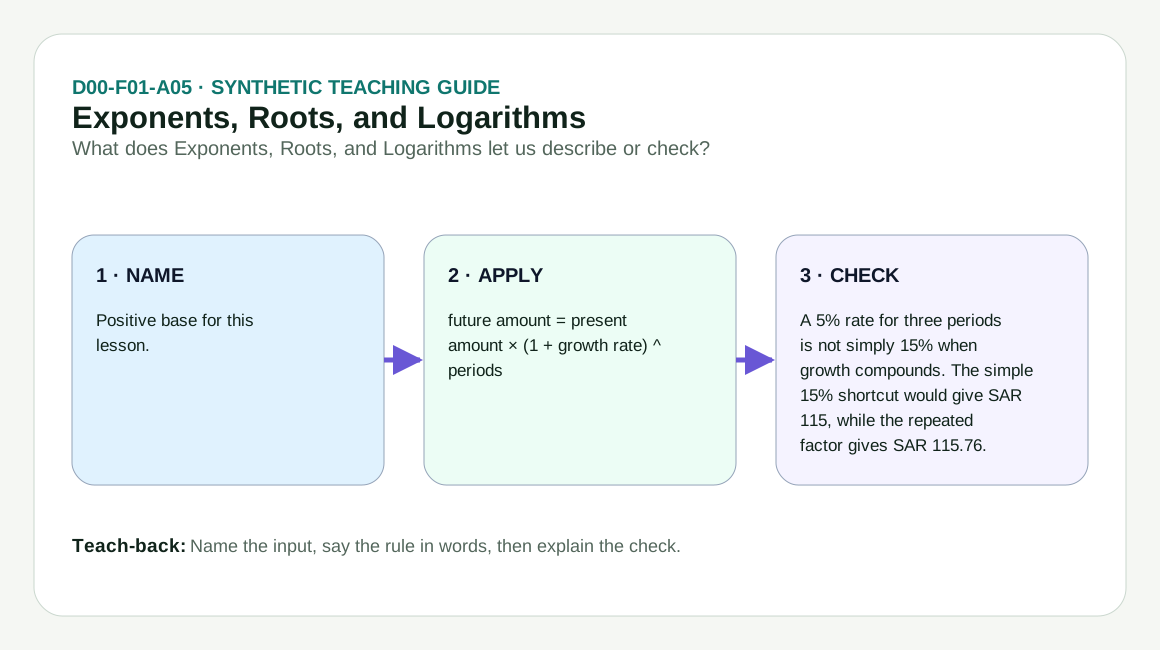
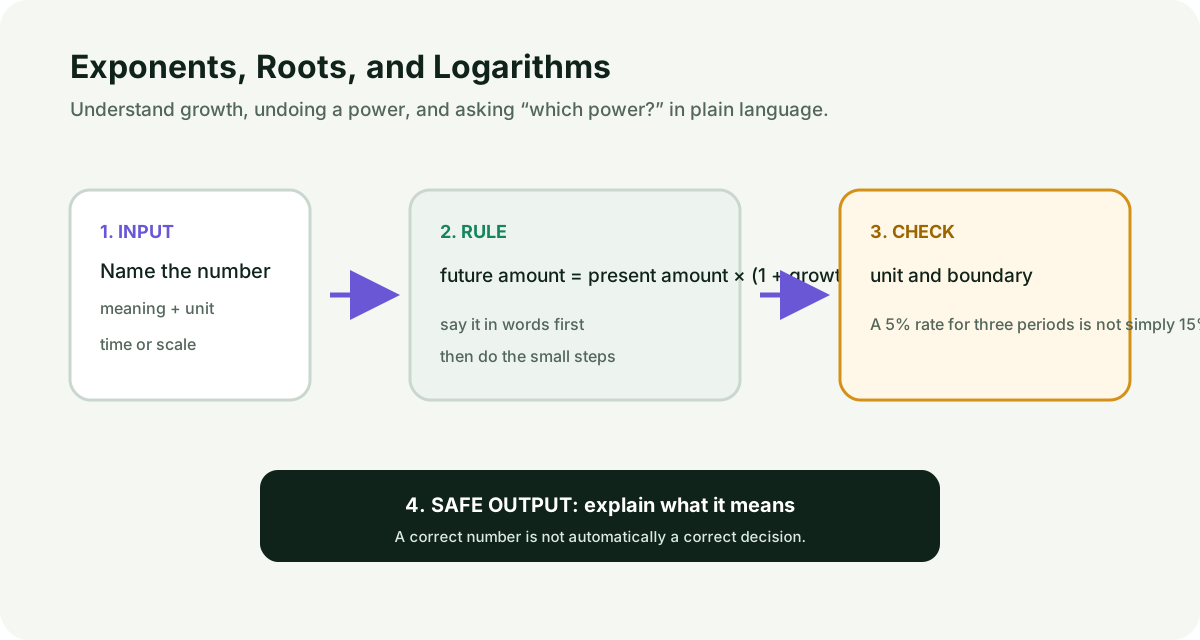
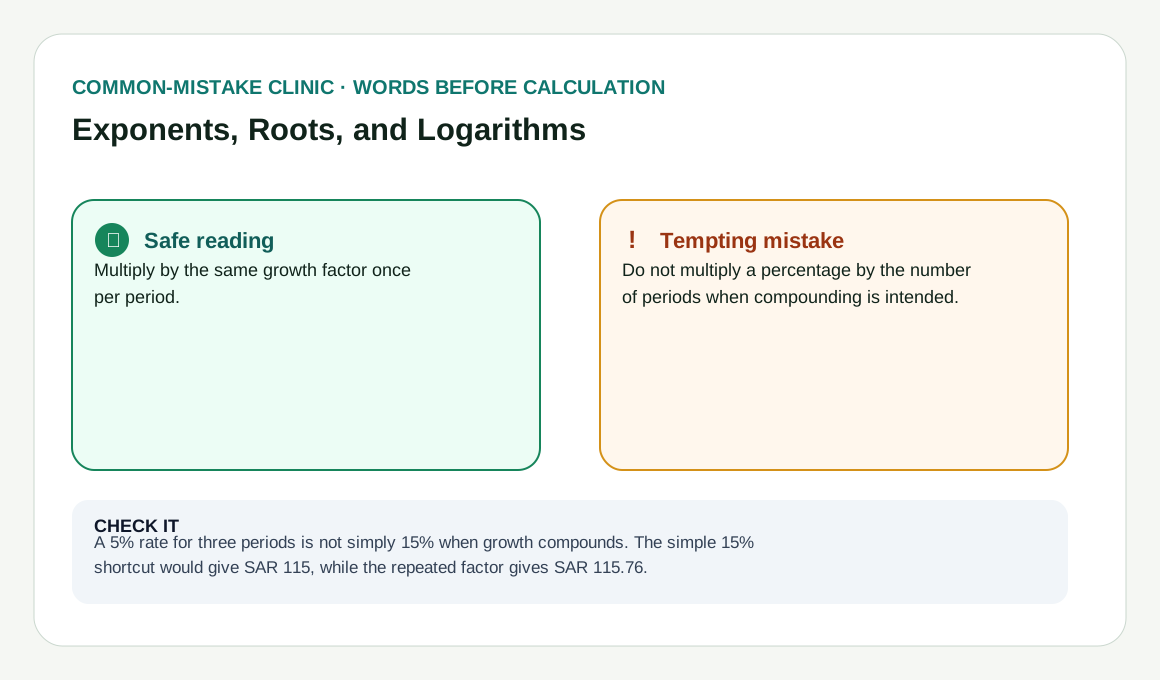
Calculation flow#
Exponents, Roots, and Logarithms — four-part map
flowchart LR
    A["Name the input"] --> B["Apply: future amount = present amount × (1 + growth rate) ^ periods"]
    B --> C["Check units and boundary"]
    C --> D["Explain the output"]
How it works#
This page states the contract — how to call it correctly. The article explains the concept: why it works, and where it breaks.
References#
- NIST Dataplot: Exponential and Logarithmic Functions — NIST/SEMATECH
- College Algebra: Domain and Range — OpenStax
- Author-derived and synthetic boundary