Schema-Drift Detector
Catch Structural and Semantic Contract Changes
Install and import#
npm install fintech-algorithmsimport { detectSchemaDrift } from "fintech-algorithms/market-data-engineering/data-quality/schema-drift-detector";Signature#
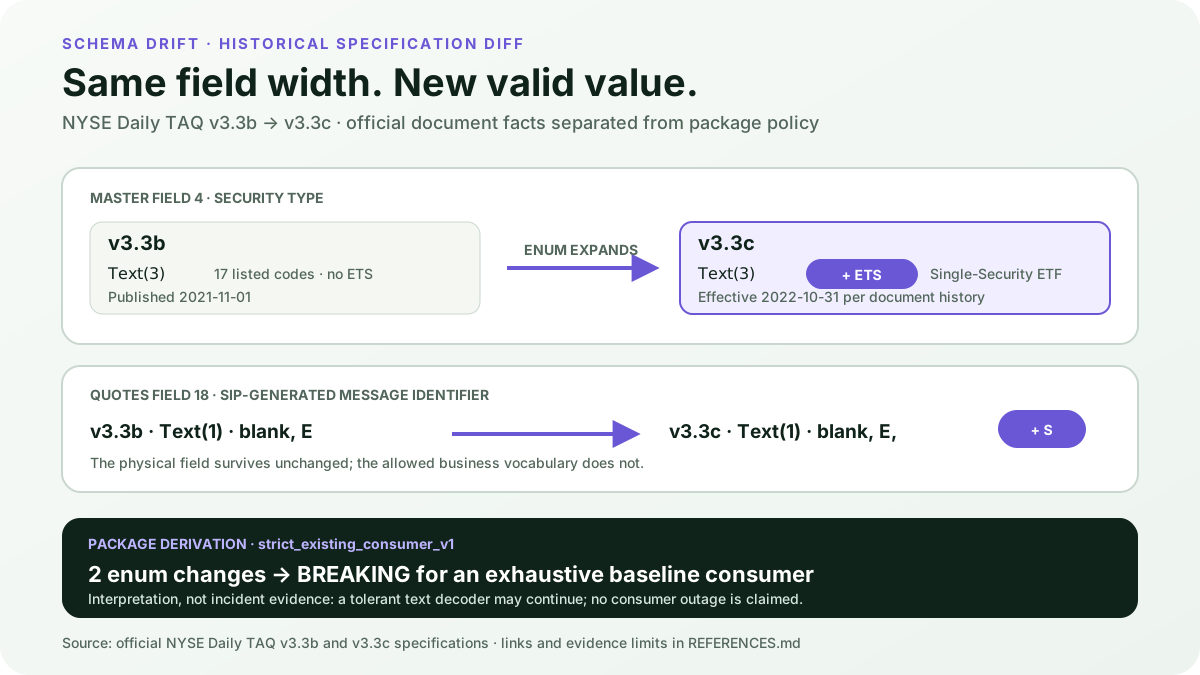
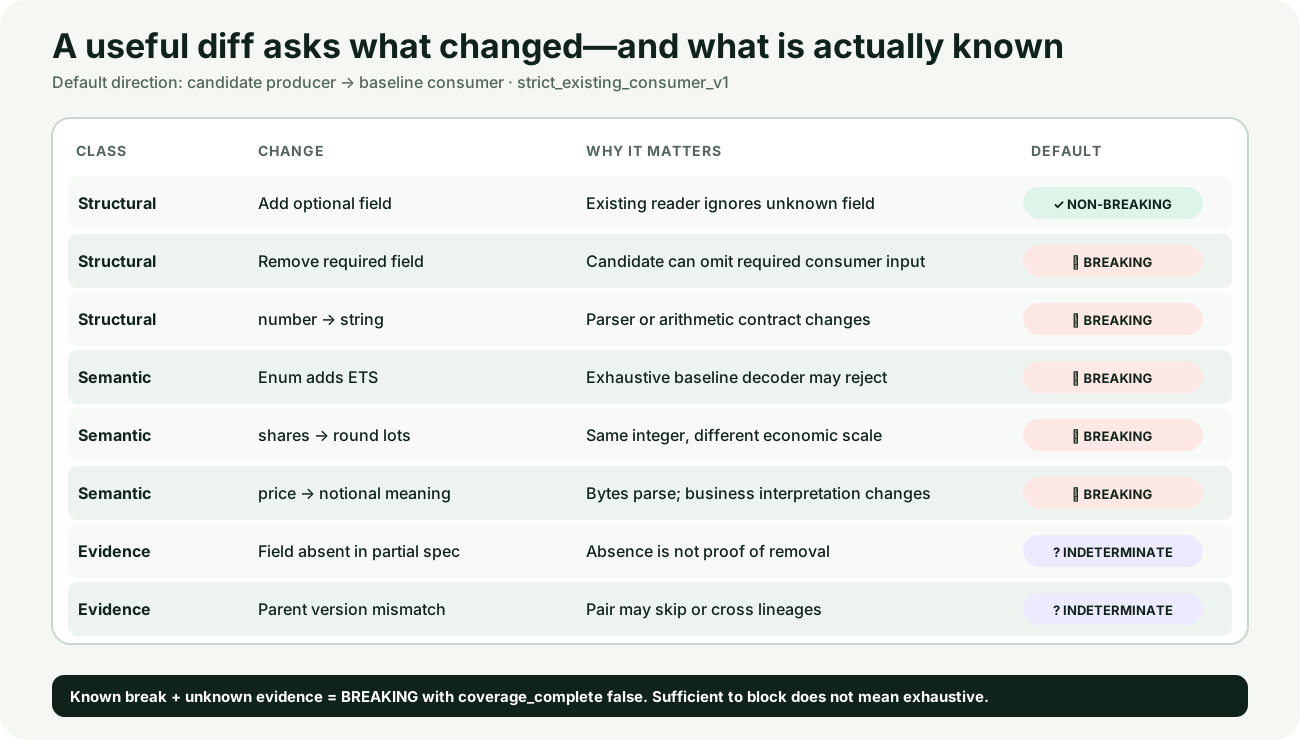
detectSchemaDrift(baseline, candidate, policy)Compares two versions of a feed schema and classifies every change as compatible or breaking. Vendors rename and retype fields without announcement, and a silently renamed field is worse than an outage because nothing fails.
Parameters#
| Name | Type | Notes |
|---|---|---|
baseline | Schema | The schema currently relied upon. |
candidate | Schema | The schema just observed on the feed. |
policy | DriftPolicy | Which categories of change are tolerated, and which must fail. |
Returns#
{ baseline_version, candidate_version, policy, status, coverage_complete, changes }
Every change with its classification, plus whether the comparison covered the whole schema — an incomplete comparison must not read as a clean bill of health.
Errors#
- When either schema is missing an identifier or version — throws
Complexity: time O(fields),
space O(fields).
Worked example#
executed Captured by running this function on the input its own test provides. Real output of real code — but not asserted against a published figure.
Input#
{
  "schema_id": "synthetic-trades",
  "version": "v1.0",
  "parent_version": null,
  "completeness": "complete",
  "fields": {
    "symbol": {
      "type": "string",
      "required": true,
      "nullable": false,
      "enum": null,
      "unit": null,
      "meaning": "Instrument symbol under the declared venue symbology"
    },
    "price": {
      "type": "number",
      "required": true,
      "nullable": false,
      "enum": null,
      "unit": "USD per share",
      "meaning": "Executed price"
    },
    "size": {
      "type": "integer",
      "required": true,
      "nullable": false,
      "enum": null,
      "unit": "shares",
      "meaning": "Executed quantity"
    },
    "sale_condition": {
      "type": "string",
      "required": false,
      "nullable": true,
      "enum": [" ", "O"],
      "unit": null,
      "meaning": "Synthetic sale-condition code"
    }
  }
}{
"schema_id": "synthetic-trades",
"version": "v1.0-clone",
"parent_version": "v1.0",
"completeness": "complete",
"fields": {
"symbol": {
"type": "string",
"required": true,
"nullable": false,
"enum": null,
"unit": null,
"meaning": "Instrument symbol under the declared venue symbology"
},
"price": {
"type": "number",
"required": true,
"nullable": false,
"enum": null,
"unit": "USD per share",
"meaning": "Executed price"
},
"size": {
"type": "integer",
"required": true,
"nullable": false,
"enum": null,
"unit": "shares",
"meaning": "Executed quantity"
},
"sale_condition": {
"type": "string",
"required": false,
"nullable": true,
"enum": [" ", "O"],
"unit": null,
"meaning": "Synthetic sale-condition code"
}
}
}Call#
detectSchemaDrift(baseline, candidate, policy)Returns#
object with 6 fields: baseline_version, candidate_version, policy, status, coverage_complete, changes
{
  "baseline_version": "v1.0",
  "candidate_version": "v1.0-clone",
  "policy": {
    "name": "strict_existing_consumer_v1",
    "direction": "candidate_producer_to_baseline_consumer",
    "added_field": "non_breaking",
    "removed_optional": "review",
    "removed_required": "breaking",
    "type_changed": "breaking",
    "optional_to_required": "non_breaking",
    "required_to_optional": "breaking",
    "nonnullable_to_nullable": "breaking",
    "nullable_to_nonnullable": "non_breaking",
    "enum_values_added": "breaking",
    "enum_values_removed": "review",
    "unit_changed": "breaking",
    "meaning_changed": "breaking"
  },
  "status": "unchanged",
  "coverage_complete": true,
  "changes": []
}Diagrams#
How it works#
This page states the contract — how to call it correctly. The article explains the concept: why it works, and where it breaks.
References#
- Daily TAQ Client Specification v3.3b
- Daily TAQ Client Specification v3.3c
- Market Data Documents
- JSON Schema Core 2020-12
- JSON Schema Validation 2020-12
- Apache Avro Specification
- Evidence decision