Kyle Lambda
Install and import#
npm install fintech-algorithmsimport { kyleLambda } from "fintech-algorithms/market-microstructure/order-flow-and-impact/kyle-lambda";Signature#
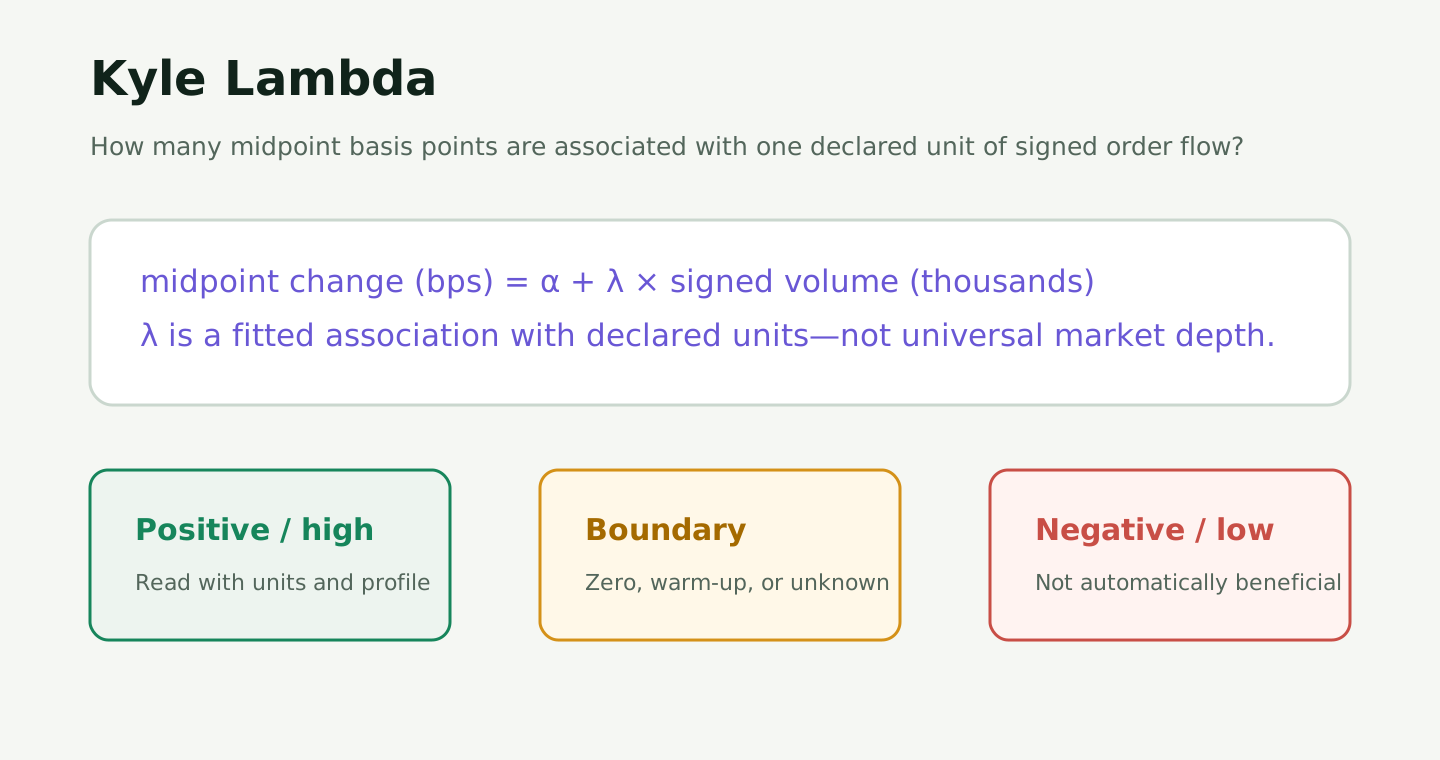
kyleLambda(inputRows, volumeTransform, intercept)The price-impact coefficient from regressing price change on signed order flow. Lambda *is* the illiquidity parameter in Kyle's model — higher means each unit of flow moves price more.
Parameters#
| Name | Type | Notes |
|---|---|---|
inputRows | Row[] | Interval observations of price change and signed volume. |
volumeTransform | string | How signed volume enters the regression — raw, or square-rooted for the concave impact many studies find. |
intercept | boolean | Whether to fit an intercept. Theory says zero; fitting one and finding it non-zero is diagnostic. |
Returns#
{ lambda, r_squared, intercept, observations, … }
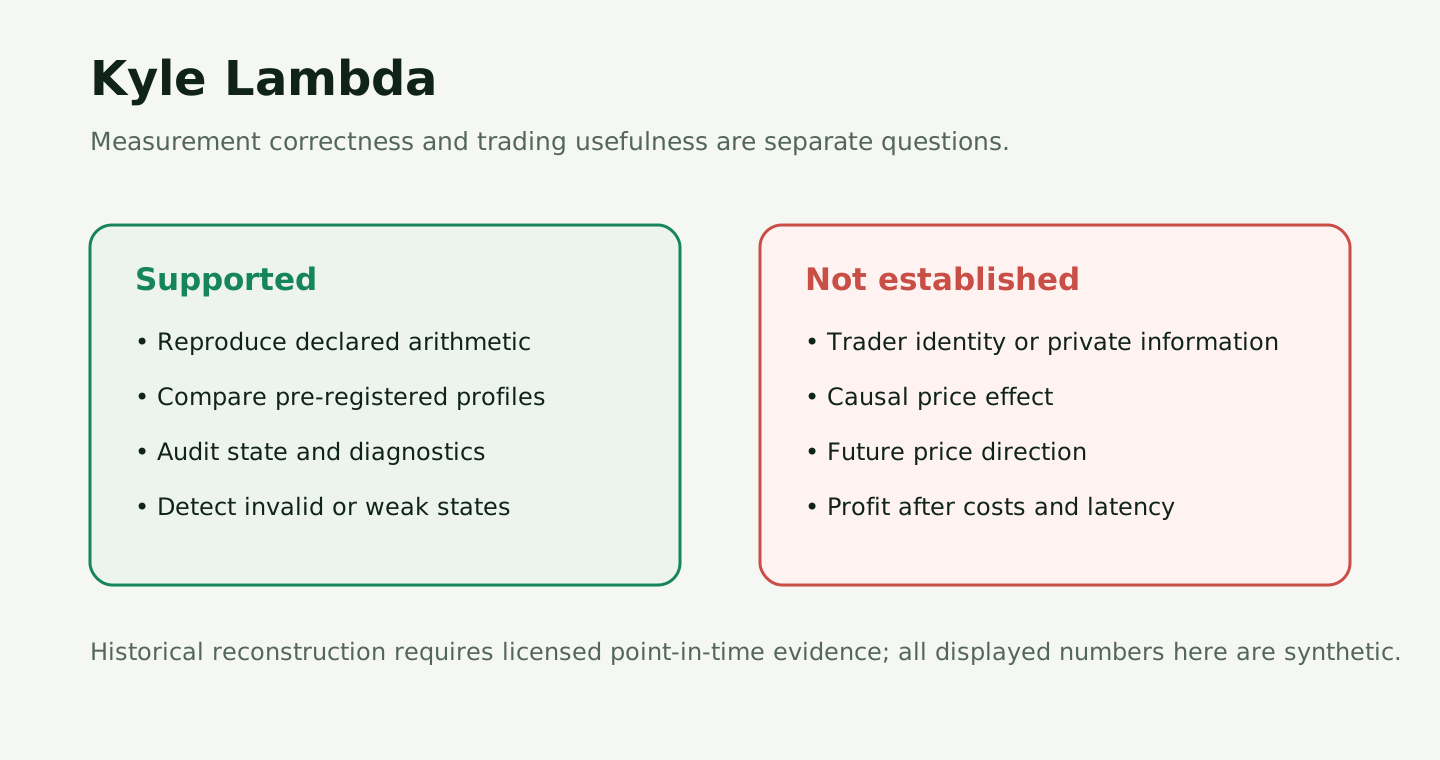
The coefficient with its fit quality — a lambda from a regression that explains nothing is a number, not a measurement.
Errors#
- When fewer than two observations, or zero variance in signed volume — throws
Complexity: time O(n),
space O(1).
Worked example#
executed Captured by running this function on the input its own test provides. Real output of real code — but not asserted against a published figure.
Input#
[
  {
    "id": "K001",
    "interval_end": 0,
    "signed_volume_k": -8.8,
    "mid_change_bps": -3.756
  },
  {
    "id": "K002",
    "interval_end": 1,
    "signed_volume_k": 4.8,
    "mid_change_bps": 2.196
  },
  {
    "id": "K003",
    "interval_end": 2,
    "signed_volume_k": 0,
    "mid_change_bps": 0.08
  }
]
Showing 3 of 60 elements.
"linear"trueCall#
kyleLambda(inputRows, volumeTransform, intercept)Returns#
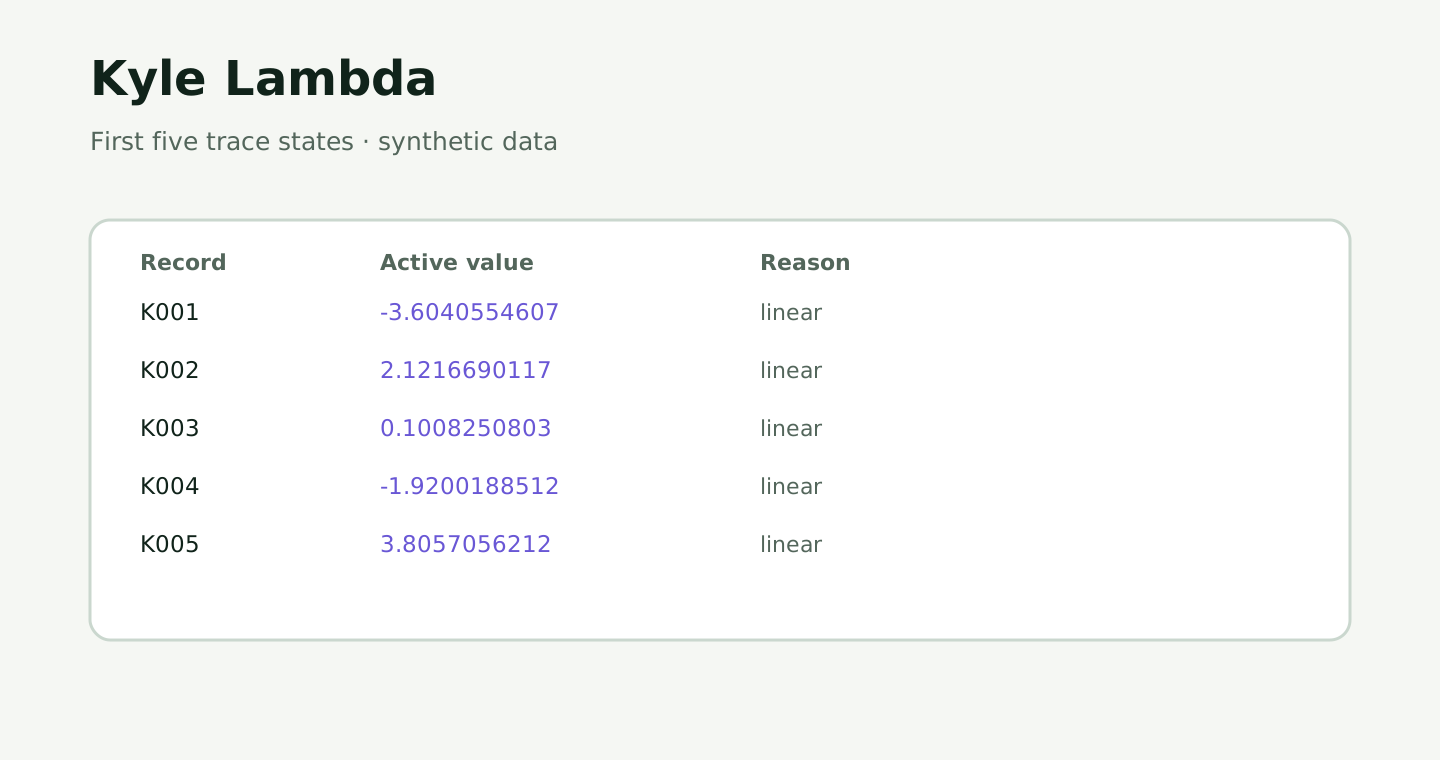
object with 10 fields: model, state, volume_transform, intercept, observation_count, alpha_bps, lambda_bps_per_regressor_unit, r_squared, …
{
  "model": "empirical-kyle-lambda",
  "state": "estimated",
  "volume_transform": "linear",
  "intercept": true,
  "observation_count": 60,
  "alpha_bps": 0.1008250803,
  "lambda_bps_per_regressor_unit": 0.4210091524,
  "r_squared": 0.9980824794,
  "residual_std_bps": 0.1004292969,
  "trace": [
    {
      "id": "K001",
      "index": 0,
      "signed_volume_k": -8.8,
      "regressor": -8.8,
      "mid_change_bps": -3.756,
      "predicted_change_bps": -3.6040554607,
      "residual_bps": -0.1519445393,
      "side": "negative-impact",
      "reason": "linear"
    },
    {
      "id": "K002",
      "index": 1,
      "signed_volume_k": 4.8,
      "regressor": 4.8,
      "mid_change_bps": 2.196,
      "predicted_change_bps": 2.1216690117,
      "residual_bps": 0.0743309883,
      "side": "positive-impact",
      "reason": "linear"
    },
    {
      "id": "K003",
      "index": 2,
      "signed_volume_k": 0,
      "regressor": 0,
      "mid_change_bps": 0.08,
      "predicted_change_bps": 0.1008250803,
      "residual_bps": -0.0208250803,
      "side": "positive-impact",
      "reason": "linear"
    }
  ]
}
Other exports#
This module also exports
orderFlowImbalance, queueImbalance, hasbrouckPriceImpact, pin, vpin, runTopic. Every module additionally exports run as an alias of its
primary function, and a meta object carrying its catalog id, domain, family,
shape and article URL.
Diagrams#
Calculation flow#
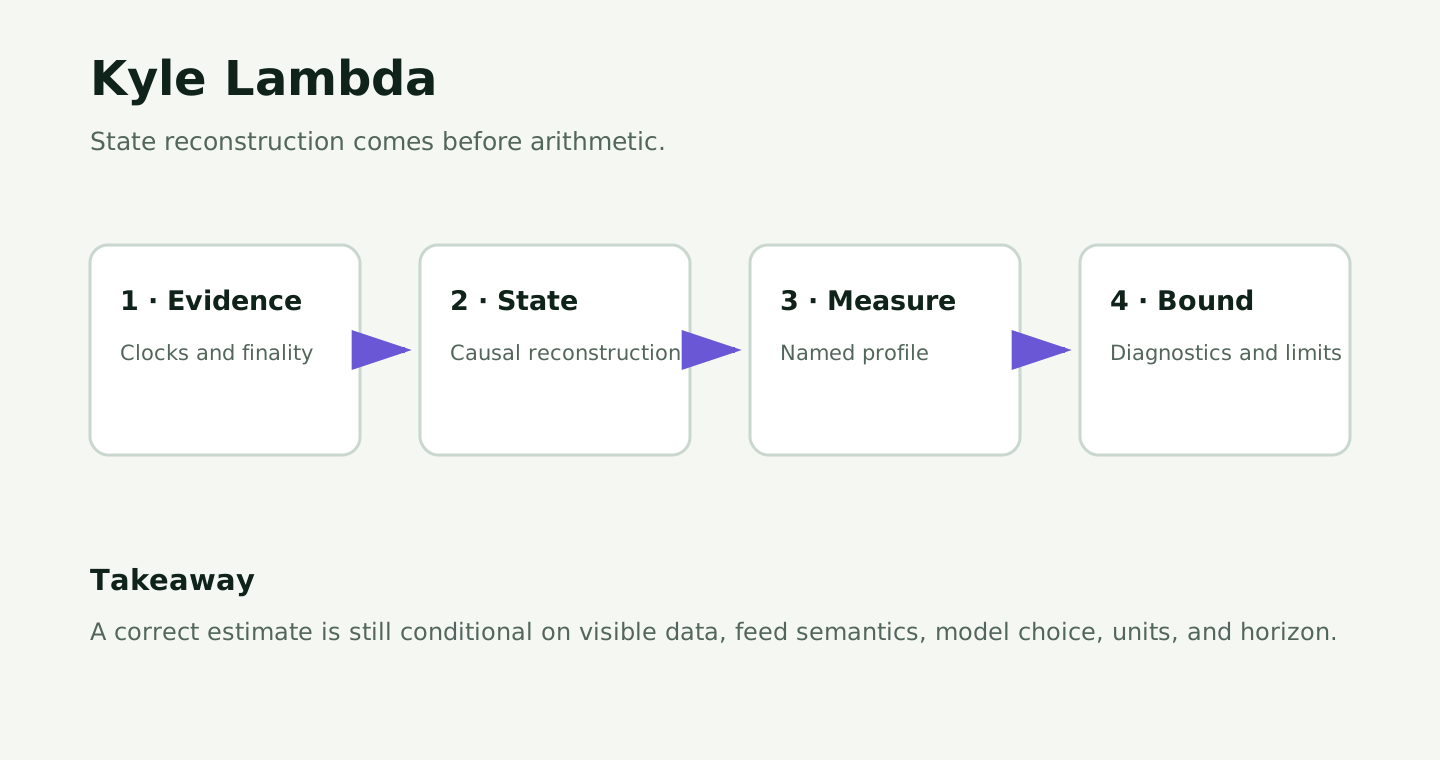
Kyle Lambda Calculation Flow
flowchart LR
    A["Point-in-time source records"] --> B["Validate clocks, sequence, and finality"]
    B --> C["Apply Kyle Lambda profile"]
    C --> D["Preserve trace and diagnostics"]
    D --> E["Report bounded output"]
    E --> F["Compare profiles"]
    F --> G["Reject unsupported inference"]
How it works#
This page states the contract — how to call it correctly. The article explains the concept: why it works, and where it breaks.