Bayesian Change-Point Detection
Install and import#
npm install fintech-algorithmsimport { runFilter } from "fintech-algorithms/statistical-time-series/state-and-regime-models/bayesian-change-point-detection";Signature#
runFilter(observations, config)Online detection of structural breaks by tracking the posterior over run length — how long since the last change. Unlike a regime model it does not need the number of regimes specified in advance.
Parameters#
| Name | Type | Notes |
|---|---|---|
observations | number[] | Observations in chronological order. |
config | { hazard: number; observation_variance: number; prior_mean: number; prior_variance: number } | hazard is the prior probability of a change at any step — its reciprocal is the expected run length, which is the more intuitive way to set it. The priors describe beliefs about a segment's mean before seeing data. |
Returns#
{ …per-step run-length posterior }[]
The run-length distribution per observation. Being online, an apparent change point can be revised by later data — the posterior shows that, a hard list of breaks would not.
Errors#
- When hazard falls outside 0…1, or a variance is not positive — throws
Complexity: time O(n²),
space O(n).
Worked example#
verified This is the worked example published in the article, replayed by the test suite on every run. The output cannot drift.
Input#
[-0.3275053489, 0.2452664583, 0.224748597]{
"hazard": 0.025,
"observation_variance": 0.36,
"prior_mean": 0,
"prior_variance": 4
}Call#
runFilter(observations, config)Returns#
object with 1 field: 2
{
  "2": {
    "index": 2,
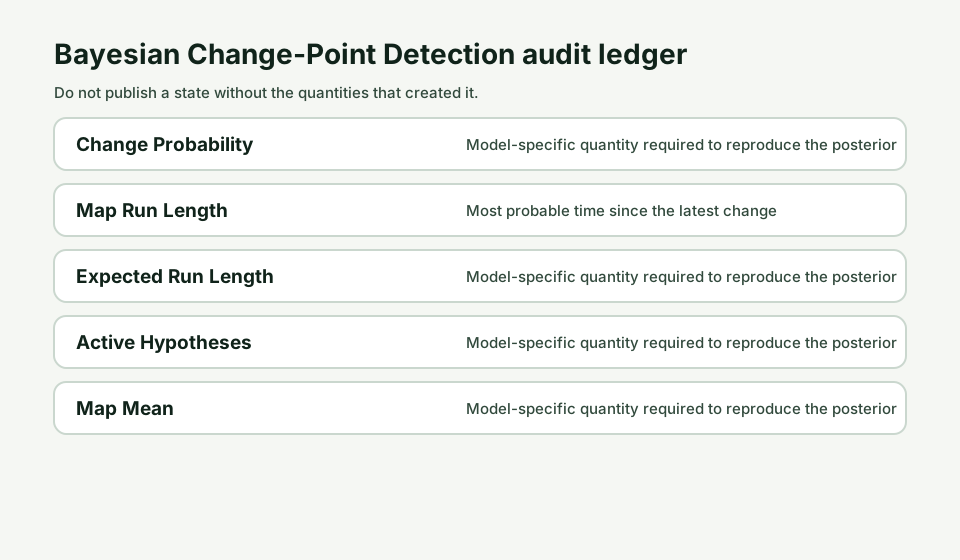
    "change_probability": 0.00942784148480789,
    "map_run_length": 3,
    "expected_run_length": 2.9241612404581354,
    "active_hypotheses": 4,
    "map_mean": 0.04611964608414239,
    "log_predictive_density": -0.6857585614486436
  }
}Diagrams#
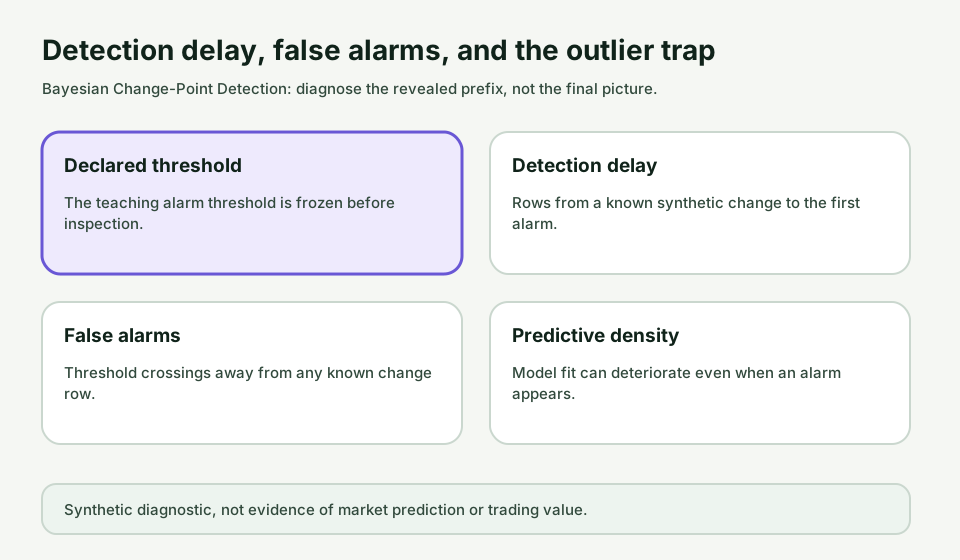
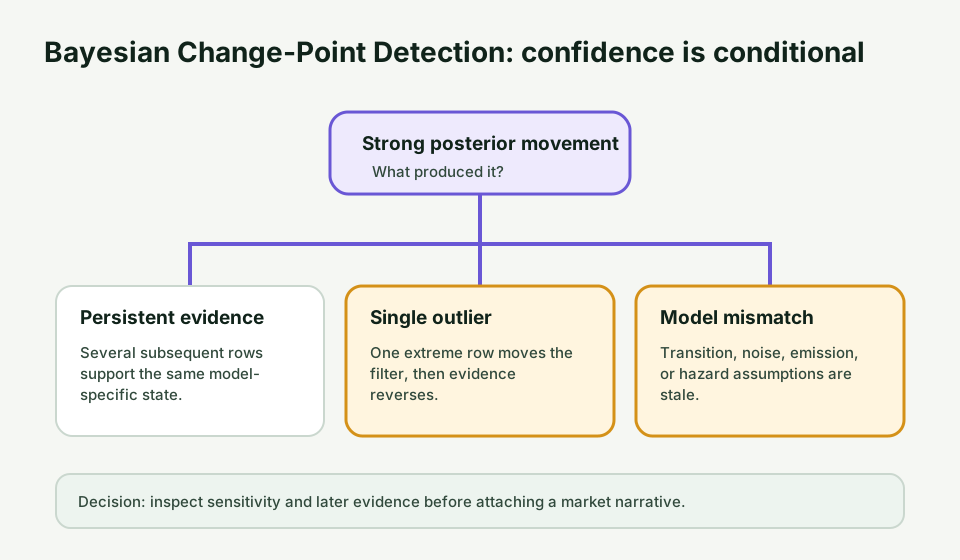
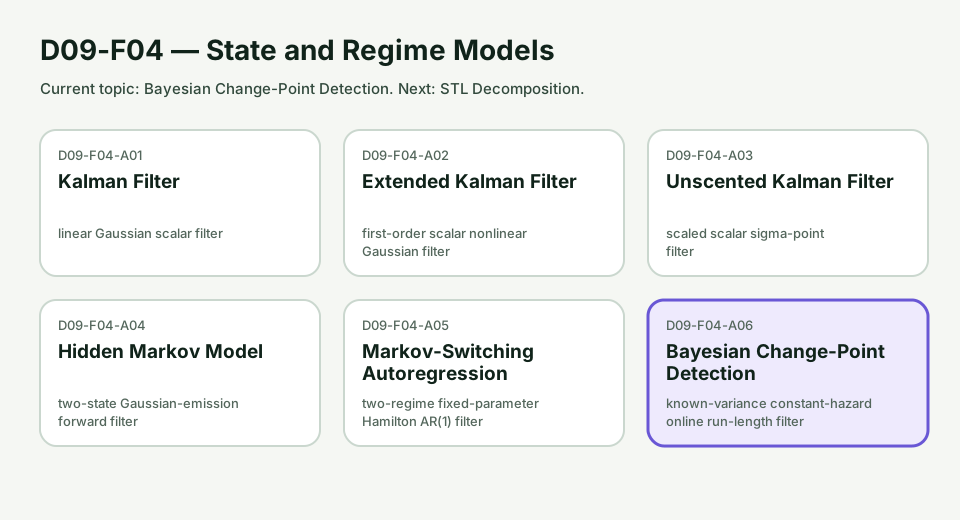
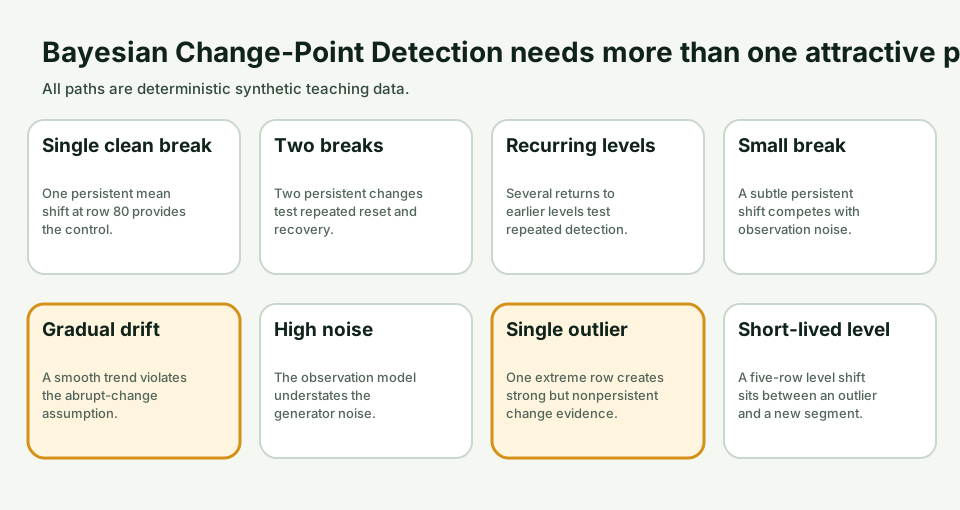
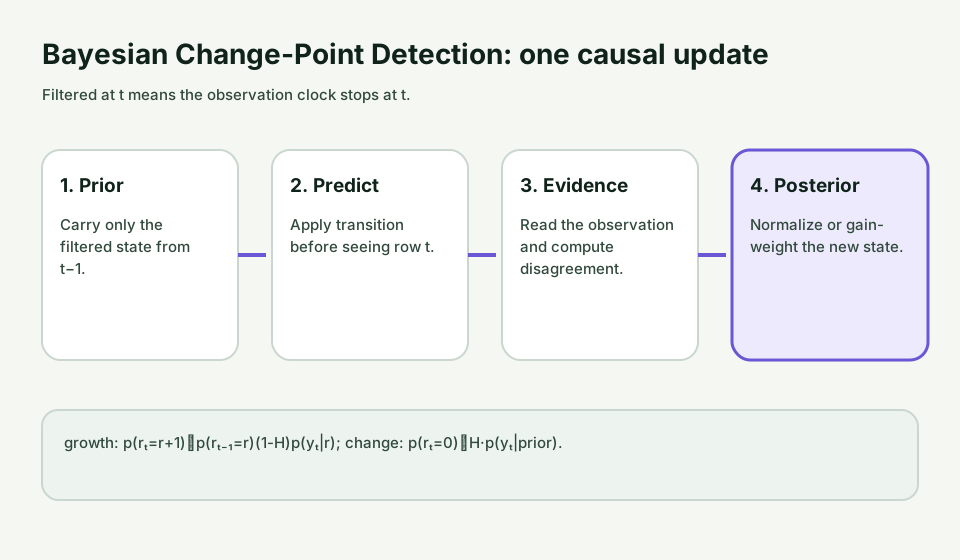
Calculation flow#
Bayesian Change-Point Detection Causal Update Flow
flowchart LR
    A["Filtered state at t-1"] --> B["Predict state at t"]
    B --> C["Read observation available at t"]
    C --> D["Compute evidence or innovation"]
    D --> E["Normalize or gain-weight update"]
    E --> F["Filtered state at t"]
    F --> G["Publish diagnostics"]
    F --> A
How it works#
This page states the contract — how to call it correctly. The article explains the concept: why it works, and where it breaks.
References#
- Bayesian Online Changepoint Detection — Ryan Prescott Adams and David J. C. MacKay
- Strictly Proper Scoring Rules, Prediction, and Estimation — Tilmann Gneiting and Adrian E. Raftery