Double Exponential Moving Average (DEMA)
Reduced Lag and Overshoot
Install and import#
npm install fintech-algorithmsimport { calculateDemaComponents } from "fintech-algorithms/technical-indicators/trend-smoothing/dema";Signature#
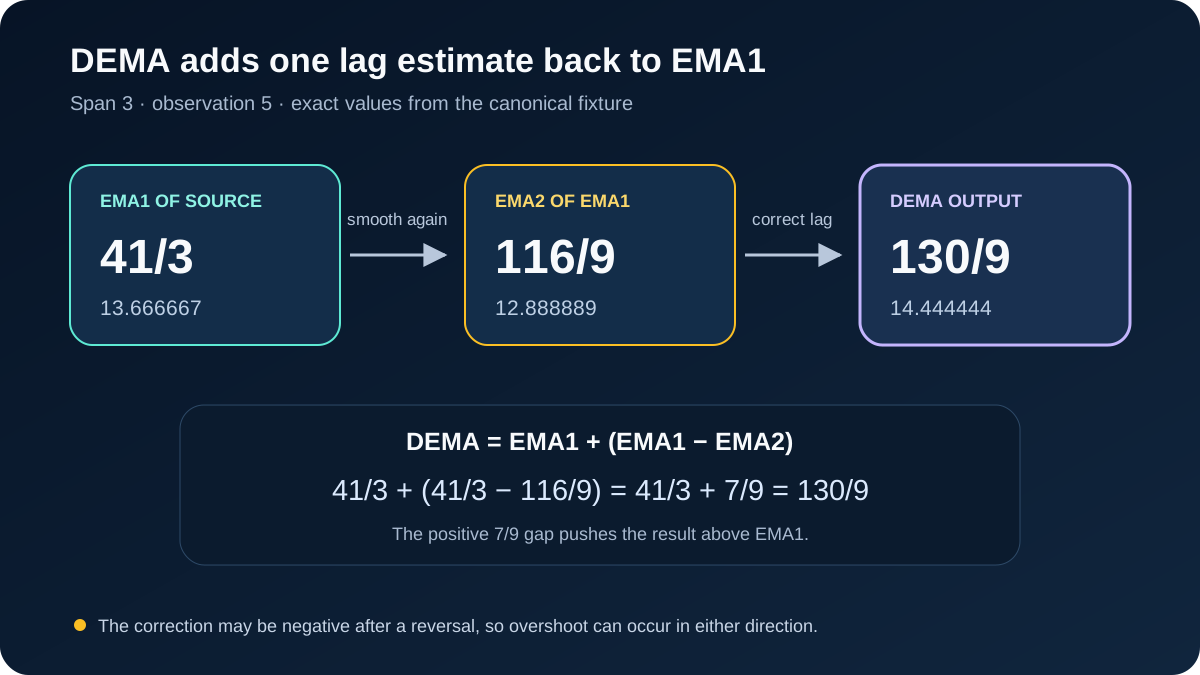
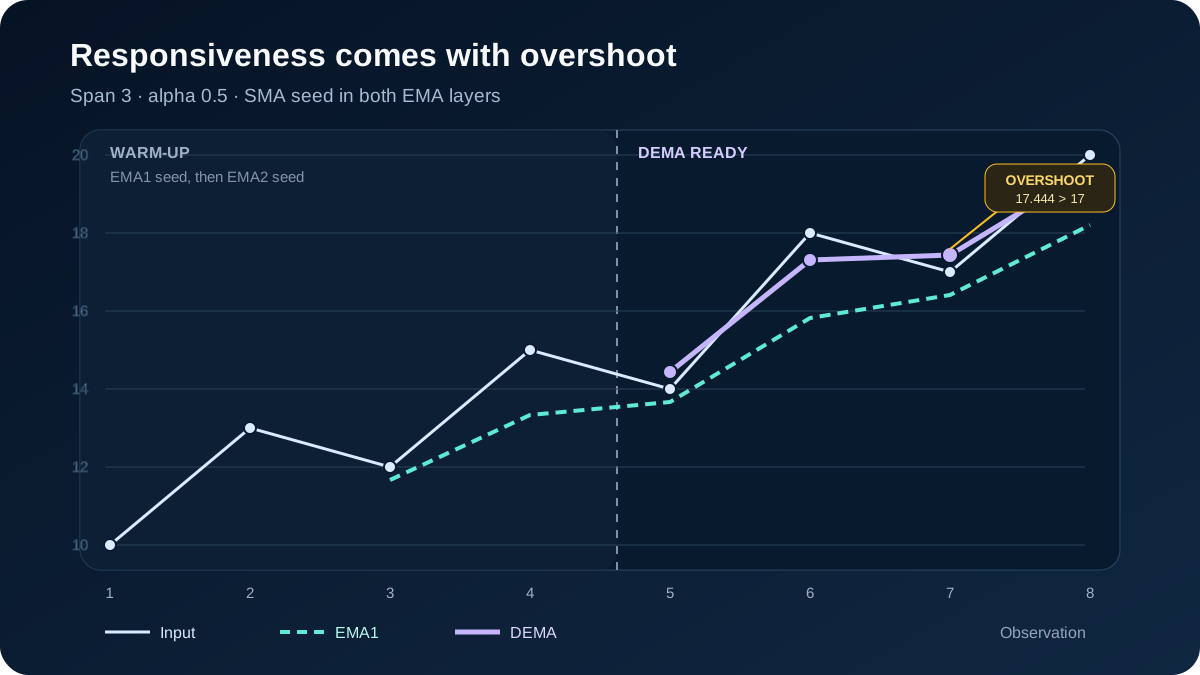
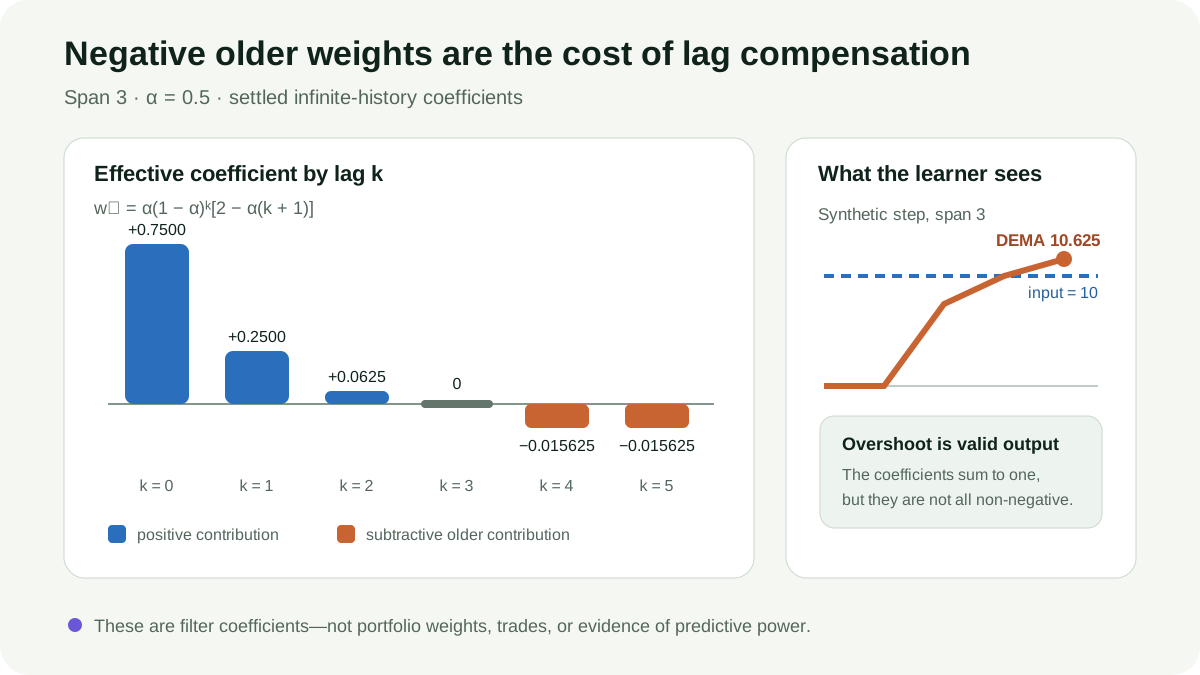
calculateDemaComponents(values, span)Double exponential moving average: 2 × EMA − EMA(EMA). Subtracting the second smoothing pass cancels most of the lag a single EMA introduces, at the cost of overshooting sharp reversals.
Parameters#
| Name | Type | Notes |
|---|---|---|
values | (number | null)[] | Observation series in chronological order, oldest first. nulls: propagate |
span | number | Smoothing span used for both EMA passes; the decay factor is 2 / (span + 1). min: 1 · integer: true |
Returns#
{ ema1, ema2, dema }[] · length same-as-input
One record per position carrying both intermediate EMAs alongside the result, so the cancellation can be checked rather than taken on trust.
Warm-up#
The first 2 × (span − 1) positions are null. Both passes must fill before the difference is defined.
Errors#
- When span < 1 or is not an integer — throws RangeError
Complexity: time O(n),
space O(n).
Worked example#
verified This is the worked example published in the article, replayed by the test suite on every run. The output cannot drift.
Input#
[10, 13, 12, 15, 14, 18]Showing 6 of 8 elements.
3Call#
calculateDemaComponents(values, span)Returns#
object with 4 fields: 4, 5, 6, 7
{
  "4": {
    "dema": 14.444444444444445,
    "status": "ready"
  },
  "5": {
    "dema": 17.305555555555557,
    "status": "ready"
  },
  "6": {
    "dema": 17.444444444444443,
    "status": "ready"
  },
  "7": {
    "dema": 19.618055555555557,
    "status": "ready"
  }
}
Other exports#
This module also exports
calculateDema, demaSteadyStateWeights. Every module additionally exports run as an alias of its
primary function, and a meta object carrying its catalog id, domain, family,
shape and article URL.
Diagrams#
Calculation flow#
DEMA calculation flow
flowchart LR
    A["Validate ordered finite value"] --> B["Update or seed EMA1"]
    B --> C{"EMA1 ready?"}
    C -- "No" --> D["Emit warming EMA1"]
    C -- "Yes" --> E["Feed EMA1 into EMA2"]
    E --> F{"EMA2 ready?"}
    F -- "No" --> G["Emit warming EMA2"]
    F -- "Yes" --> H["Calculate 2 × EMA1 − EMA2"]
    H --> I["Emit ready DEMA and component states"]
How it works#
This page states the contract — how to call it correctly. The article explains the concept: why it works, and where it breaks.
References#
- Smoothing Data With Faster Moving Averages — Patrick G. Mulloy; *Technical Analysis of Stocks & Commodities*
- TA-Lib DEMA definition — TA-Lib project
- Follow-up discussion of equivalent period — Letter published by *Technical Analysis of Stocks & Commodities*
- EMA foundation package — The Fintech Builder
- Evidence and design reconciliation
- Historical-case publication boundary