Logistic PD Model
Install and import#
npm install fintech-algorithmsimport { logisticPdModel } from "fintech-algorithms/credit-risk-and-default/probability-of-default/logistic-pd-model";Signature#
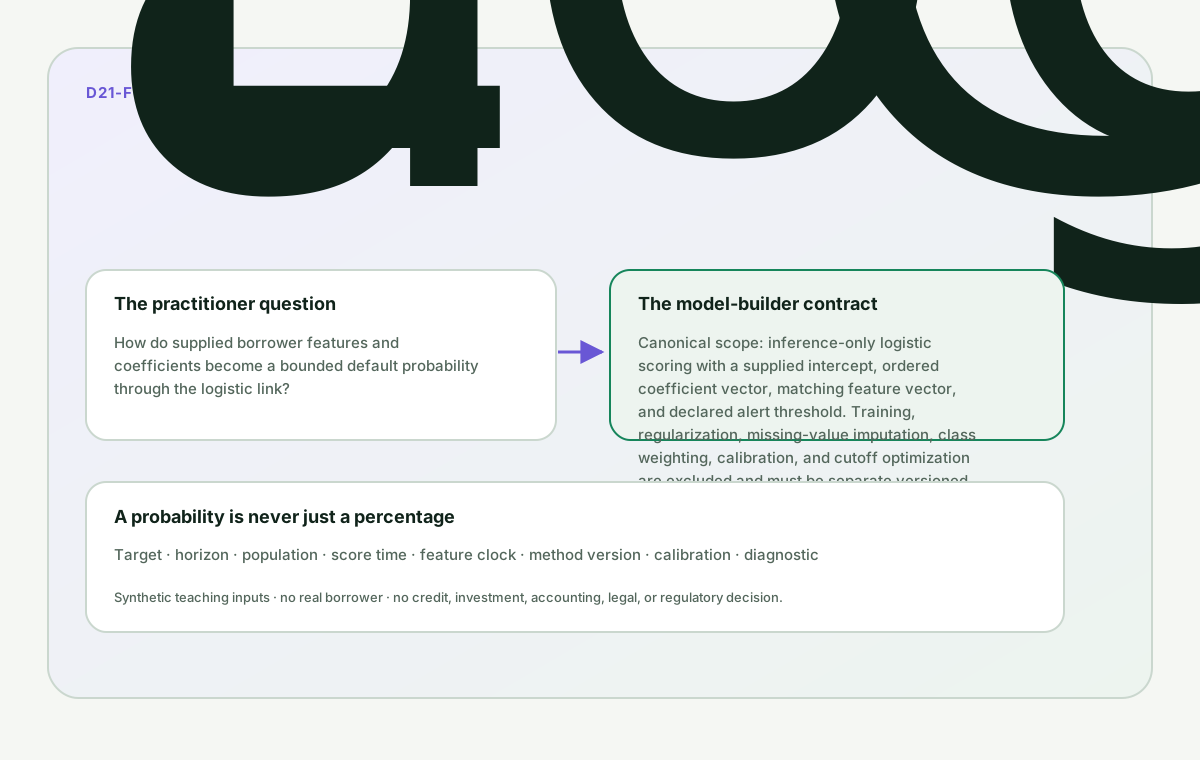
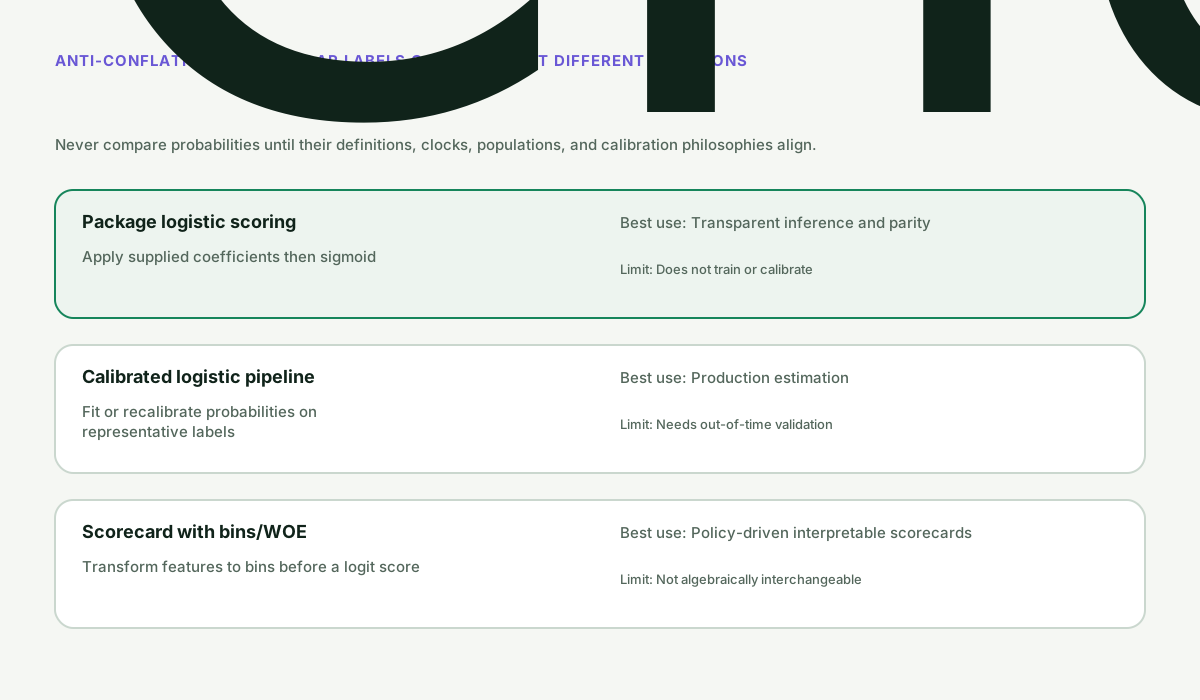
logisticPdModel(intercept, coefficients, features, alert_threshold)Applies a logistic link to a supplied linear credit score and reports the resulting default probability alongside the per-feature contributions that produced it and its position relative to an alert threshold.
Parameters#
| Name | Type | Notes |
|---|---|---|
intercept | number | The constant term of the already-fitted linear score. This function does not fit anything; the intercept and coefficients come from the caller. |
coefficients | number[] | The fitted coefficient for each feature, in the same order as features. Must hold at least one finite number.min_length: 1 · same_length_as: features |
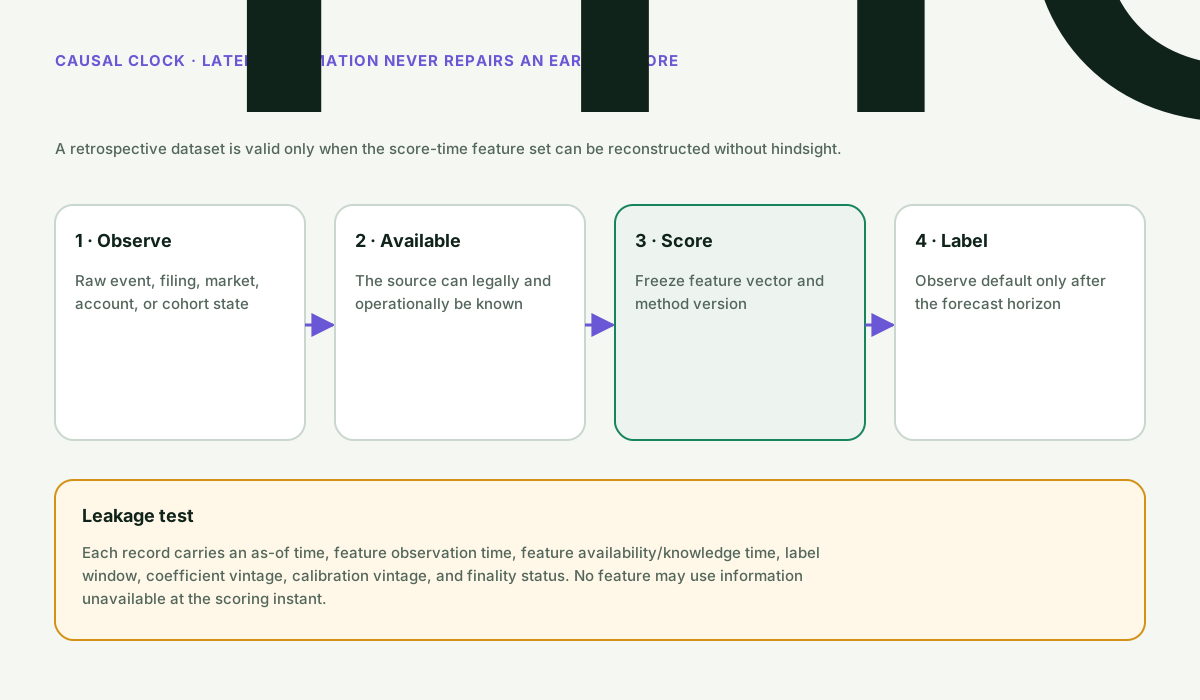
features | number[] | The borrower's feature values, aligned position by position with coefficients.min_length: 1 |
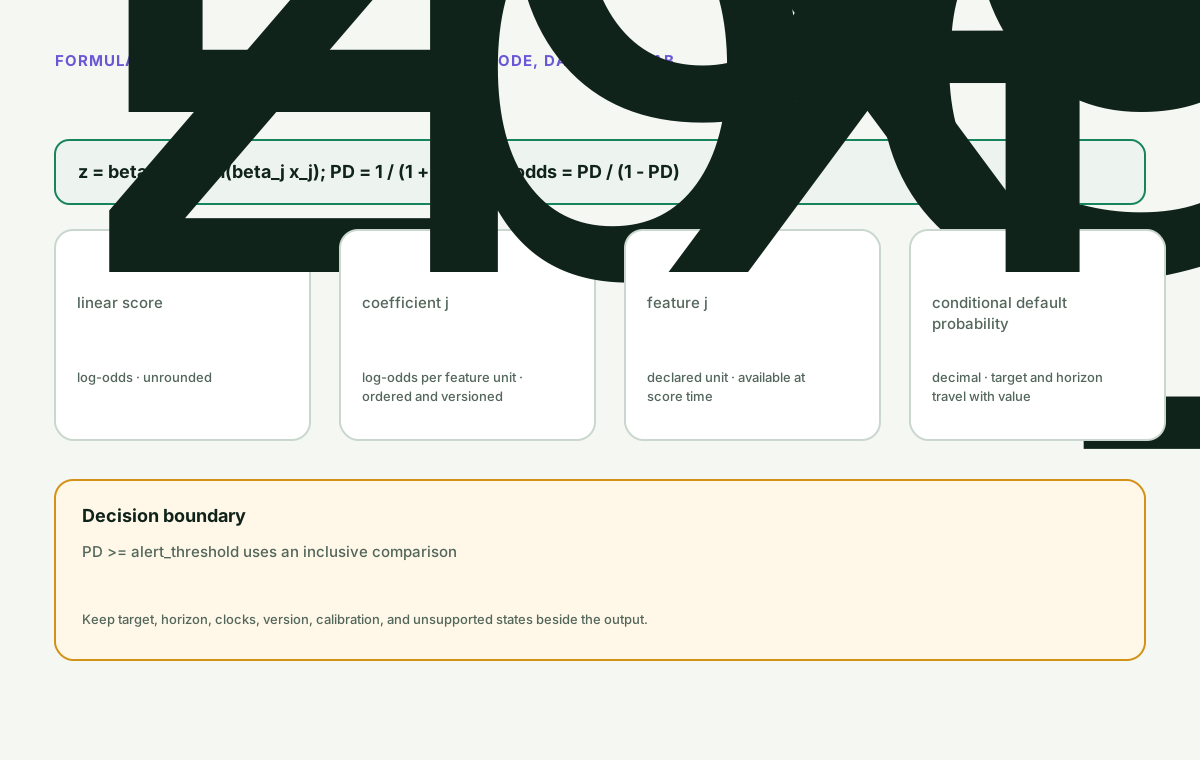
alert_threshold | number | The probability at or above which the borrower is flagged. Compared with the computed probability using a greater-than-or-equal test. exclusive_min: 0 · exclusive_max: 1 |
Returns#
{ linear_score: number; feature_contributions: number[]; probability_of_default: number; survival_probability: number; odds_of_default: number; alert_threshold: number; state: string; reason: string }
linear_score is the intercept plus the summed contributions, and feature_contributions holds each coefficient times its feature. probability_of_default is the logistic transform of the score, survival_probability its complement, and odds_of_default the ratio of the two. state is at-or-above-alert or below-alert, and reason records that the score was supplied rather than fitted here.
Errors#
- When any argument is not a finite number — throws Error
- When coefficients or features is not an array of at least one finite number — throws Error
- When coefficients and features have different lengths — throws Error
- When alert_threshold is not strictly between zero and one — throws Error
Complexity: time O(n),
space O(n).
Worked example#
verified This is the worked example published in the article, replayed by the test suite on every run. The output cannot drift.
Input#
-2.4[0.8, -0.6, 1.1][0.5, -0.4, 0.2]0.2Call#
logisticPdModel(intercept, coefficients, features, alert_threshold)Returns#
object with 8 fields: linear_score, feature_contributions, probability_of_default, survival_probability, odds_of_default, alert_threshold, state, reason
{
  "linear_score": -1.54,
  "feature_contributions": [0.4, 0.24, 0.22],
  "probability_of_default": 0.176535274779,
  "survival_probability": 0.823464725221,
  "odds_of_default": 0.214381101427,
  "alert_threshold": 0.2,
  "state": "below-alert",
  "reason": "supplied-logit-score-transformed"
}
Other exports#
This module also exports
probitPdModel, throughTheCyclePd, pointInTimePd, mertonDistanceToDefault, campbellHilscherSzilagyiDistressProbability, bharathShumwayNaiveDistanceToDefault, calculate. Every module additionally exports run as an alias of its
primary function, and a meta object carrying its catalog id, domain, family,
shape and article URL.
Diagrams#

Calculation flow#
Logistic PD Model calculation flow
flowchart LR
    S1["Validate feature identity order units availability tim"]
    S2["Multiply each feature by its matching coefficient"]
    S3["Add the intercept to obtain the linear logodds score"]
    S4["Apply a numerically stable sigmoid"]
    S5["Return probability survival odds contribution trace an"]
    S1 --> S2
    S2 --> S3
    S3 --> S4
    S4 --> S5
    S5 --> D{"PD  alertthreshold uses an inclusive comparison"}
    D --> O["probability_of_default + diagnostics"]
    O --> A["Audit: probabilityofdefault  survivalprobability  1 within tolera"]
How it works#
This page states the contract — how to call it correctly. The article explains the concept: why it works, and where it breaks.
References#
- NIST/SEMATECH glossary: logistic function — National Institute of Standards and Technology
- Financial Ratios and the Probabilistic Prediction of Bankruptcy — James A. Ohlson
- IRB approach: minimum requirements to use IRB approach — Basel Committee on Banking Supervision
- Supervisory Guidance on Model Risk Management — OCC, Board of Governors of the Federal Reserve System, and FDIC
- Evidence boundary