STL Decomposition
Install and import#
npm install fintech-algorithmsimport { stlDecompose } from "fintech-algorithms/statistical-time-series/decomposition-and-cycles/stl-decomposition";Signature#
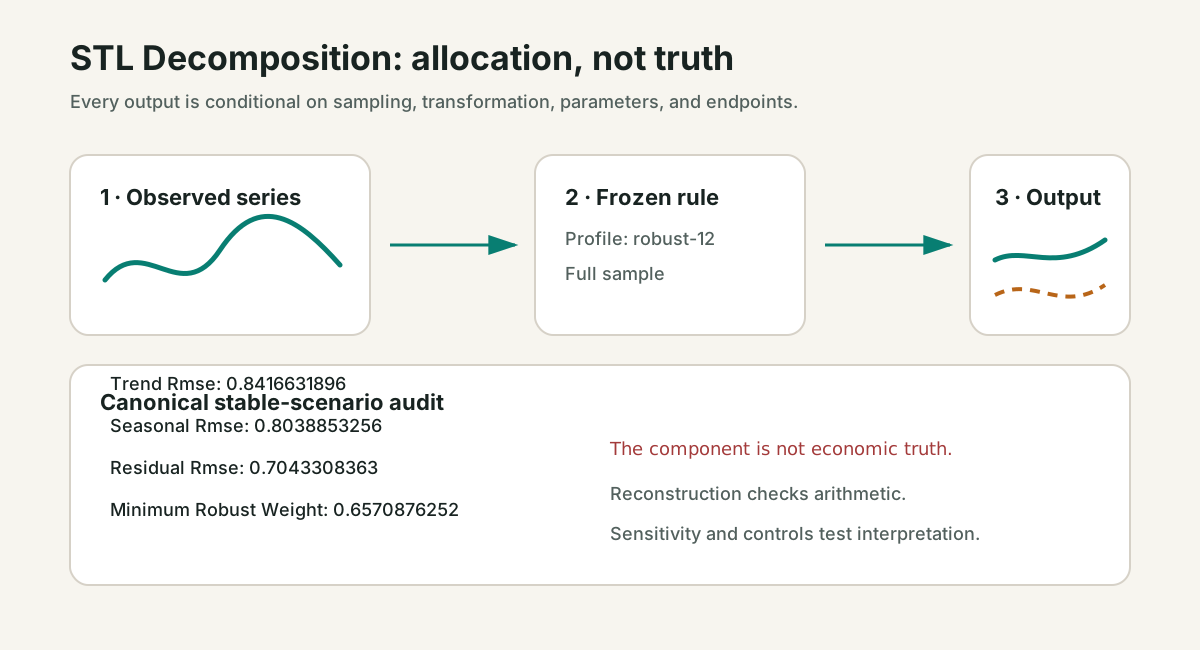
stlDecompose(values, period, seasonalWindow, trendWindow, robustIterations)Seasonal-trend decomposition by loess: splits a series into seasonal, trend and remainder. Unlike a fixed seasonal index it lets the seasonal shape evolve, which is why it survives series where the pattern drifts.
Parameters#
| Name | Type | Notes |
|---|---|---|
values | number[] | Observation series, chronological. |
period | number | Seasonal period — 12 for monthly, 5 for a trading week. min: 1 · integer: true |
seasonalWindow | number | Loess span for the seasonal component. Larger holds the seasonal shape more constant across cycles. min: 1 · integer: true |
trendWindow | number | Loess span for the trend. min: 1 · integer: true |
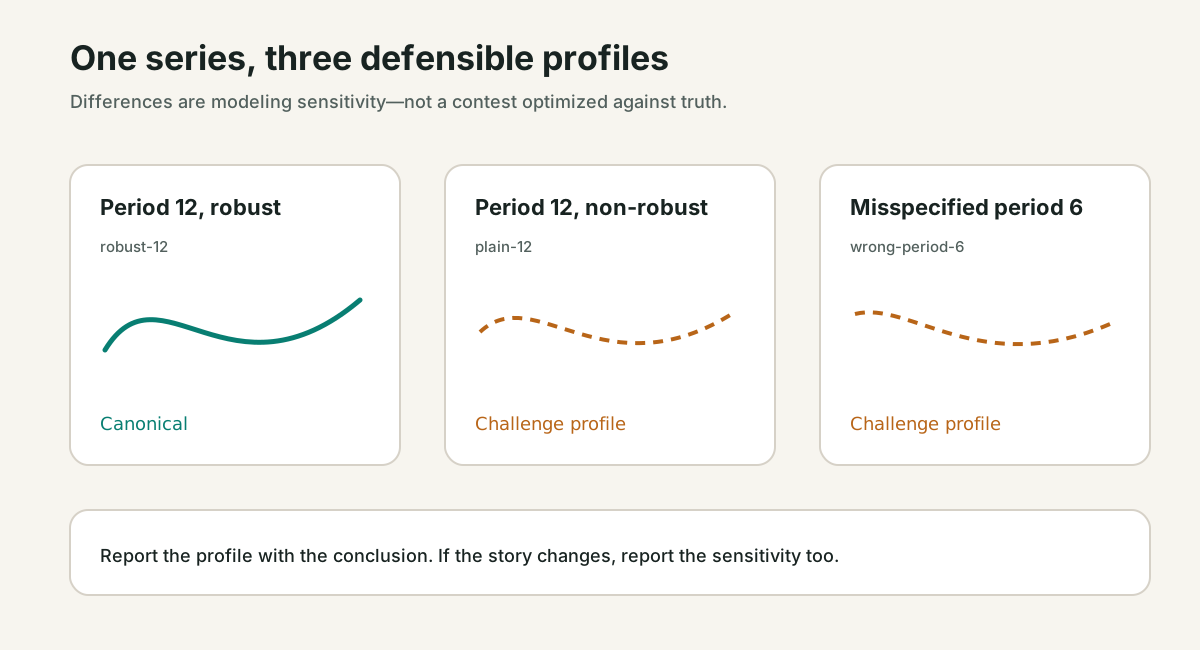
robustIterations | number | Robustness passes that downweight outliers. Zero gives the non-robust fit. min: 0 · integer: true |
Returns#
{ seasonal, trend, remainder, … }
The three components, which sum back to the original series.
Errors#
- When the series is shorter than two full periods — throws
Complexity: time O(n × window × iterations),
space O(n).
Worked example#
executed Captured by running this function on the input its own test provides. Real output of real code — but not asserted against a published figure.
Input#
[
  100.0901805654,
  101.3367333472,
  102.4083163971,
  102.9128416721,
  103.198587938,
  102.4311805579
]
Showing 6 of 192 elements.
127192Call#
stlDecompose(values, period, seasonalWindow, trendWindow, robustIterations)Returns#
object with 10 fields: observed, trend, seasonal, residual, robust_weights, period, seasonal_window, trend_window, …
{
  "observed": [
    100.0901805654,
    101.3367333472,
    102.4083163971,
    102.9128416721,
    103.198587938,
    102.4311805579
  ],
  "trend": [
    101.80653184631831,
    101.74335719017421,
    101.68290299767973,
    101.62622211934938,
    101.5743610938178,
    101.52818917545937
  ],
  "seasonal": [
    -1.675059270552302,
    -0.37793707310334934,
    0.5876119710645483,
    1.128755113942449,
    1.414763613255315,
    0.6984276428857473
  ],
  "residual": [
    -0.041292010366001275,
    -0.028686769870863493,
    0.13780142835571352,
    0.15786443880817314,
    0.20946323092688846,
    0.20456373955488483
  ],
  "robust_weights": [
    0.9997399824592482,
    0.9998384208965301,
    0.9966750447871305,
    0.9957359792237003,
    0.9926684141414982,
    0.9930448769484919
  ],
  "period": 12,
  "seasonal_window": 7,
  "trend_window": 19,
  "robust_iterations": 2,
  "reconstruction_max_error": 0
}
Other exports#
This module also exports
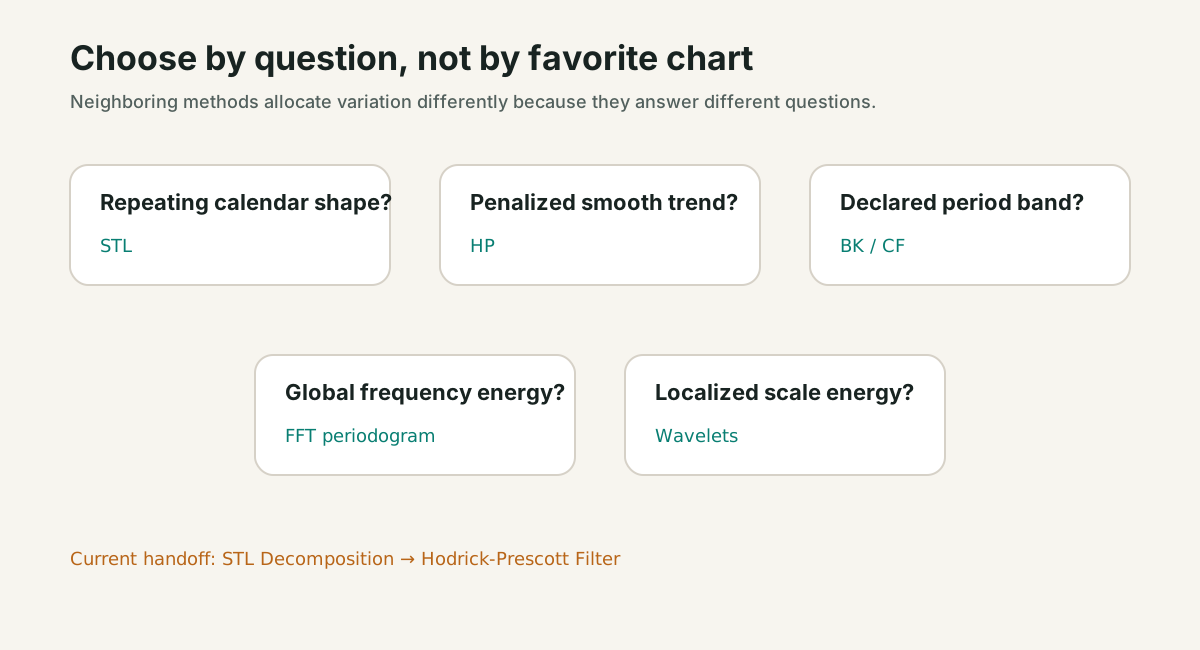
hpFilter, bkFilter, cfFilter, fftPeriodogram, haarWavelet, runTopic. Every module additionally exports run as an alias of its
primary function, and a meta object carrying its catalog id, domain, family,
shape and article URL.
Diagrams#
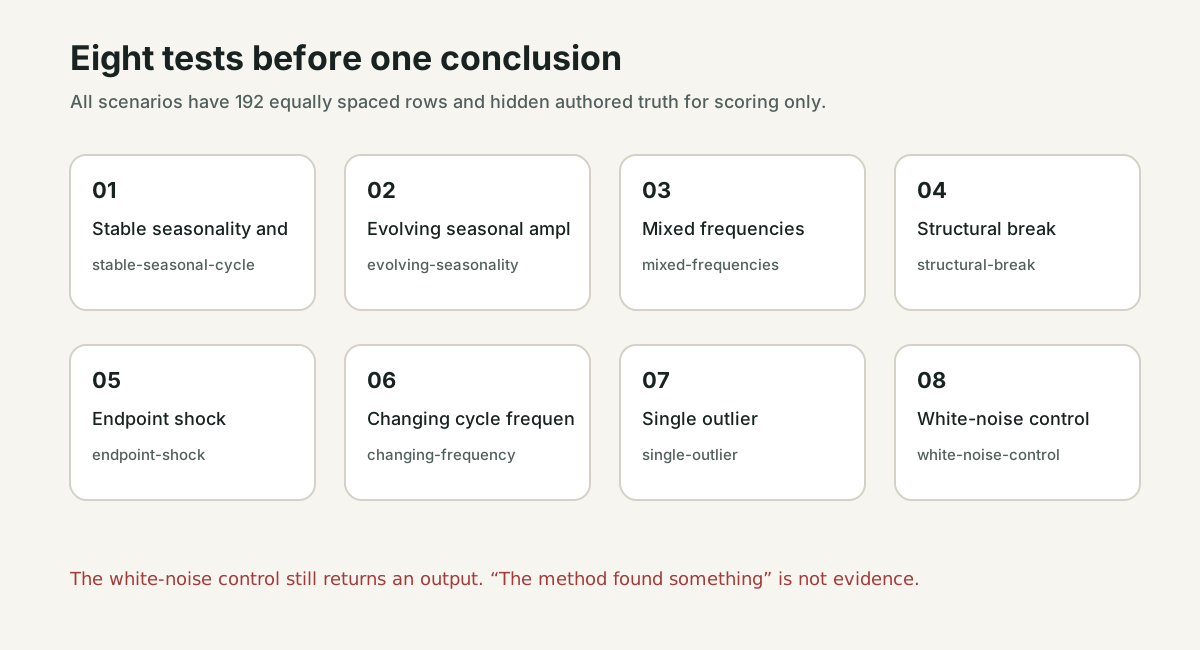
Calculation flow#
STL Decomposition — Audit Flow
flowchart LR
    A["Finite evenly sampled values"] --> B["Freeze transformation and profile"]
    B --> C["Seasonal-position LOESS ↔ trend LOESS"]
    C --> D["Component or power output"]
    D --> E["Reconstruction / accounting check"]
    E --> F["Endpoint and revision audit"]
    F --> G["Profile sensitivity"]
    G --> H["White-noise control"]
    H --> I{"Decision use justified?"}
    I -->|No| J["Keep as descriptive diagnostic"]
    I -->|Yes| K["Rebuild causally and test out of sample"]
How it works#
This page states the contract — how to call it correctly. The article explains the concept: why it works, and where it breaks.
References#
- Evidence table
- Source records
- Evidence policy
- Version notes