Impermanent-Loss Calculation
Install and import#
npm install fintech-algorithmsimport { impermanentLoss } from "fintech-algorithms/digital-assets-and-on-chain-finance/liquidity-and-liquidation/impermanent-loss-calculation";Signature#
impermanentLoss(data, config)Value lost by providing liquidity rather than simply holding the two assets. Called impermanent because it reverses if the price returns — which it frequently does not, and the loss is realised on withdrawal.
Parameters#
| Name | Type | Notes |
|---|---|---|
data | PositionInput | Position state — balances, prices, and the protocol parameters the calculation depends on. |
config | ProtocolConfig | Protocol-specific thresholds and factors. These differ per protocol and per asset, so a figure computed under the wrong config is confidently wrong. |
Returns#
{ status, value, components, diagnostics }
The result with every component, so a position's state can be reconciled against the protocol's own interface.
Errors#
- When a required protocol parameter is missing — reported as a status rather than thrown
Complexity: time O(assets),
space O(assets).
Worked example#
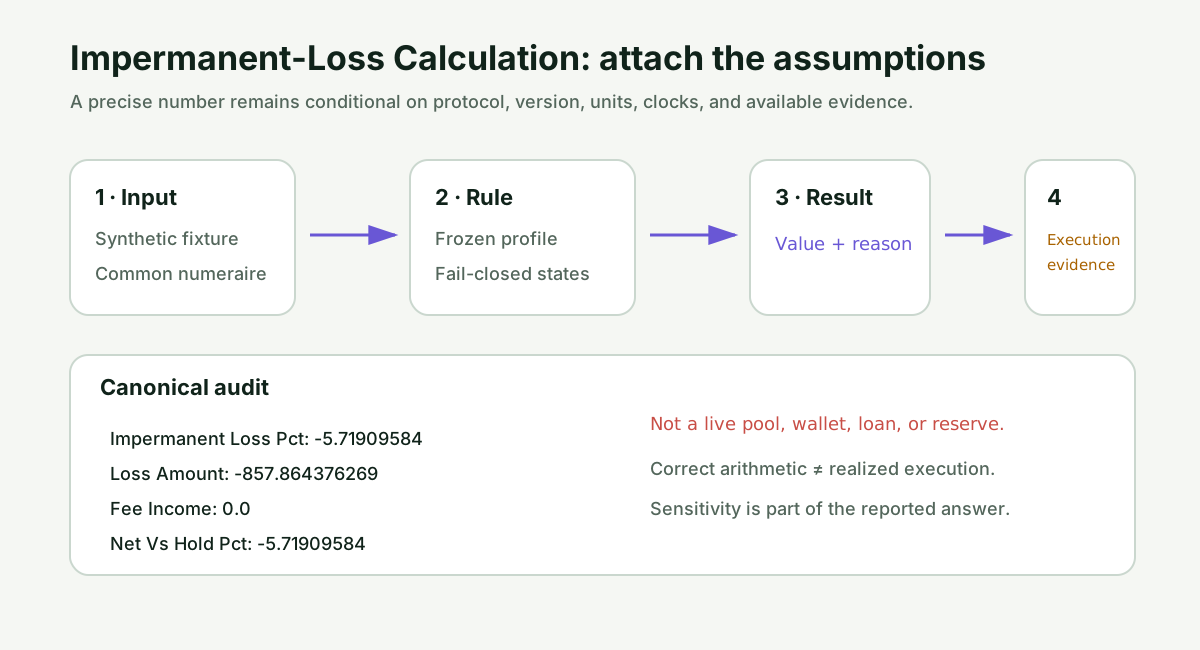
executed Captured by running this function on the input its own test provides. Real output of real code — but not asserted against a published figure.
Input#
{
  "initial_pool_value": 10000,
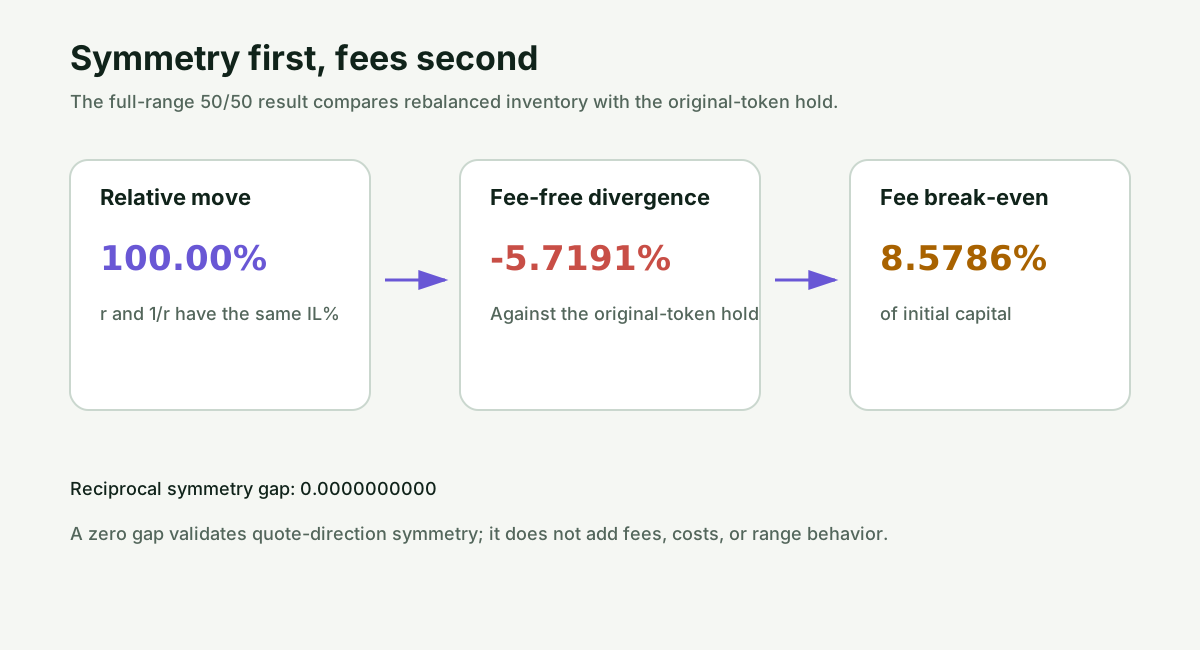
  "price_ratio": 2
}{
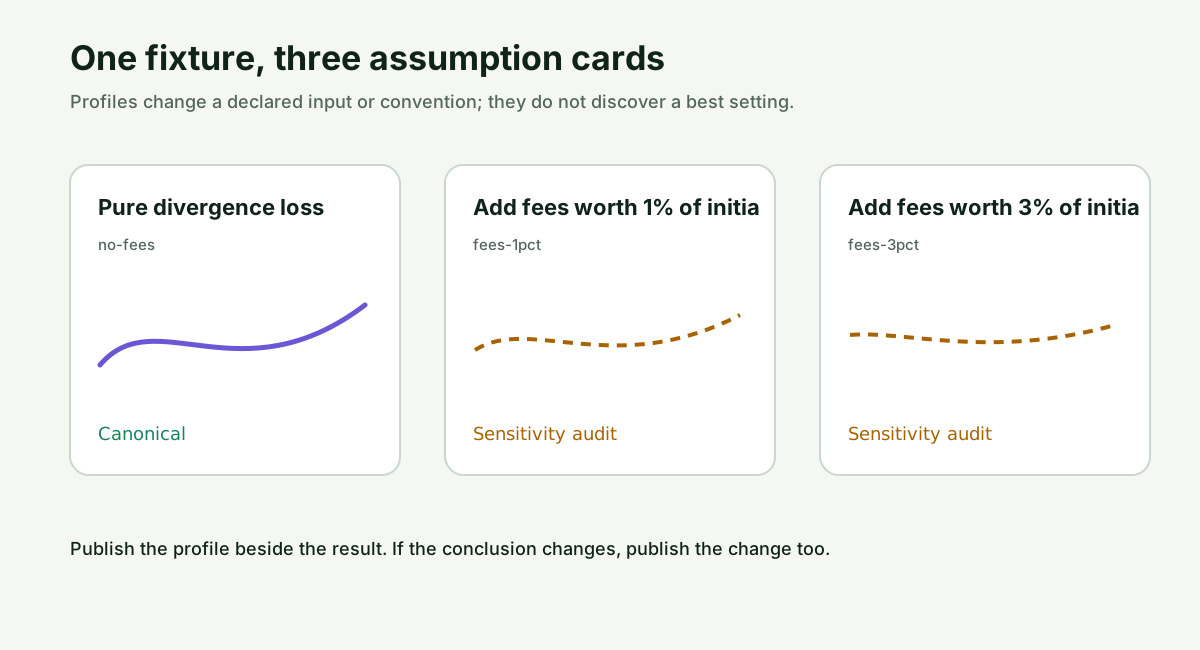
"fee_return_fraction": 0
}Call#
impermanentLoss(data, config)Returns#
object with 10 fields: initial_pool_value, price_ratio, hold_value, pool_value_excluding_fees, impermanent_loss_fraction, impermanent_loss_amount, fee_income, net_pool_value, …
{
  "initial_pool_value": 10000,
  "price_ratio": 2,
  "hold_value": 15000,
  "pool_value_excluding_fees": 14142.135623731,
  "impermanent_loss_fraction": -0.0571909584,
  "impermanent_loss_amount": -857.864376269,
  "fee_income": 0,
  "net_pool_value": 14142.135623731,
  "net_vs_hold_fraction": -0.0571909584,
  "trace": [
    {
      "price_ratio": 0.2,
      "impermanent_loss": -0.2546440075,
      "hold_value": 6000,
      "pool_value": 4472.1359549996,
      "net_pool_value": 4472.1359549996
    },
    {
      "price_ratio": 0.2027004653,
      "impermanent_loss": -0.2513136942,
      "hold_value": 6013.5023266882,
      "pool_value": 4502.2268416601,
      "net_pool_value": 4502.2268416601
    },
    {
      "price_ratio": 0.2054373932,
      "impermanent_loss": -0.2479874573,
      "hold_value": 6027.1869662025,
      "pool_value": 4532.5201956582,
      "net_pool_value": 4532.5201956582
    }
  ]
}
Other exports#
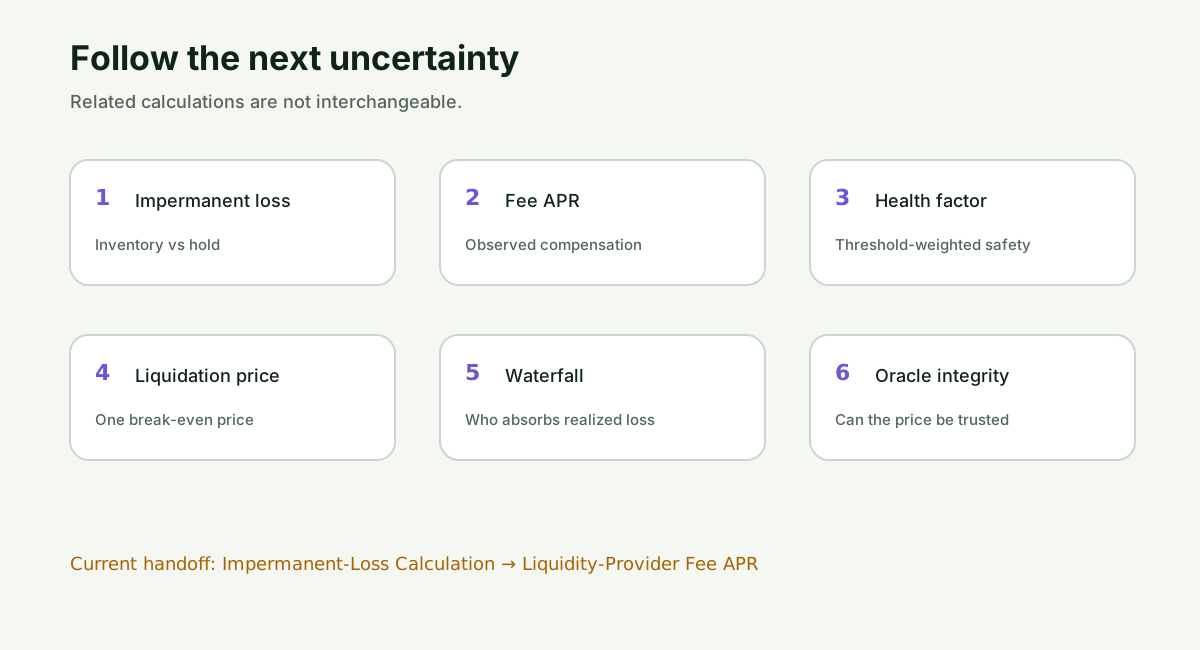
This module also exports
feeApr, healthFactor, liquidationPrice, liquidationWaterfall, runTopic. Every module additionally exports run as an alias of its
primary function, and a meta object carrying its catalog id, domain, family,
shape and article URL.
Diagrams#
Calculation flow#
Impermanent-Loss Calculation — Calculation and Decision Flow
flowchart LR
    A["Identify protocol, version, chain, and valuation time"] --> B["Validate finite inputs and common units"]
    B --> C["Compare constant-product LP value with initial-token hold"]
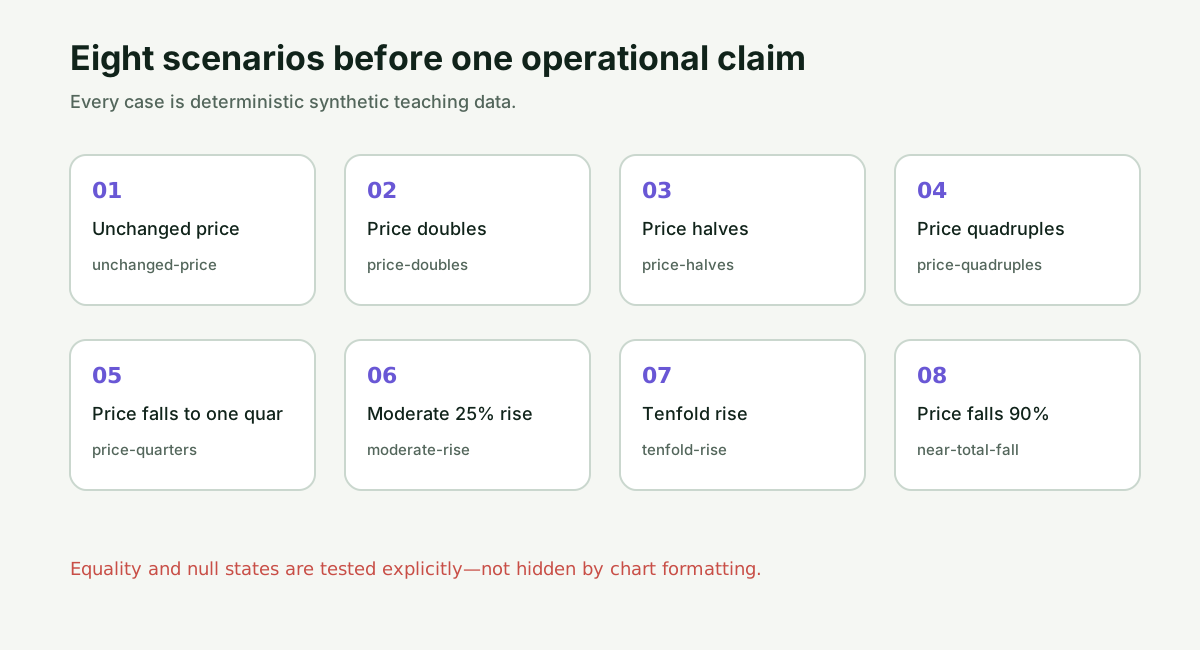
    C --> D["Return value plus state/reason"]
    D --> E["Check equality, zero, and unsupported states"]
    E --> F["Compare sensitivity profiles"]
    F --> G{"Operational evidence complete?"}
    G -->|No| H["Keep as synthetic or descriptive calculation"]
    G -->|Yes| I["Add live source, oracle, execution, and finality controls"]
How it works#
This page states the contract — how to call it correctly. The article explains the concept: why it works, and where it breaks.
References#
- Uniswap v2 Core — Uniswap; Hayden Adams, Noah Zinsmeister, and Dan Robinson
- Uniswap v3 Core — Uniswap; Hayden Adams, Noah Zinsmeister, Moody Salem, River Keefer, and Dan Robinson
- An Analysis of Uniswap Markets — Authors via arXiv; Guillermo Angeris, Hsien-Tang Kao, Rei Chiang, Charlie Noyes, and Tarun Chitra
- UNISWAP: Impermanent Loss and Risk Profile of a Liquidity Provider — Authors via arXiv; Andreas Aigner and Gurvinder Dhaliwal
- Generalizing Impermanent Loss on Decentralized Exchanges with Constant Function Market Makers — Authors via arXiv; Rohan Tangri, Peter Yatsyshin, Elisabeth A. Duijnstee, and Danilo Mandic
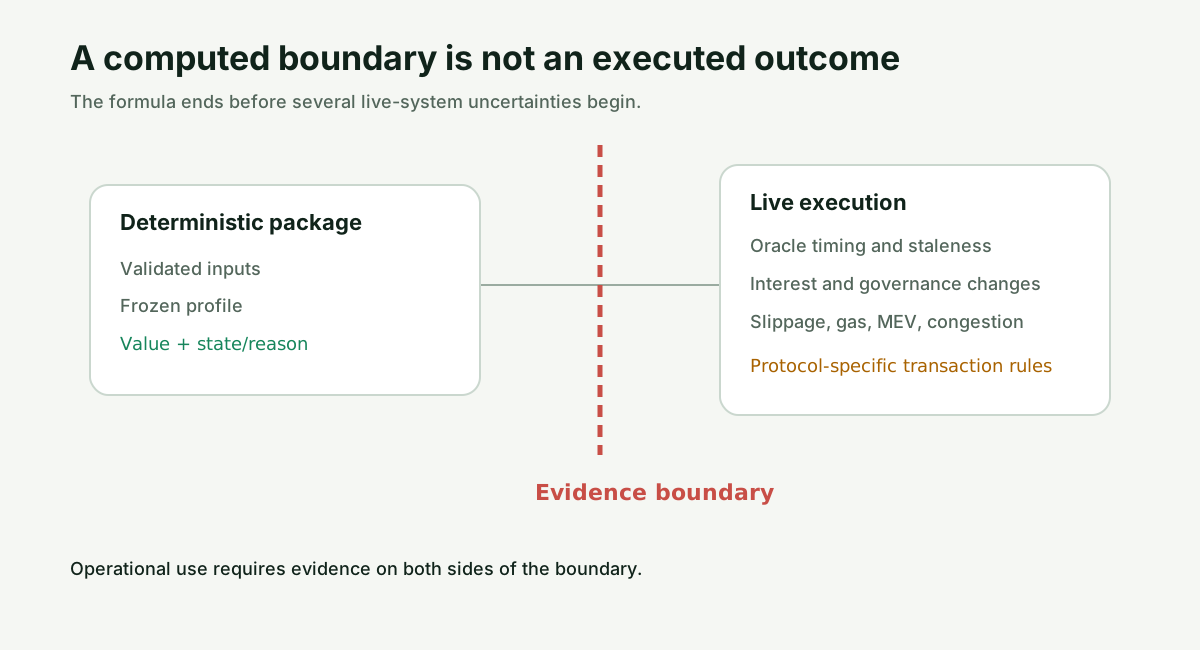
- Evidence boundary