High-Low Index
Install and import#
npm install fintech-algorithmsimport { calculate } from "fintech-algorithms/market-breadth-and-internals/high-low-and-trend-breadth/high-low-index";Signature#
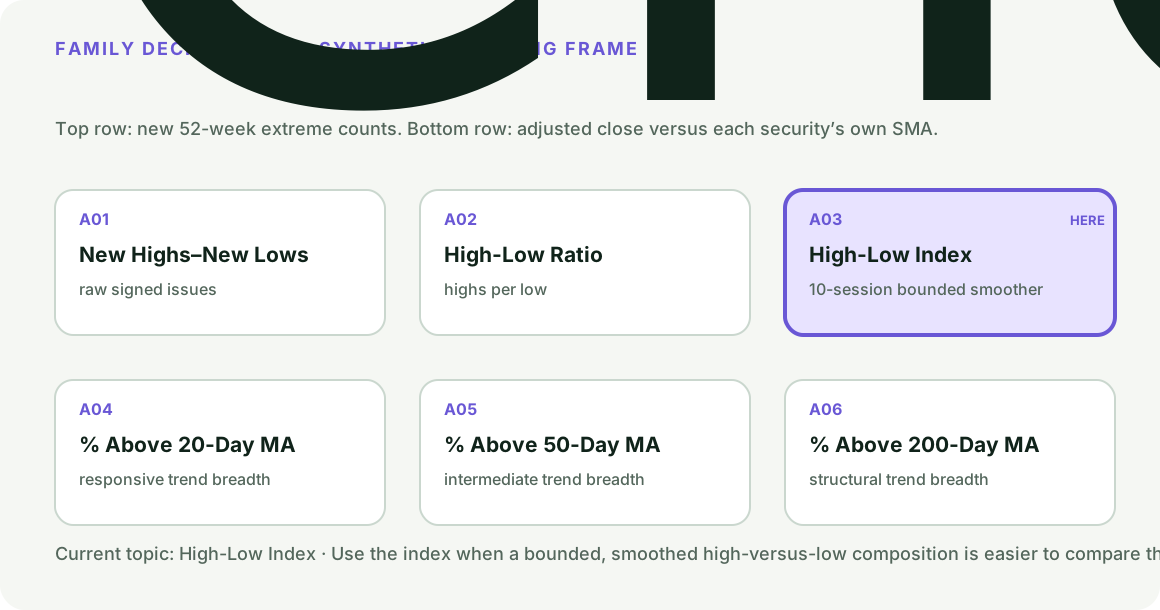
calculate(records, decisionTime)A moving average of the high–low ratio, which turns a noisy daily reading into something with a usable trend.
Parameters#
| Name | Type | Notes |
|---|---|---|
records | Record[] | Session records with evidence state. |
decisionTime | string | Point-in-time bound. |
Returns#
Row[] · length same-as-input
The smoothed index per session.
Errors#
- When insufficient history for the smoothing window — reported per row rather than thrown
Complexity: time O(records),
space O(sessions).
Worked example#
verified This is the worked example published in the article, replayed by the test suite on every run. The output cannot drift.
Input#
[
  {
    "session_date": "2026-01-06",
    "available_at": "2026-01-06T21:30:00Z",
    "source_evidence_state": "ready",
    "venue_id": "SYNTH-X",
    "universe_id": "SYNTH-HIGH-LOW-12",
    "methodology_id": "synthetic-high-low-v1",
    "lookback_sessions": 252,
    "new_highs": 7,
    "new_lows": 5,
    "eligible_issues": 12,
    "overlap_issues": 0
  },
  {
    "session_date": "2026-01-07",
    "available_at": "2026-01-07T21:30:00Z",
    "source_evidence_state": "ready",
    "venue_id": "SYNTH-X",
    "universe_id": "SYNTH-HIGH-LOW-12",
    "methodology_id": "synthetic-high-low-v1",
    "lookback_sessions": 252,
    "new_highs": 7,
    "new_lows": 5,
    "eligible_issues": 12,
    "overlap_issues": 0
  },
  {
    "session_date": "2026-01-08",
    "available_at": "2026-01-08T21:30:00Z",
    "source_evidence_state": "ready",
    "venue_id": "SYNTH-X",
    "universe_id": "SYNTH-HIGH-LOW-12",
    "methodology_id": "synthetic-high-low-v1",
    "lookback_sessions": 252,
    "new_highs": 7,
    "new_lows": 5,
    "eligible_issues": 12,
    "overlap_issues": 0
  }
]
Showing 3 of 10 elements.
"2026-03-01T00:00:00Z"Call#
calculate(records, decisionTime)Returns#
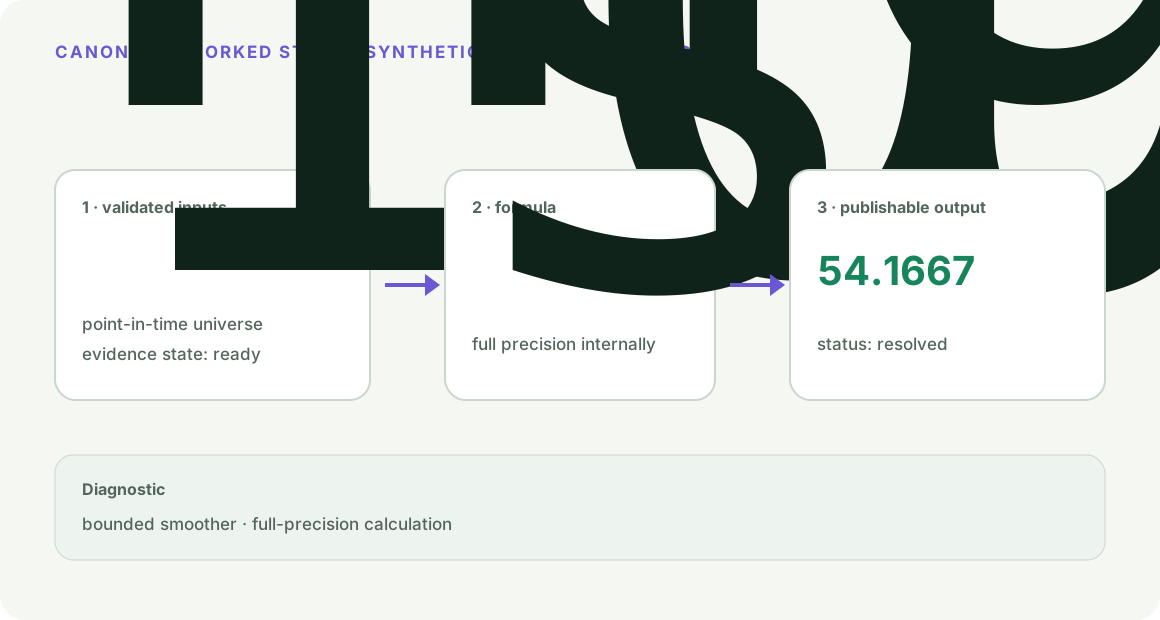
object with 1 field: 9
{
  "9": {
    "session_date": "2026-01-15",
    "new_highs": 2,
    "new_lows": 10,
    "value": 54.166666666666664,
    "status": "resolved",
    "reason": null
  }
}Diagrams#
Calculation flow#
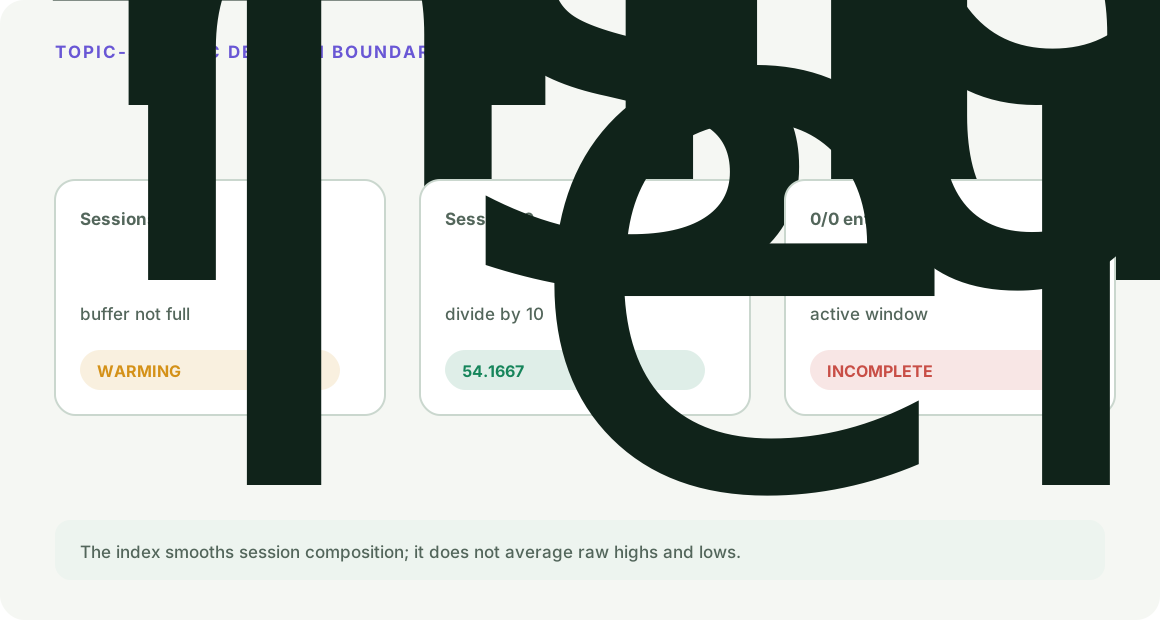
Topic decision flow — High-Low Index
flowchart LR
    A["Daily NH and NL"] --> B{"NH + NL > 0?"}
    B -->|"No"| I["Undefined RHP; contaminate active window"]
    B -->|"Yes"| C["RHP = 100 × NH / (NH + NL)"]
    C --> D["Append to rolling tray"]
    D --> E{"Ten defined values?"}
    E -->|"No"| W["Warming"]
    E -->|"Yes"| F["Mean of ten RHP values"]
    F --> G["Publish percentage points"]
How it works#
This page states the contract — how to call it correctly. The article explains the concept: why it works, and where it breaks.
References#
- Nasdaq Fundamental Data
- How High/Low and New High/New Low Are Calculated
- High-Low Index
- Rolling Mean Documentation
- Evidence decision