Index Replication-Cost Estimator
Install and import#
npm install fintech-algorithmsimport { calculate } from "fintech-algorithms/index-and-benchmark-engineering/governance-and-maintenance/index-replication-cost-estimator";Signature#
calculate(data)Estimates what a rebalance costs to implement — spread, market impact and commission. This is where the rulebook meets reality: a screen that looks clean on paper can be expensive to track.
Parameters#
| Name | Type | Notes |
|---|---|---|
data | { trades: Trade[] } | Each trade carries size, spread and the liquidity measures the impact model consumes. |
Returns#
{ results, estimatedCost, costBpsOnGrossTrade }
Per-trade costs plus the total in basis points of gross traded value, which is the unit these are compared in.
Errors#
- When a trade is missing a liquidity input the model requires — recorded on the result rather than thrown
Complexity: time O(n),
space O(n).
Worked example#
verified This is the worked example published in the article, replayed by the test suite on every run. The output cannot drift.
Input#
{
  "trades": [
    {
      "id": "A",
      "tradeValue": 12000000,
      "spreadBps": 6,
      "impactCoefficientBps": 18,
      "participation": 0.08
    },
    {
      "id": "B",
      "tradeValue": -7000000,
      "spreadBps": 10,
      "impactCoefficientBps": 25,
      "participation": 0.12
    },
    {
      "id": "C",
      "tradeValue": 3500000,
      "spreadBps": 14,
      "impactCoefficientBps": 30,
      "participation": 0.18
    }
  ]
}Call#
calculate(data)Returns#
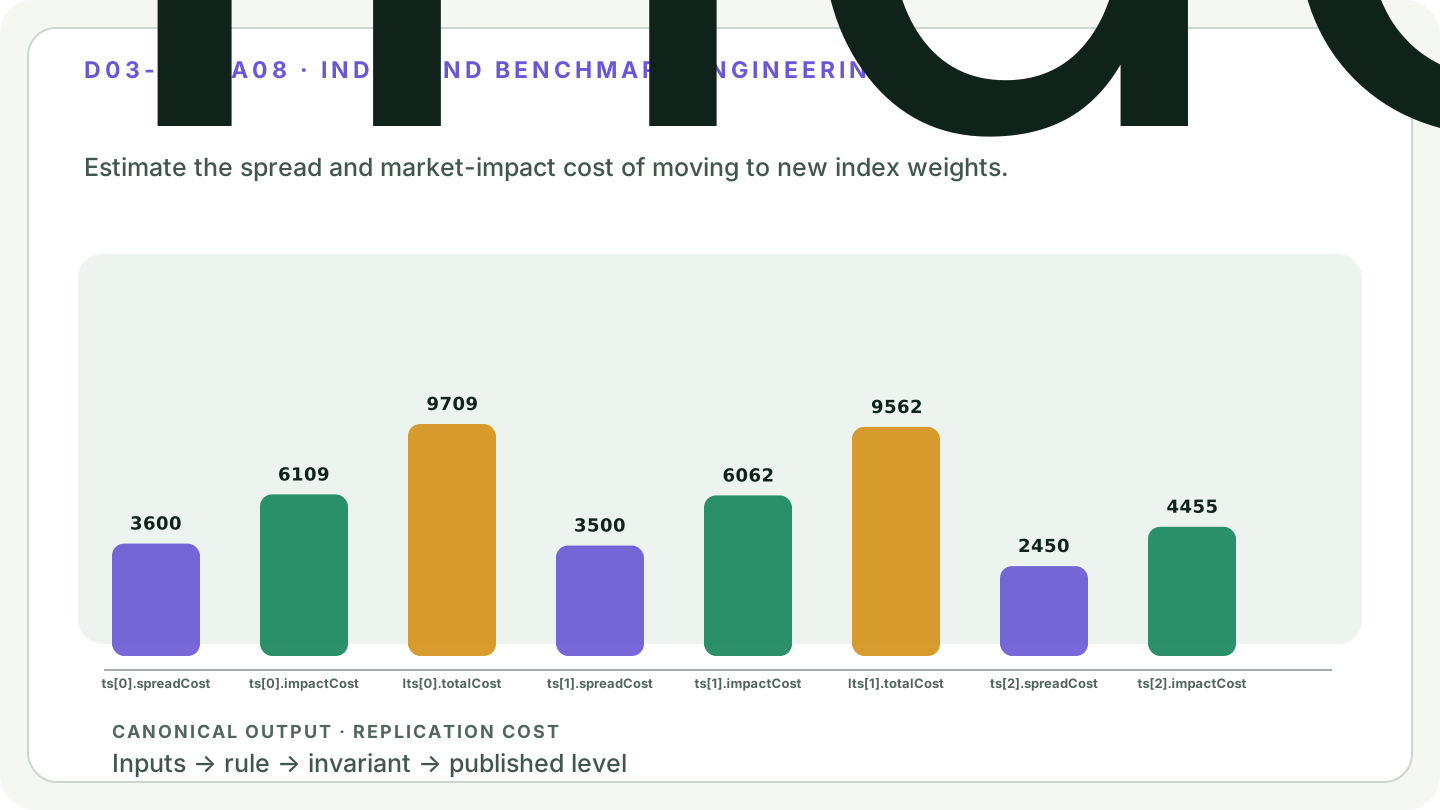
object with 3 fields: results, estimatedCost, costBpsOnGrossTrade
{
  "results": [
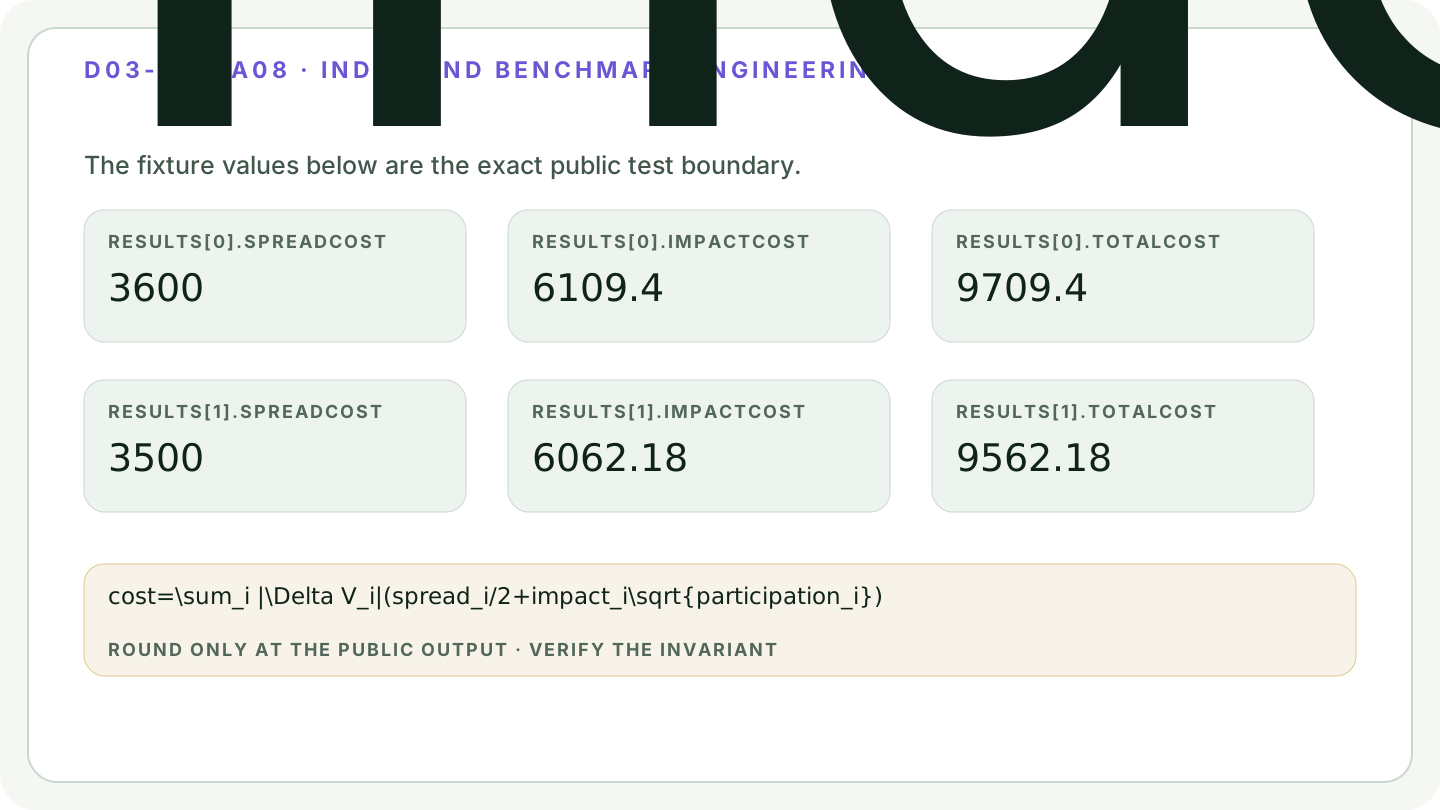
    {
      "id": "A",
      "spreadCost": 3600,
      "impactCost": 6109.402589,
      "totalCost": 9709.402589
    },
    {
      "id": "B",
      "spreadCost": 3500,
      "impactCost": 6062.177826,
      "totalCost": 9562.177826
    },
    {
      "id": "C",
      "spreadCost": 2450,
      "impactCost": 4454.772721,
      "totalCost": 6904.772721
    }
  ],
  "estimatedCost": 28401.098007,
  "costBpsOnGrossTrade": 11.360439
}Diagrams#
Calculation flow#
Index Replication-Cost Estimator calculation flow
flowchart LR
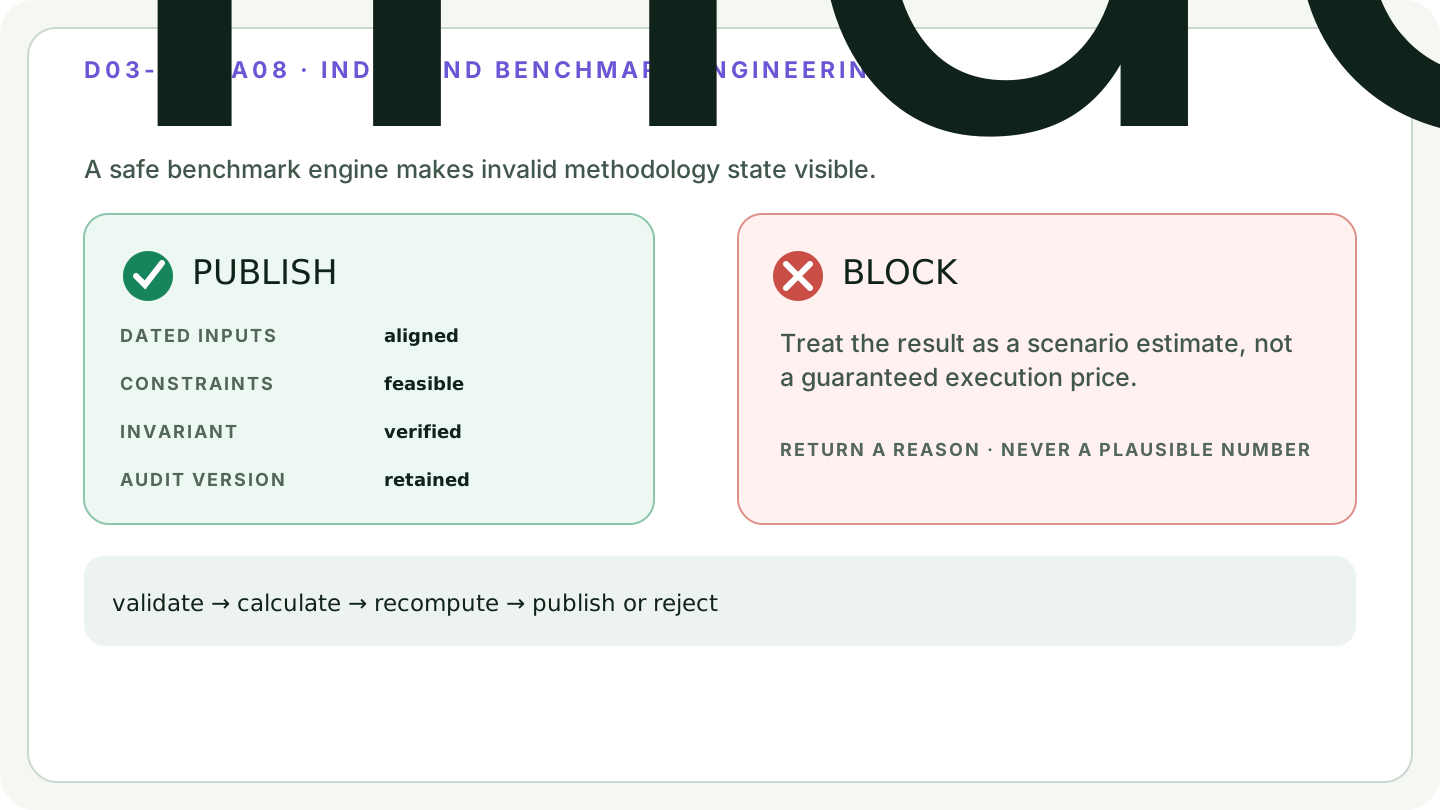
    A["Point-in-time inputs"] --> B["Validate units and timing"]
    B --> C{"Contract feasible?"}
    C -->|No| D["Reject with reason"]
    C -->|Yes| E["Calculate Index Replication-Cost Estimator"]
    E --> F["Recompute invariants"]
    F --> G{"Checks pass?"}
    G -->|No| D
    G -->|Yes| H["Publish audited output"]
Index Replication-Cost Estimator methodology state
stateDiagram-v2
    [*] --> FrozenInputs
    FrozenInputs --> Validated: contract passes
    FrozenInputs --> Rejected: missing or infeasible
    Validated --> Calculated: apply named rule
    Calculated --> Audited: invariants pass
    Calculated --> Rejected: invariant fails
    Audited --> Published: version and timestamp recorded
    Published --> Revised: approved correction
    Revised --> FrozenInputs: rebuild from retained source state
How it works#
This page states the contract — how to call it correctly. The article explains the concept: why it works, and where it breaks.
References#
- S&P Dow Jones Indices Index Mathematics Methodology — S&P Dow Jones Indices
- S&P DJI Equity Indices Policies & Practices — S&P Dow Jones Indices
- FTSE Russell Capping Methodology — FTSE Russell, LSEG
- FTSE Russell Index Policy and Methodology Library — FTSE Russell, LSEG
- MSCI Global Investable Market Indexes Methodology Library — MSCI
- MSCI Minimum Volatility Indexes Methodology — MSCI
- S&P Risk Control 2.0 Indices Methodology — S&P Dow Jones Indices
- Principles for Financial Benchmarks — International Organization of Securities Commissions
- Regulation (EU) 2016/1011 — European Union
- Portfolio Selection — Harry Markowitz
- On the Properties of Equally-Weighted Risk Contributions Portfolios — Sébastien Maillard, Thierry Roncalli, and Jérôme Teïletche
- Fundamental Indexation — Robert Arnott, Jason Hsu, and Philip Moore
- FTSE Currency Hedging Methodology Overview — FTSE Russell, LSEG