Sequence-Gap Detection and Recovery
Install and import#
npm install fintech-algorithmsimport { recoverSequenceStream } from "fintech-algorithms/market-data-engineering/order-book-feed-engineering/sequence-gap-detection-and-recovery";Signature#
recoverSequenceStream(arrivals)Detects missing sequence numbers and decides whether the stream can continue or must resynchronise from a snapshot. A gap is not a nuisance — every message after it is applied to a book that is already wrong.
Parameters#
| Name | Type | Notes |
|---|---|---|
arrivals | Arrival[] | Messages with their sequence numbers, in arrival order — which is not necessarily sequence order. |
Returns#
{ status, gaps, recovered, resync_required, … }
Each gap with whether it was recoverable from buffered messages or requires a snapshot resync.
Errors#
- When sequence numbers are absent — reported as a status rather than thrown
Complexity: time O(n log n),
space O(n).
Worked example#
executed Captured by running this function on the input its own test provides. Real output of real code — but not asserted against a published figure.
Input#
[
  {
    "sequence": 100,
    "source": "live"
  },
  {
    "sequence": 102,
    "source": "live"
  },
  {
    "sequence": 103,
    "source": "live"
  }
]
Showing 3 of 18 elements.
{
  "start_sequence": 100
}Call#
recoverSequenceStream(arrivals)Returns#
object with 11 fields: start_sequence, applied_sequences, next_expected, missing_sequences, buffered_sequences, duplicate_sequences, recovery_requests, recovery_request_count, …
{
  "start_sequence": 100,
  "applied_sequences": [100, 101, 102, 103, 104, 105],
  "next_expected": 117,
  "missing_sequences": [],
  "buffered_sequences": [],
  "duplicate_sequences": [107],
  "recovery_requests": [
    {
      "from_sequence": 101,
      "to_sequence": 101
    },
    {
      "from_sequence": 104,
      "to_sequence": 104
    },
    {
      "from_sequence": 106,
      "to_sequence": 106
    }
  ],
  "recovery_request_count": 5,
  "replay_arrival_count": 6,
  "trace": [
    {
      "arrival_sequence": 100,
      "source": "live",
      "next_expected": 101,
      "missing": [],
      "buffered": []
    },
    {
      "arrival_sequence": 102,
      "source": "live",
      "next_expected": 101,
      "missing": [101],
      "buffered": [102]
    },
    {
      "arrival_sequence": 103,
      "source": "live",
      "next_expected": 101,
      "missing": [101],
      "buffered": [102, 103]
    }
  ],
  "state": "current"
}
Other exports#
This module also exports
normalizeEvents, reconstructL2, aggregatePriceLevels, reconstructL3, reconcileSnapshotIncrementals, consolidateVenues, calculate. Every module additionally exports run as an alias of its
primary function, and a meta object carrying its catalog id, domain, family,
shape and article URL.
Diagrams#
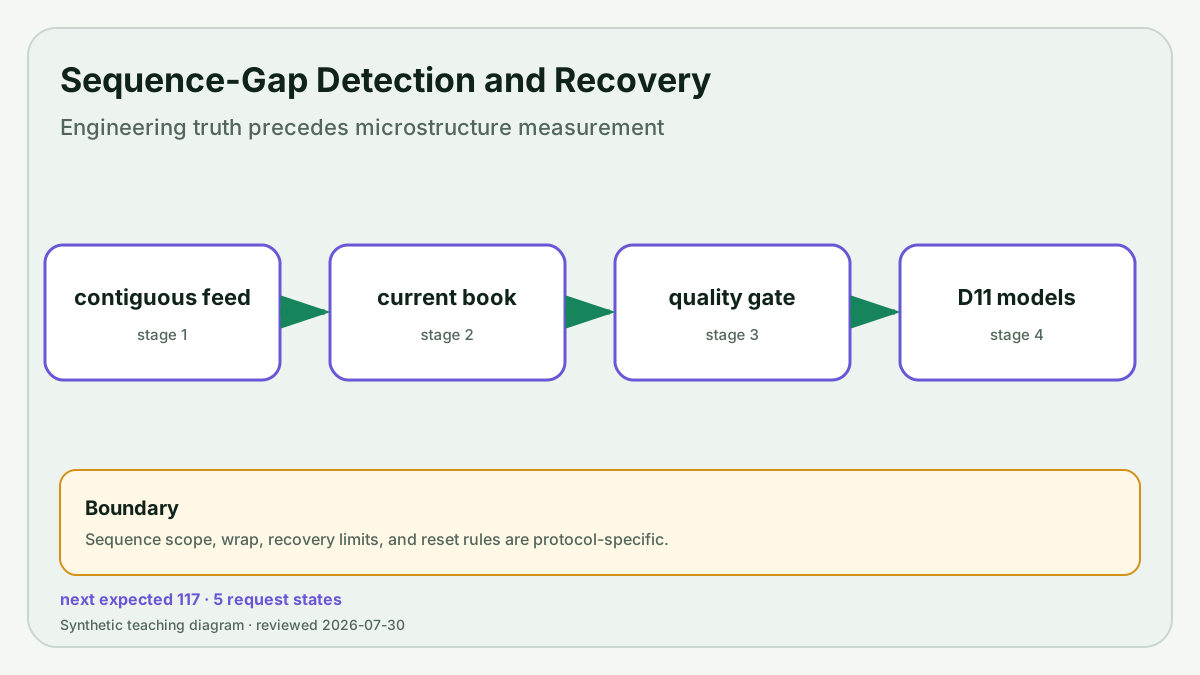
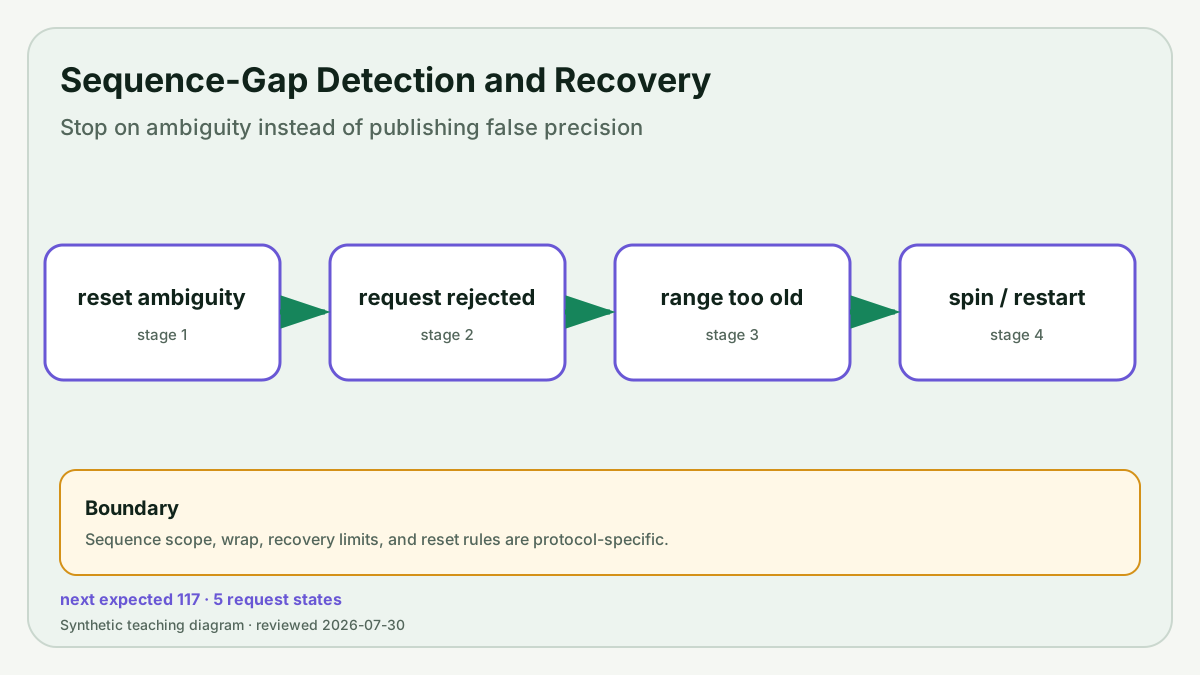
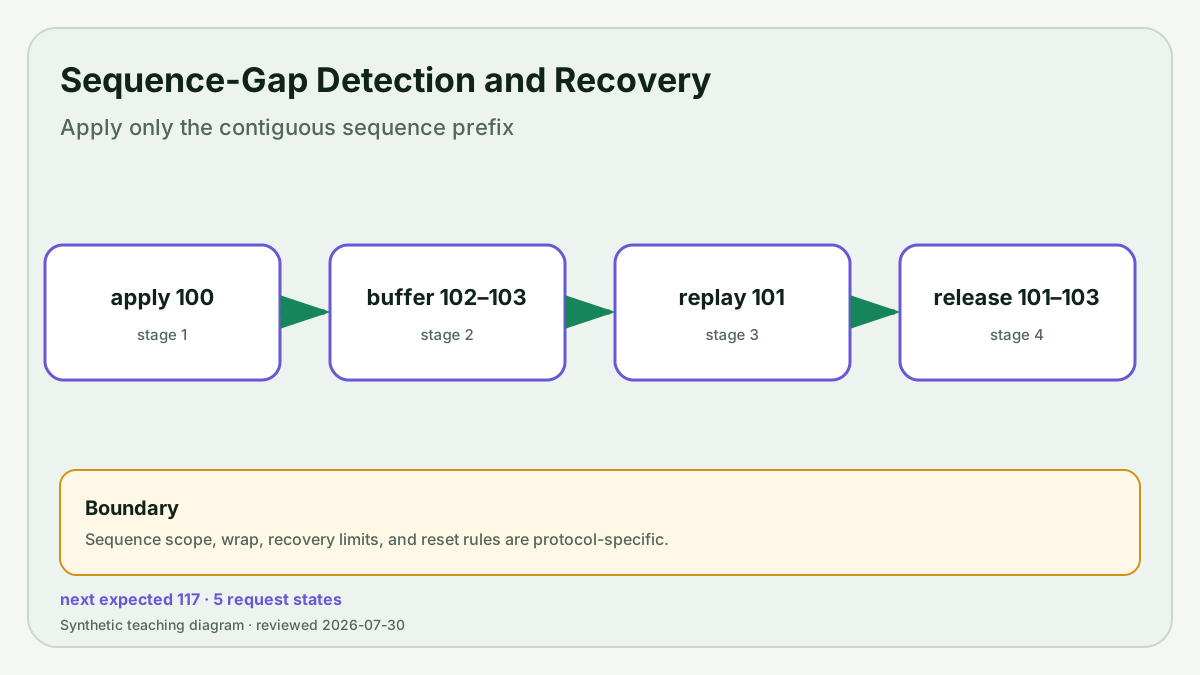
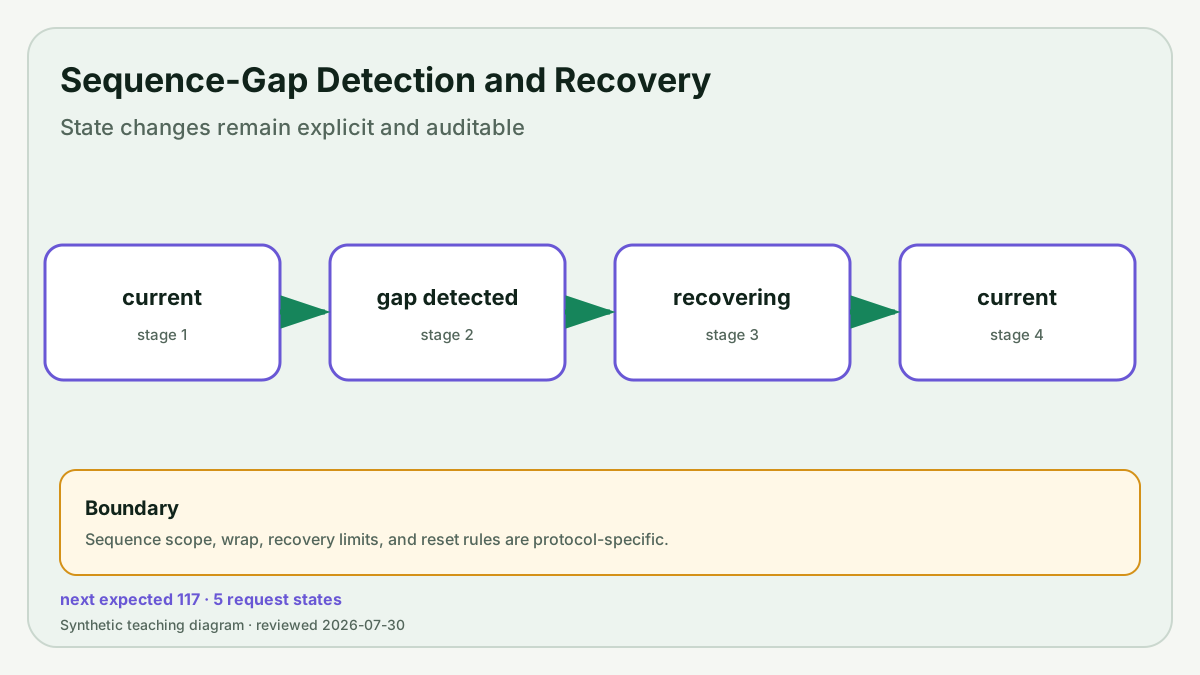
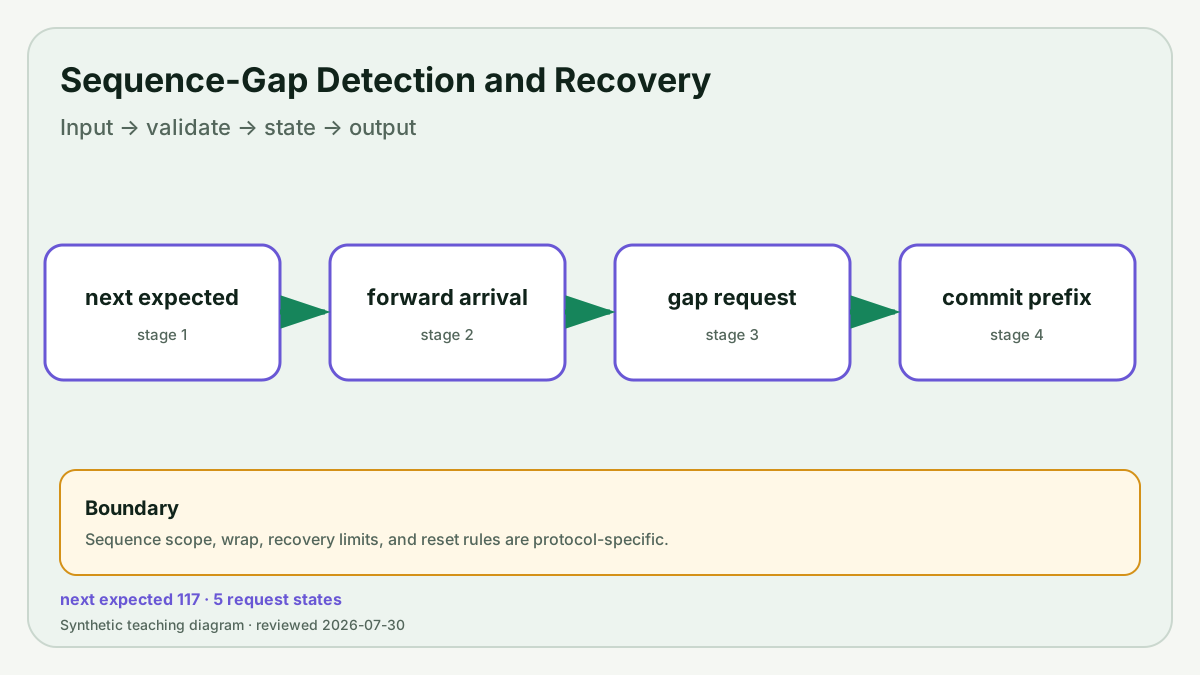
Calculation flow#
Sequence-Gap Detection and Recovery system flow
flowchart LR
    A["Apply the expected sequence."] --> B["Buffer forward arrivals and expose the missing range."]
    B --> C{"Safe to publish?"}
    C -->|"yes"| D["Release the entire contiguous prefix after replay."]
    C -->|"no"| E["Never apply a forward message merely because it arrived over reliable transport."]
    D --> F["Publish contiguous applied prefix and recovery state"]
    F --> G["Route to the named D11 measurement"]
How it works#
This page states the contract — how to call it correctly. The article explains the concept: why it works, and where it breaks.
References#
- Topic-specific source roles
- Nasdaq TotalView-ITCH 5.0 — Nasdaq
- Nasdaq GLIMPSE 5.0 — Nasdaq
- MoldUDP64 protocol — Nasdaq
- FIX recommended practices for book management — FIX Trading Community
- Cboe Multicast PITCH specification — Cboe Global Markets
- Coinbase Exchange WebSocket channels — Coinbase
- UTP Quote Data Feed — UTP Plan
- UTP odd-lot data service update — UTP Plan / Nasdaq Trader
- UTP Data Feed Services Specification — UTP Plan