Time Bars
Install and import#
npm install fintech-algorithmsimport { constructBars } from "fintech-algorithms/market-data-engineering/bar-construction/time-bars";Signature#
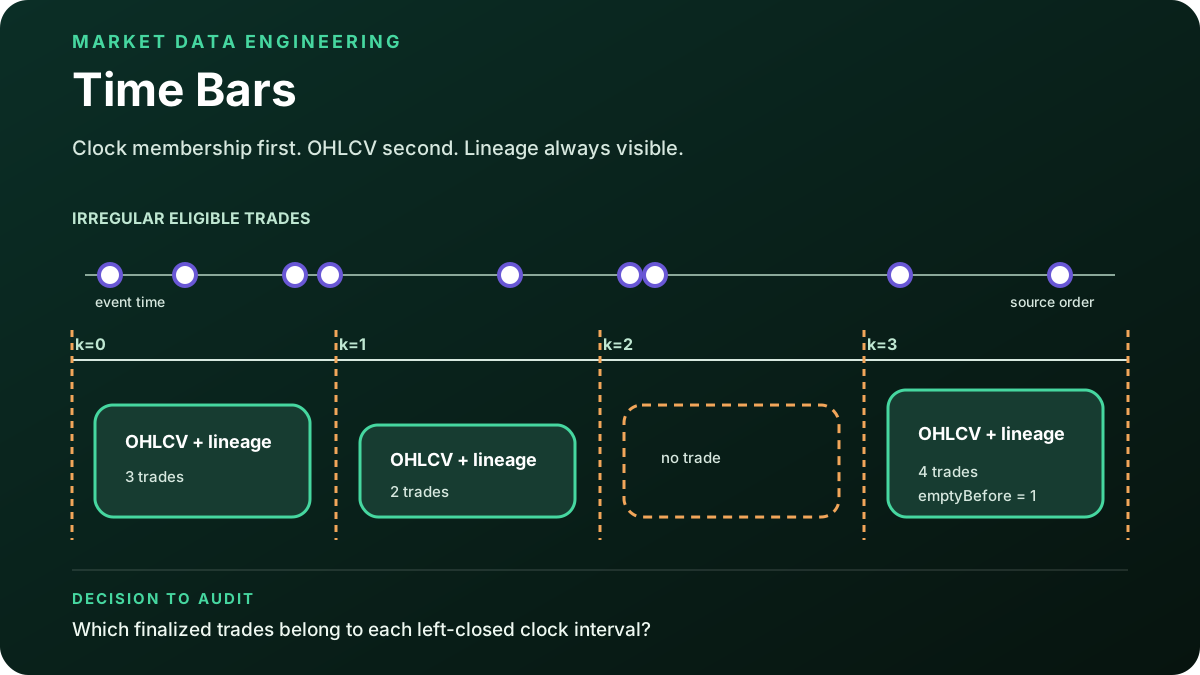
constructBars(trades, config)Groups a trade tape into fixed-duration bars. This is the sampling scheme every chart you have seen uses, and it is a *choice*: it samples the market at a constant rate regardless of how much is happening in it.
Parameters#
| Name | Type | Notes |
|---|---|---|
trades | Trade[] | The raw tape in chronological order. Each trade carries tradeId, timestamp, session, symbol, price, volume and currency. |
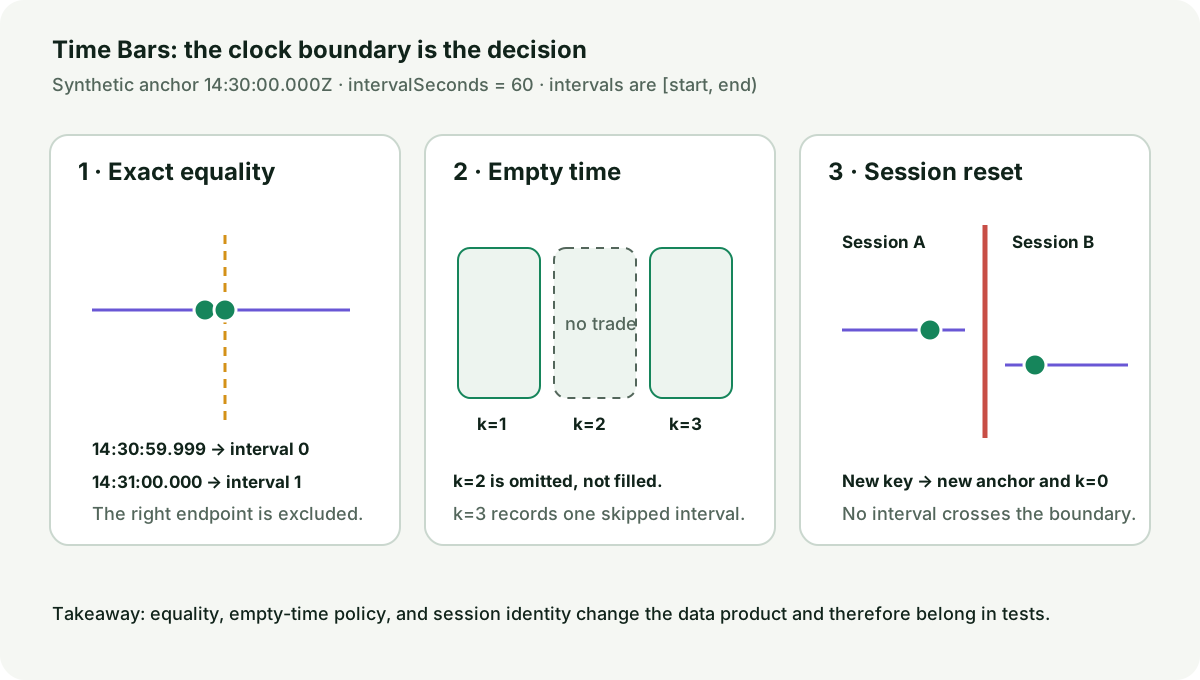
config | { intervalSeconds: number; sessionStarts: Record<string, string>; closePartial?: boolean; emptyBarPolicy?: "omit" } | intervalSeconds sets the bar length. sessionStarts maps each session id to its opening timestamp, so bucket boundaries are anchored to the session rather than to the first trade. closePartial decides whether a final incomplete bar is emitted. emptyBarPolicy: "omit" drops intervals with no trades instead of emitting a flat bar. |
Returns#
Bar[] · length fewer
One bar per interval that produced trades, carrying open, high, low, close, volume and the interval boundaries.
Errors#
- When intervalSeconds is not a positive number — throws
- When sessionStarts is missing or empty — throws
Complexity: time O(n),
space O(bars).
Worked example#
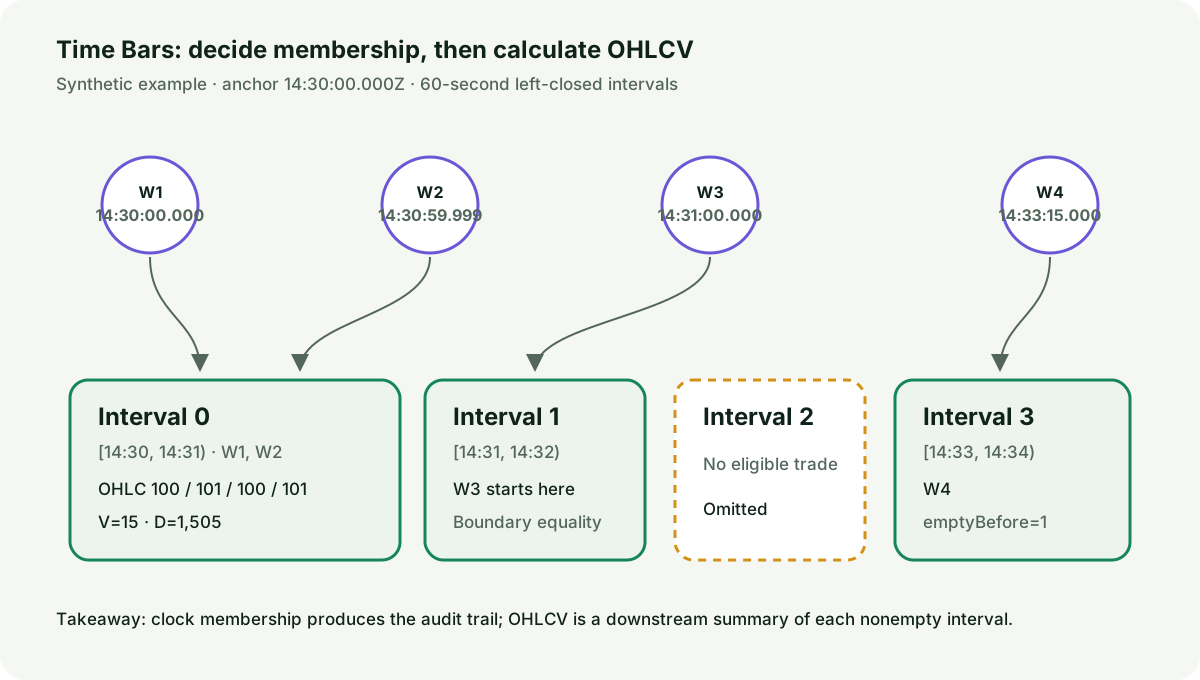
verified This is the worked example published in the article, replayed by the test suite on every run. The output cannot drift.
Input#
[
  {
    "tradeId": "W1",
    "timestamp": "2026-01-05T14:30:00.000Z",
    "session": "S1",
    "symbol": "SYNTH",
    "price": 100,
    "volume": 10,
    "currency": "USD"
  },
  {
    "tradeId": "W2",
    "timestamp": "2026-01-05T14:30:59.999Z",
    "session": "S1",
    "symbol": "SYNTH",
    "price": 101,
    "volume": 5,
    "currency": "USD"
  },
  {
    "tradeId": "W3",
    "timestamp": "2026-01-05T14:31:00.000Z",
    "session": "S1",
    "symbol": "SYNTH",
    "price": 99,
    "volume": 8,
    "currency": "USD"
  }
]
Showing 3 of 4 elements.
{
  "intervalSeconds": 60,
  "sessionStarts": {
    "S1": "2026-01-05T14:30:00.000Z"
  },
  "emptyBarPolicy": "omit",
  "closePartial": true
}Call#
constructBars(trades, config)Returns#
array of 3 objects
[
  {
    "barIndex": 0,
    "session": "S1",
    "intervalIndex": 0,
    "startTime": "2026-01-05T14:30:00.000Z",
    "endTime": "2026-01-05T14:31:00.000Z",
    "firstTradeTime": "2026-01-05T14:30:00.000Z",
    "lastTradeTime": "2026-01-05T14:30:59.999Z",
    "open": 100,
    "high": 101,
    "low": 100,
    "close": 101,
    "volume": 15,
    "dollarValue": 1505,
    "tickCount": 2
  },
  {
    "barIndex": 1,
    "session": "S1",
    "intervalIndex": 1,
    "startTime": "2026-01-05T14:31:00.000Z",
    "endTime": "2026-01-05T14:32:00.000Z",
    "firstTradeTime": "2026-01-05T14:31:00.000Z",
    "lastTradeTime": "2026-01-05T14:31:00.000Z",
    "open": 99,
    "high": 99,
    "low": 99,
    "close": 99,
    "volume": 8,
    "dollarValue": 792,
    "tickCount": 1
  },
  {
    "barIndex": 2,
    "session": "S1",
    "intervalIndex": 3,
    "startTime": "2026-01-05T14:33:00.000Z",
    "endTime": "2026-01-05T14:34:00.000Z",
    "firstTradeTime": "2026-01-05T14:33:15.000Z",
    "lastTradeTime": "2026-01-05T14:33:15.000Z",
    "open": 102,
    "high": 102,
    "low": 102,
    "close": 102,
    "volume": 2,
    "dollarValue": 204,
    "tickCount": 1
  }
]Diagrams#
Calculation flow#
Causal construction flow — Time Bars
flowchart TD
    A["Receive finalized eligible trade"] --> B{"New session key?"}
    B -->|Yes| C["Apply finite-tail policy and reset"]
    B -->|No| D["Keep current interval"]
    C --> E["Compute session-relative interval index"]
    D --> E
    E --> F{"Same interval?"}
    F -->|No| G["Emit prior nonempty bar"]
    F -->|Yes| H["Accumulate trade into OHLCV and lineage"]
    G --> H
    H --> A
How it works#
This page states the contract — how to call it correctly. The article explains the concept: why it works, and where it breaks.
References#
- NYSE Daily TAQ Client Specification — New York Stock Exchange, an Intercontinental Exchange company
- Trading Information — New York Stock Exchange
- Auctions — New York Stock Exchange
- Rule 613: Consolidated Audit Trail — U.S. Securities and Exchange Commission
- Evidence and data decision