Markov-Switching Autoregression
Install and import#
npm install fintech-algorithmsimport { runFilter } from "fintech-algorithms/statistical-time-series/state-and-regime-models/markov-switching-autoregression";Signature#
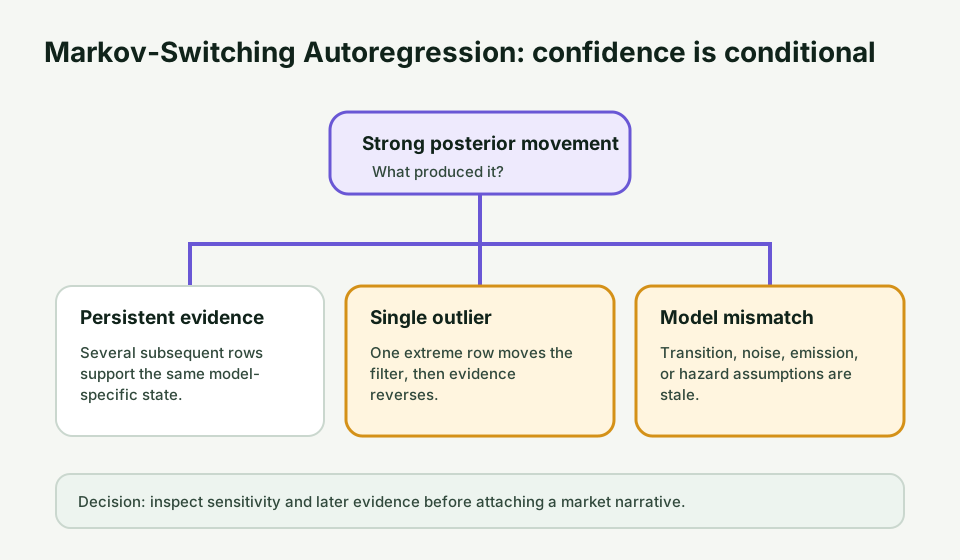
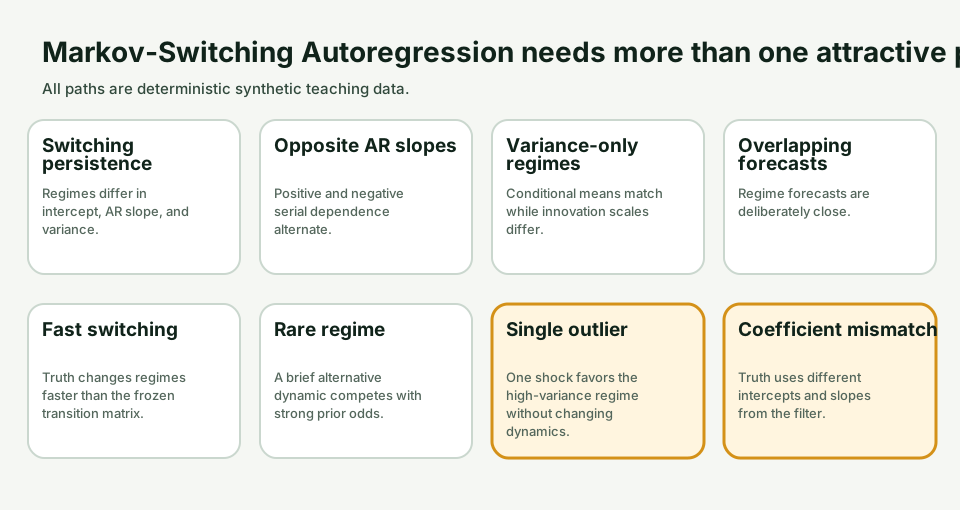
runFilter(observations, config)An autoregression whose coefficients switch with a hidden regime. Captures the common situation where a series is persistent in calm conditions and mean-reverting in stressed ones — one AR fit across both describes neither.
Parameters#
| Name | Type | Notes |
|---|---|---|
observations | number[] | Observations in chronological order. |
config | { transition: number[][]; intercepts: number[]; phis: number[]; stds: number[]; initial: number[] } | One intercept, AR coefficient and standard deviation per regime, plus the transition matrix. |
Returns#
{ …per-step filtered probabilities and predictions }[]
Regime probabilities alongside the regime-weighted prediction at each step.
Errors#
- When the parameter arrays differ in length from the number of regimes — throws
Complexity: time O(n × states²),
space O(n × states).
Worked example#
verified This is the worked example published in the article, replayed by the test suite on every run. The output cannot drift.
Input#
[-0.0710447869, 0.2119198541, 0.4036856432]{
"transition": [
[0.95, 0.05],
[0.1, 0.9]
],
"intercepts": [0.12, -0.18],
"phis": [0.72, -0.3],
"stds": [0.35, 1.05],
"initial": [0.85, 0.15]
}Call#
runFilter(observations, config)Returns#
object with 1 field: 2
{
  "2": {
    "index": 2,
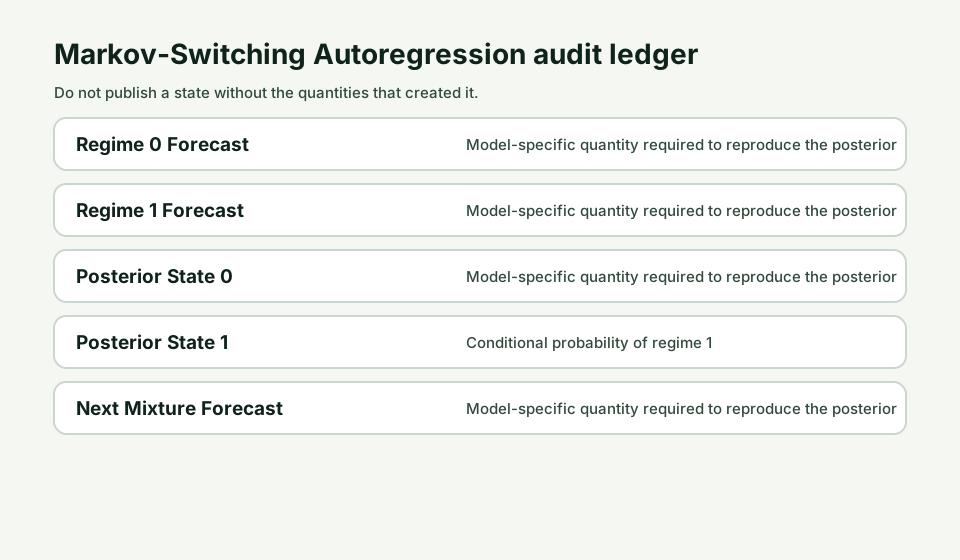
    "regime_0_forecast": 0.272582294952,
    "regime_1_forecast": -0.24357595623,
    "predicted_state_0": 0.8867587273436667,
    "predicted_state_1": 0.11324127265633334,
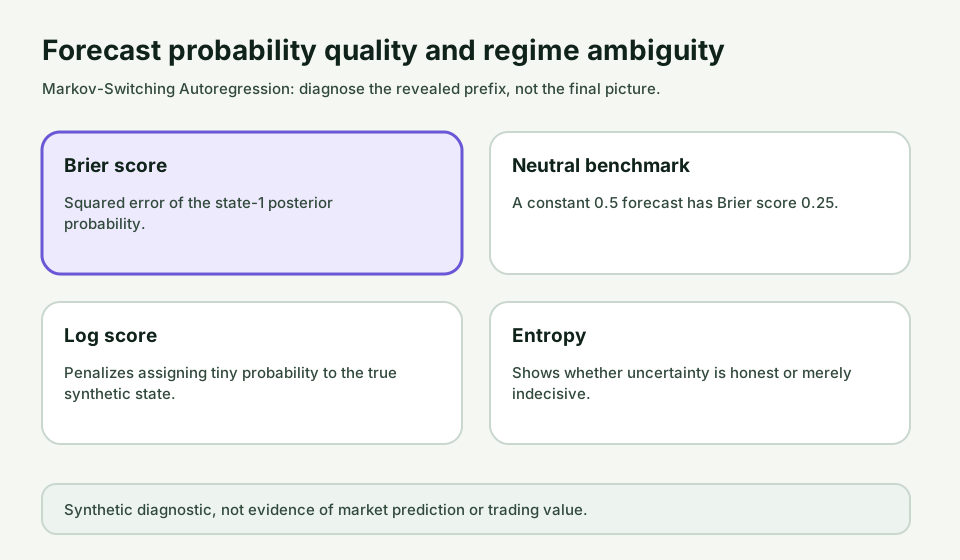
    "posterior_state_0": 0.9636140438968227,
    "posterior_state_1": 0.03638595610317732,
    "most_likely_state": 0,
    "next_mixture_forecast": 0.3530523573178951,
    "log_predictive_density": -0.022389779102029245
  }
}Diagrams#
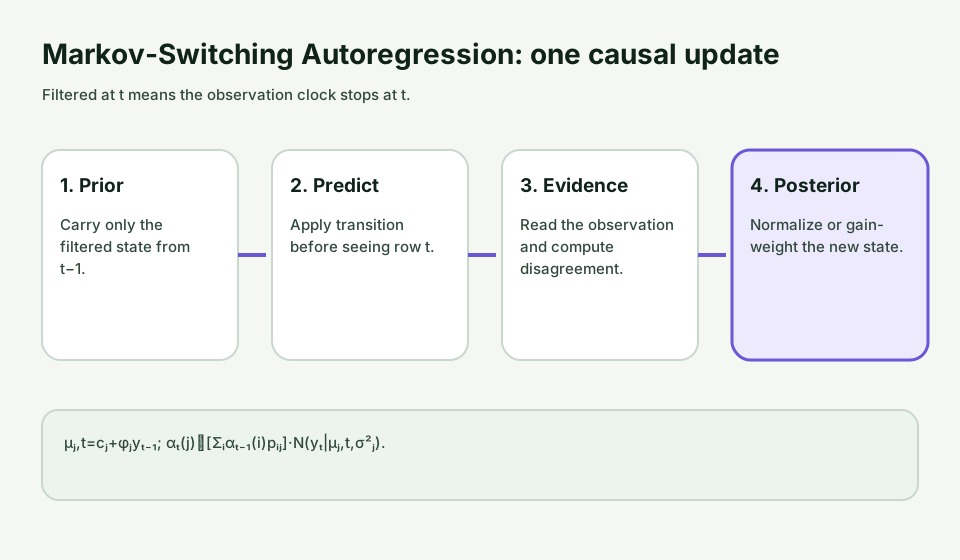
Calculation flow#
Markov-Switching Autoregression Causal Update Flow
flowchart LR
    A["Filtered state at t-1"] --> B["Predict state at t"]
    B --> C["Read observation available at t"]
    C --> D["Compute evidence or innovation"]
    D --> E["Normalize or gain-weight update"]
    E --> F["Filtered state at t"]
    F --> G["Publish diagnostics"]
    F --> A
How it works#
This page states the contract — how to call it correctly. The article explains the concept: why it works, and where it breaks.
References#
- A New Approach to the Economic Analysis of Nonstationary Time Series and the Business Cycle — James D. Hamilton
- MarkovAutoregression — statsmodels developers
- Strictly Proper Scoring Rules, Prediction, and Estimation — Tilmann Gneiting and Adrian E. Raftery