Skewness and Tail Asymmetry
Install and import#
npm install fintech-algorithmsimport { skewnessAndTailAsymmetry } from "fintech-algorithms/foundations/dispersion-shape-and-robust-statistics/skewness-and-tail-asymmetry";Signature#
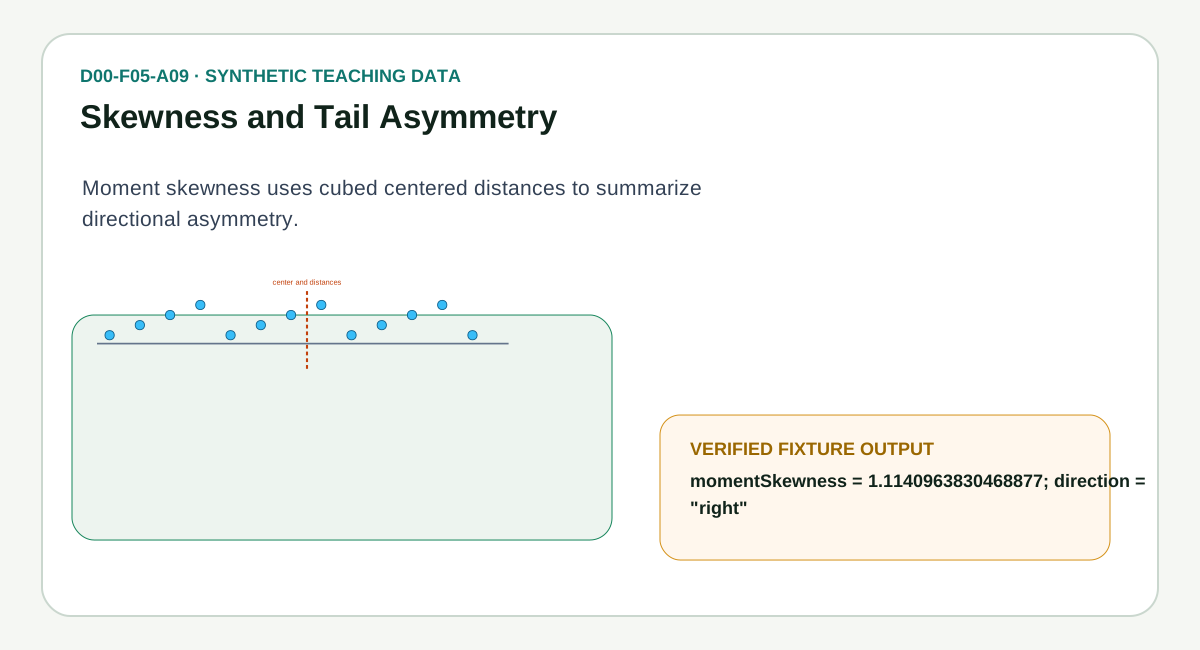
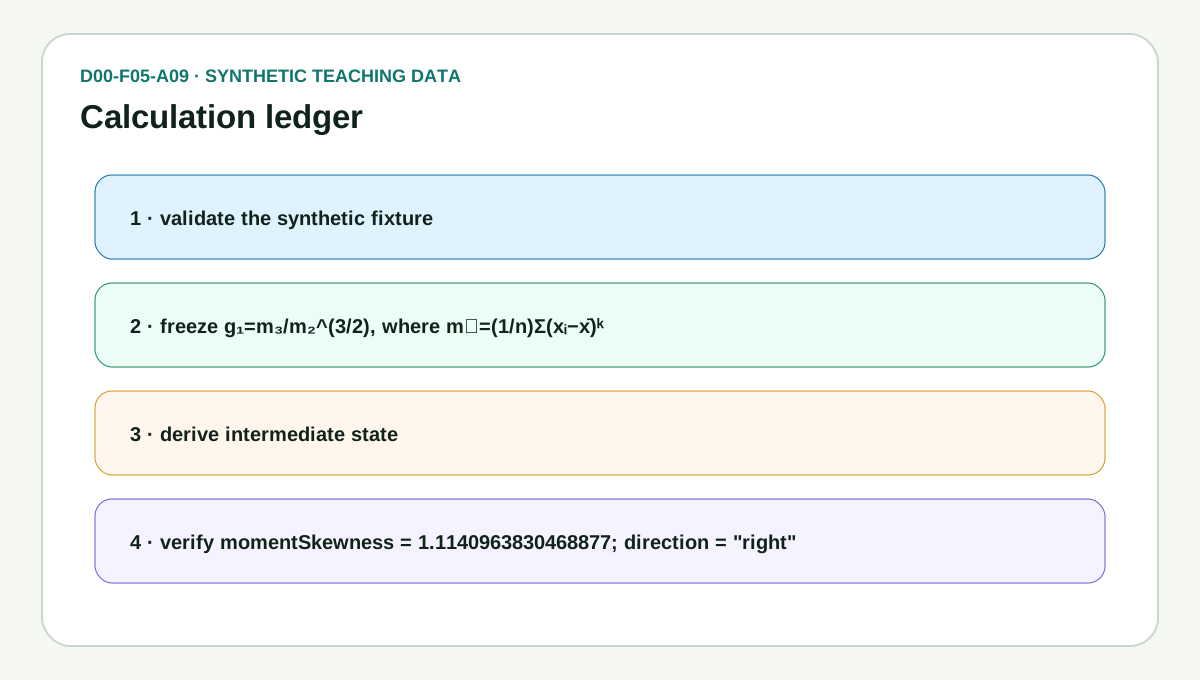
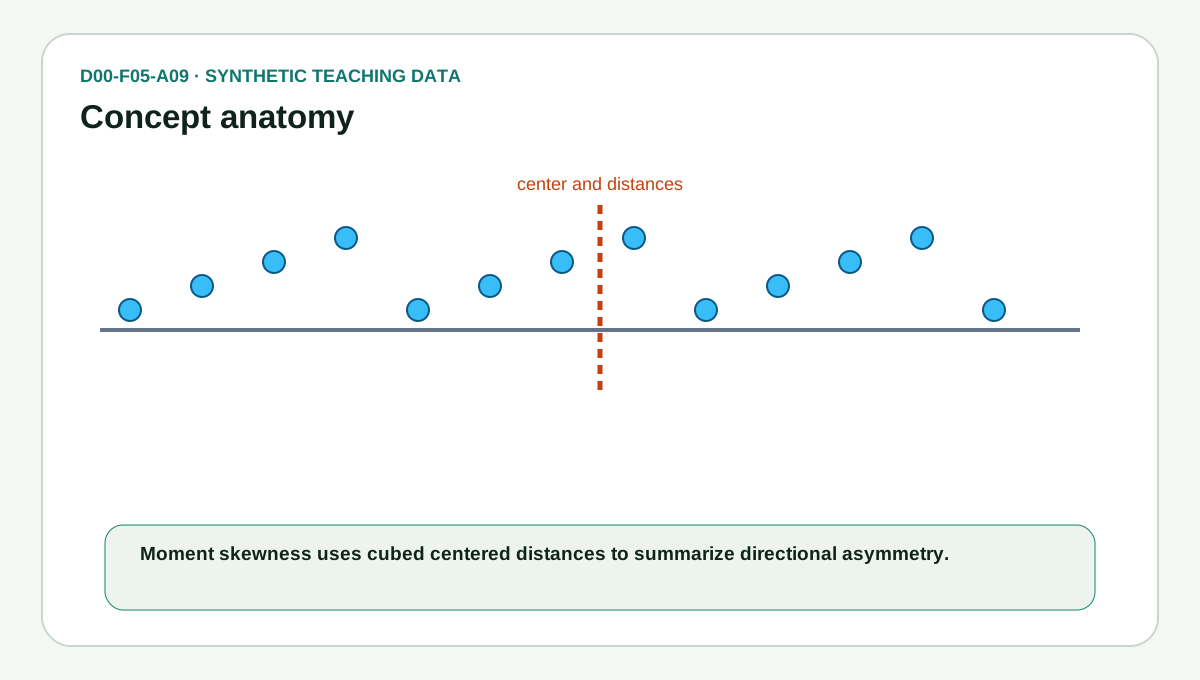
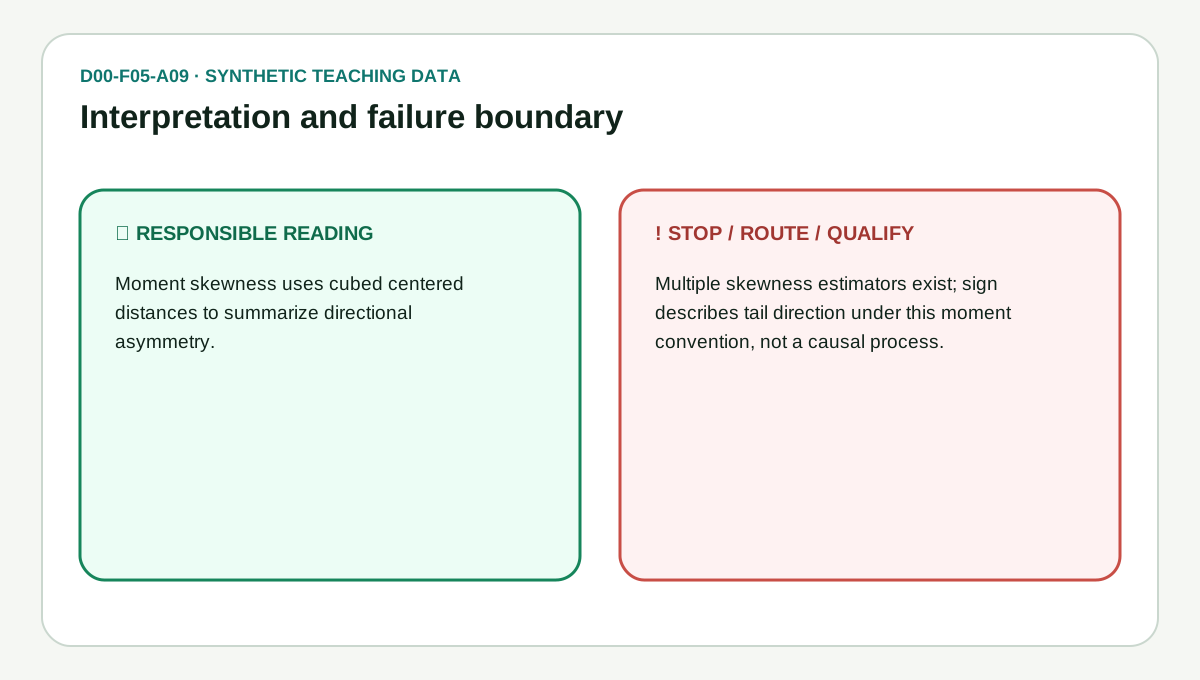
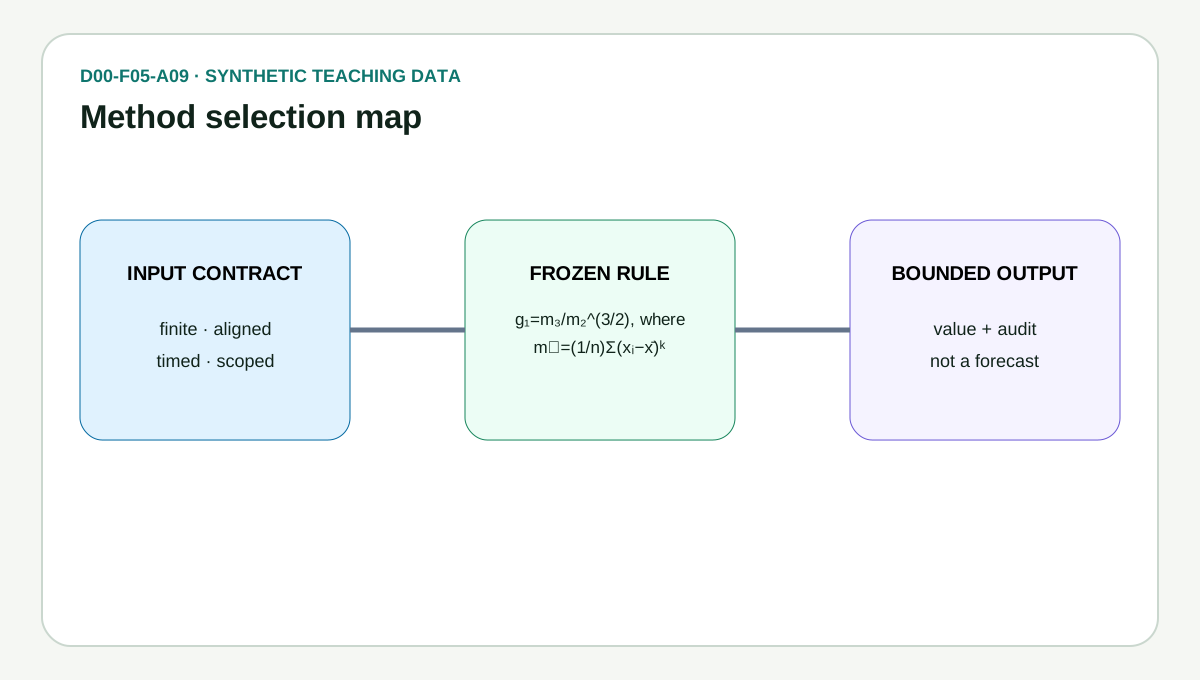
skewnessAndTailAsymmetry(input)Divides the third central moment by the second raised to the power 1.5, giving the moment coefficient of skewness, and labels which tail is the longer one.
Parameters#
| Name | Type | Notes |
|---|---|---|
input | { values: number[] } | The observations whose asymmetry is being measured, under the key values. Both moments are population moments, dividing by n rather than applying a small-sample correction.values: at least two observations, and not all identical |
Returns#
{ momentSkewness: number; direction: 'right' | 'left' | 'symmetric' }
momentSkewness is m3 / m2 ** 1.5, and direction is right when it is positive, left when negative, and symmetric at exactly zero.
Errors#
- When
inputis null, an array, or not an object — throws TypeError - When
valuesis missing, is not an array, or is empty — throws RangeError - When any entry of
valuesdoes not coerce to a finite number — throws RangeError - When
valuesholds fewer than two observations, so the sample divisorn - 1would be zero — throws RangeError - When the second central moment is zero because every observation is identical — throws RangeError
Complexity: time O(n log n),
space O(n).
Worked example#
verified This is the worked example published in the article, replayed by the test suite on every run. The output cannot drift.
Input#
{
  "values": [1, 2, 2, 4, 9]
}Call#
skewnessAndTailAsymmetry(input)Returns#
object with 2 fields: momentSkewness, direction
{
  "momentSkewness": 1.1140963830468877,
  "direction": "right"
}Diagrams#
Calculation flow#
Reasoning flow — D00-F05-A09
flowchart LR
    A["Synthetic input + metadata"] --> B{"Contract valid?"}
    B -->|No| C["Reject or route with reason"]
    B -->|Yes| D["Apply Skewness and Tail Asymmetry"]
    D --> E["Formula: g₁=m₃/m₂^(3/2), where mₖ=(1/n)Σ(xᵢ−x̄)ᵏ"]
    E --> F["Verified fixture output"]
    F --> G{"Interpretation within boundary?"}
    G -->|Yes| H["Report value + convention + audit"]
    G -->|No| I["Add companion view or narrower claim"]
How it works#
This page states the contract — how to call it correctly. The article explains the concept: why it works, and where it breaks.
References#
- Measures of Scale — NIST/SEMATECH e-Handbook
- Skewness and Kurtosis — NIST/SEMATECH e-Handbook
- Historical-example decision