Cross-Model Conflict and Double-Counting Resolver
Install and import#
npm install fintech-algorithmsimport { crossModelConflictAndDoubleCountingResolver } from "fintech-algorithms/fundamental-analysis-and-valuation/integrated-equity-scoring/cross-model-conflict-and-double-counting-resolver";Signature#
crossModelConflictAndDoubleCountingResolver(data)Groups scored components by the evidence they share, caps each group's weight so correlated evidence cannot be counted twice, and flags groups whose members disagree by more than the conflict threshold.
Parameters#
| Name | Type | Notes |
|---|---|---|
data | { group_cap: number; conflict_threshold: number; components: Array<{ name?: string; evidence_group: string; score: number; weight: number }> } | group_cap is the largest weight any one evidence group may carry and must be greater than 0 and at most 1. conflict_threshold is the within-group score range that marks a conflict and must be greater than 0 and at most 100. Each component needs a text evidence_group, a score between 0 and 100 and a positive weight; name falls back to component. |
Returns#
{ state: string; method: string; raw_score: number; resolved_score: number; double_counting_adjustment: number; groups: Array<{ group: string; raw_weight: number; capped_weight: number; mean_score: number; range: number; conflict: boolean }>; conflict_groups: string[]; conflict_count: number; group_cap: number; conflict_threshold: number }
raw_score is the weighted mean over all components as supplied and resolved_score the weighted mean of group means under the capped weights, with double_counting_adjustment their difference. groups carries one row per evidence group sorted by name, conflict_groups and conflict_count the groups whose range reaches the threshold, and state is conflict-detected when any exists, otherwise resolved.
Errors#
- When components is not a nonempty list, or a component lacks a text evidence_group — throws TypeError
- When group_cap or conflict_threshold is not a finite number — throws TypeError
- When group_cap is not in (0, 1], or conflict_threshold is not in (0, 100] — throws RangeError
- When a component score is below 0 or above 100, or its weight is not positive — throws RangeError
Complexity: time O(n log n),
space O(n).
Worked example#
executed Captured by running this function on the input its own test provides. Real output of real code — but not asserted against a published figure.
Input#
{
  "group_cap": 0.4,
  "conflict_threshold": 30,
  "components": [
    {
      "name": "altman_liquidity",
      "score": 82,
      "weight": 0.3,
      "evidence_group": "liquidity"
    },
    {
      "name": "current_ratio",
      "score": 76,
      "weight": 0.2,
      "evidence_group": "liquidity"
    },
    {
      "name": "piotroski_quality",
      "score": 70,
      "weight": 0.25,
      "evidence_group": "quality"
    }
  ]
}Call#
crossModelConflictAndDoubleCountingResolver(data)Returns#
object with 10 fields: state, method, raw_score, resolved_score, double_counting_adjustment, groups, conflict_groups, conflict_count, …
{
  "state": "resolved",
  "method": "evidence-group-cap-and-conflict-resolver",
  "raw_score": 69.45833333333333,
  "resolved_score": 69.64,
  "double_counting_adjustment": 0.18166666666667197,
  "groups": [
    {
      "group": "liquidity",
      "raw_weight": 0.5,
      "capped_weight": 0.4,
      "mean_score": 79.6,
      "range": 6,
      "conflict": false
    },
    {
      "group": "quality",
      "raw_weight": 0.5,
      "capped_weight": 0.4,
      "mean_score": 57.5,
      "range": 25,
      "conflict": false
    },
    {
      "group": "resilience",
      "raw_weight": 0.2,
      "capped_weight": 0.2,
      "mean_score": 74,
      "range": 0,
      "conflict": false
    }
  ],
  "conflict_groups": [],
  "conflict_count": 0,
  "group_cap": 0.4,
  "conflict_threshold": 30
}
Other exports#
This module also exports
calculate, pointInTimeStockScoringInputAssembly, stockScoringPeerCohortResolver, fundamentalMetricDirectionAndPeerNormalization, modelApplicabilityAndVariantRouter, accountingFinancialHealthComposite, earningsQualityComposite, dividendSafetyScore, balanceSheetResilienceScore, distressModelEnsemble, overallExplainableStockScore, scoreConfidenceMissingDataPenaltyAndAbstention, marketWideStockScreeningAndRanking, stockScoreHistoryMigrationAndChangeAttribution. Every module additionally exports run as an alias of its
primary function, and a meta object carrying its catalog id, domain, family,
shape and article URL.
Diagrams#
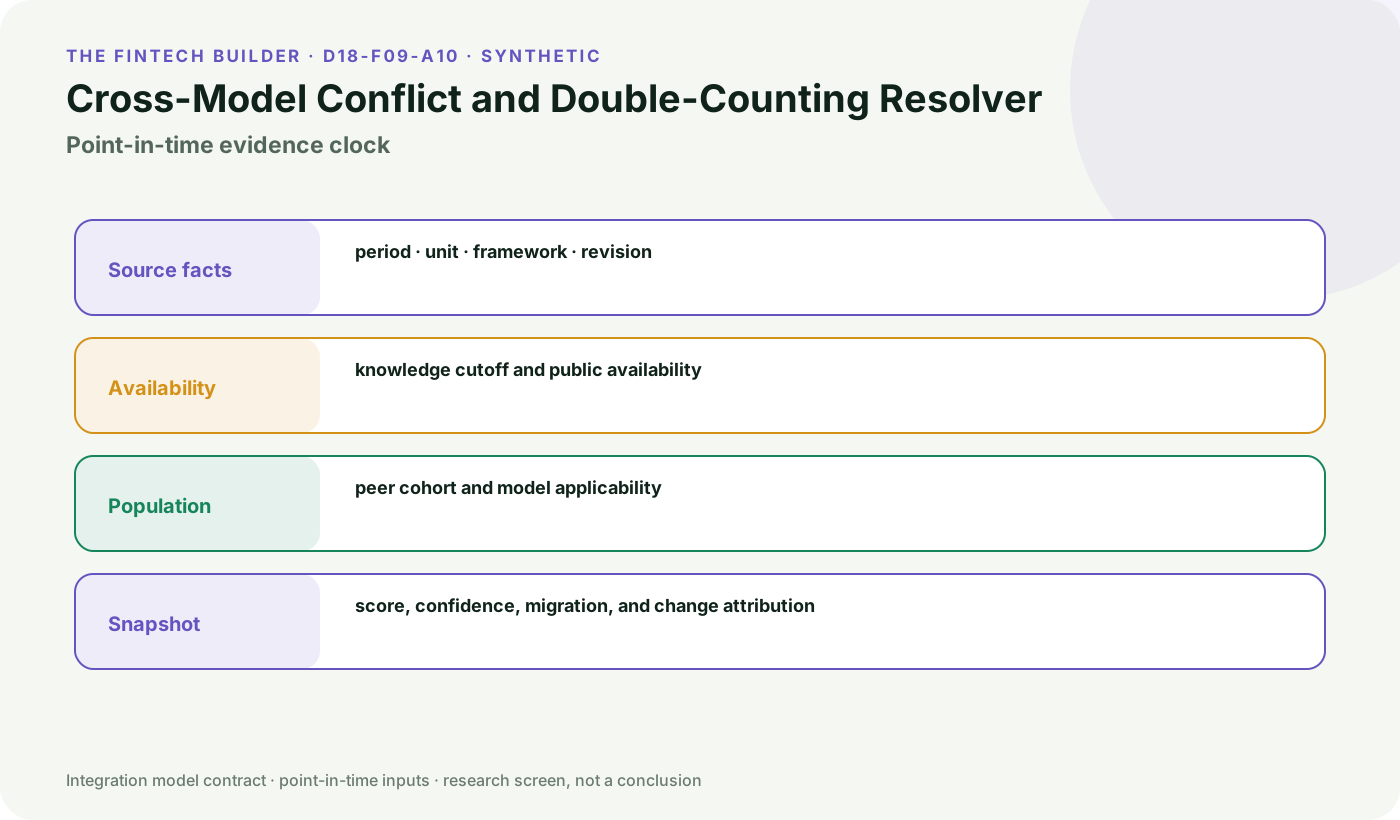
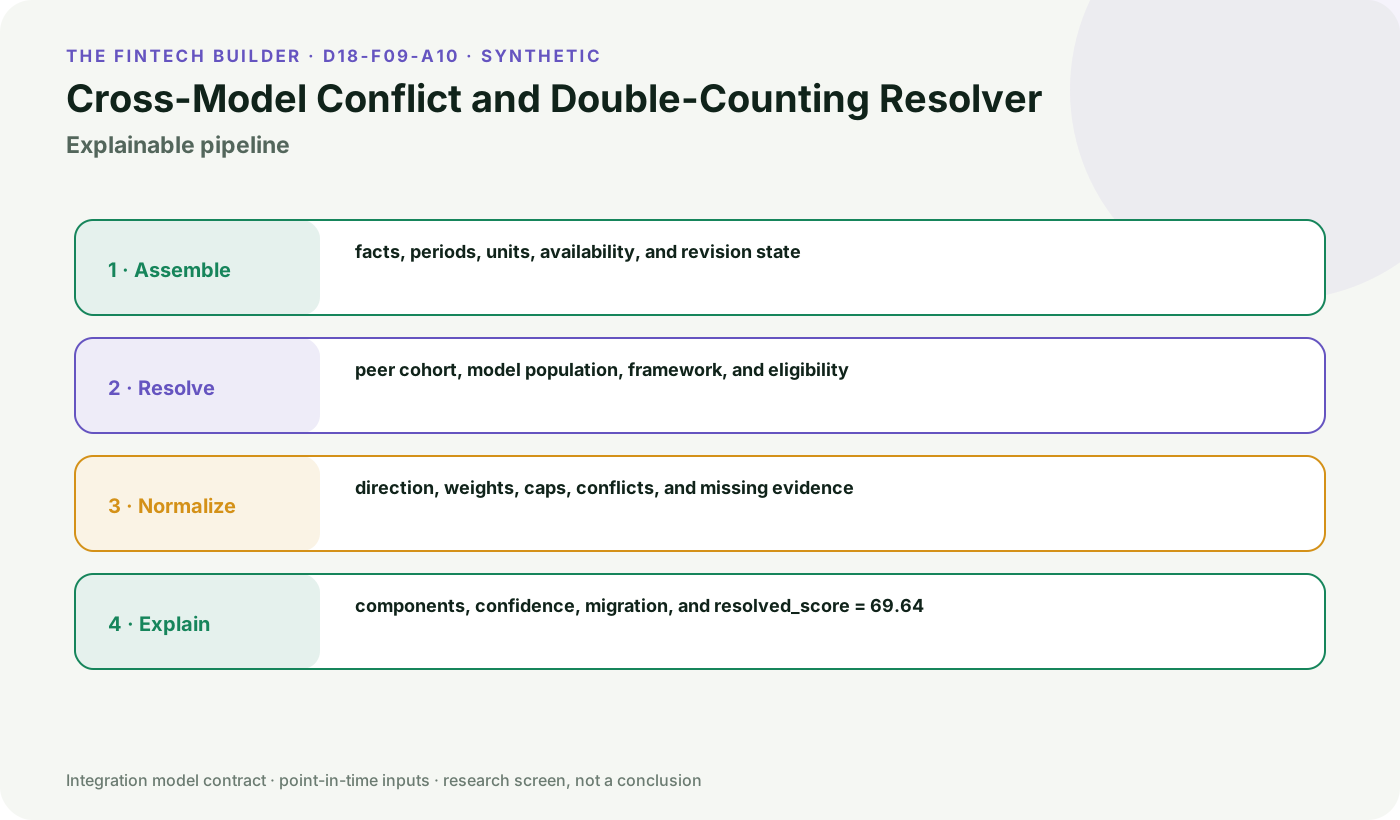

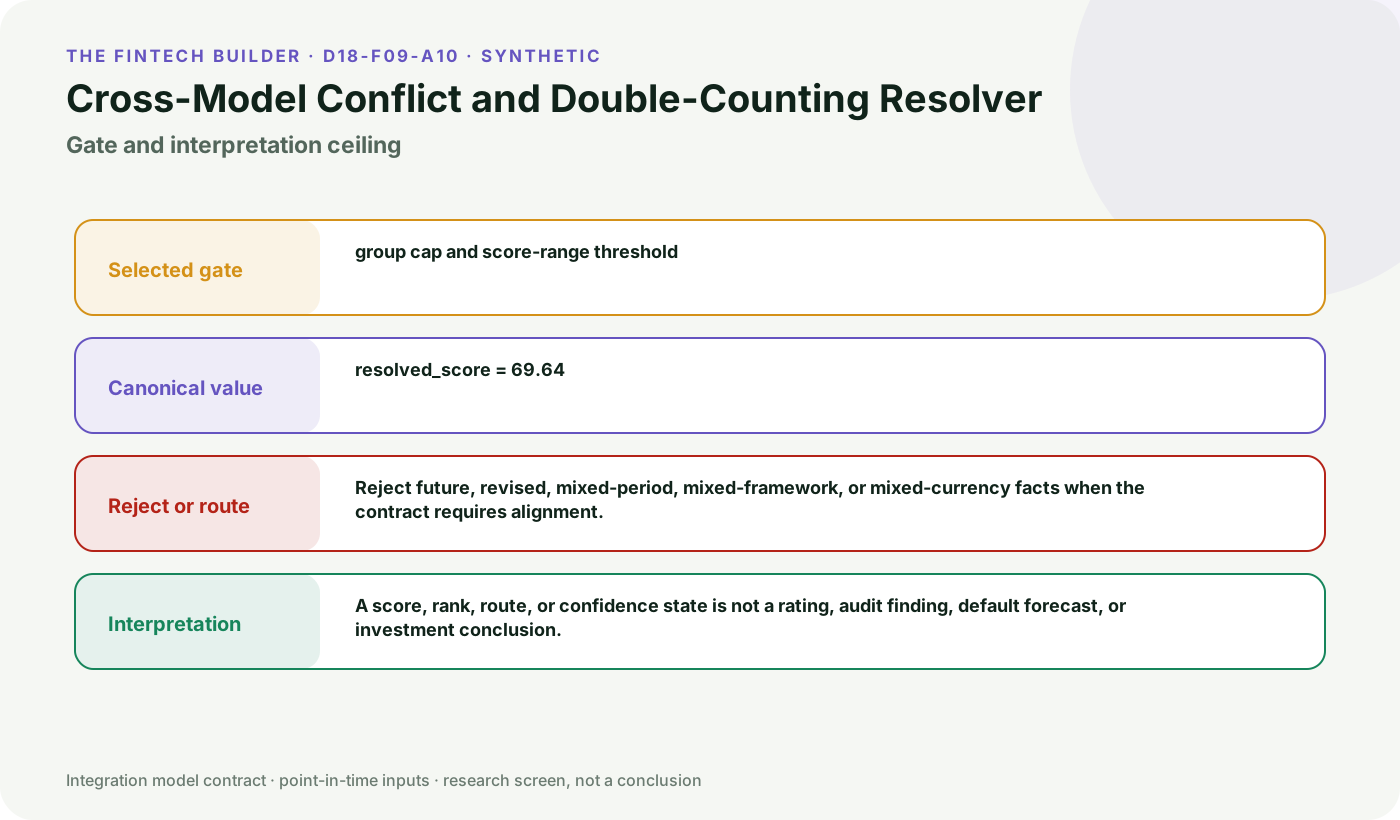
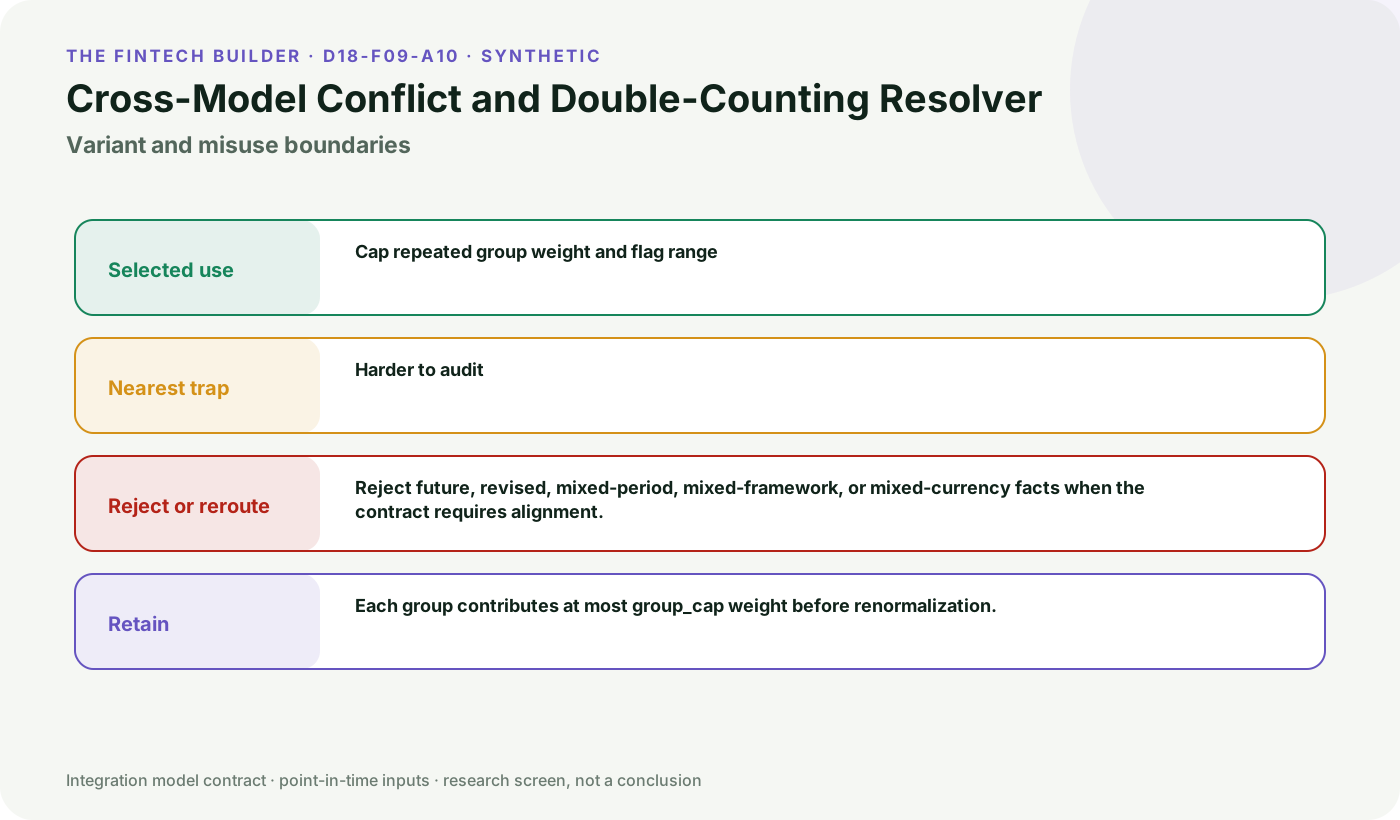
Calculation flow#
Cross-Model Conflict and Double-Counting Resolver calculation flow
flowchart LR
    S1["Validate component scores weights group labels cap and"]
    S2["Calculate each groups weighted mean and score range"]
    S3["Cap group weight and flag ranges at or above the thres"]
    S4["Normalize capped contributions into resolvedscore"]
    S1 --> S2
    S2 --> S3
    S3 --> S4
    S4 --> D{"group cap and scorerange threshold"}
    D --> O["resolved_score + diagnostics"]
    O --> A["Audit: Each group contributes at most groupcap weight before reno"]
How it works#
This page states the contract — how to call it correctly. The article explains the concept: why it works, and where it breaks.
References#
- Financial Ratios, Discriminant Analysis and the Prediction of Corporate Bankruptcy — Edward I. Altman
- Value Investing: The Use of Historical Financial Statement Information to Separate Winners from Losers — Joseph D. Piotroski
- The Detection of Earnings Manipulation — Messod D. Beneish
- Beginners' Guide to Financial Statements — U.S. Securities and Exchange Commission
- Conceptual Framework for Financial Reporting — International Accounting Standards Board
- Evidence boundary