ATR Support and Resistance
Install and import#
npm install fintech-algorithmsimport { atrSupportAndResistance } from "fintech-algorithms/geometric-chart-patterns/pivots-and-levels/atr-support-and-resistance";Signature#
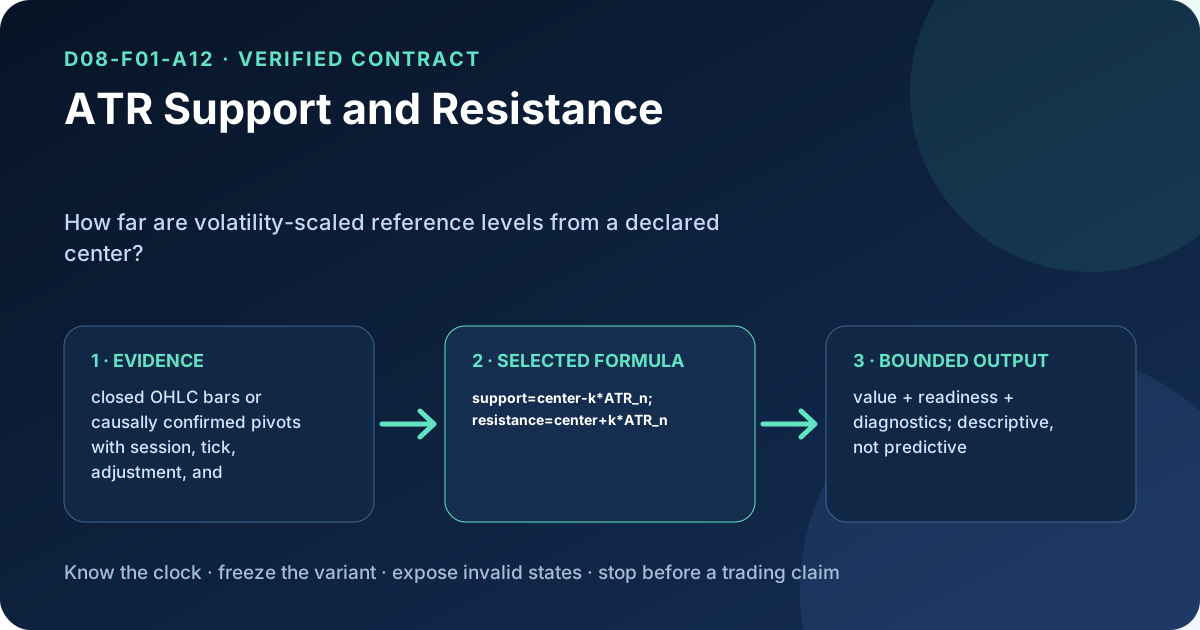
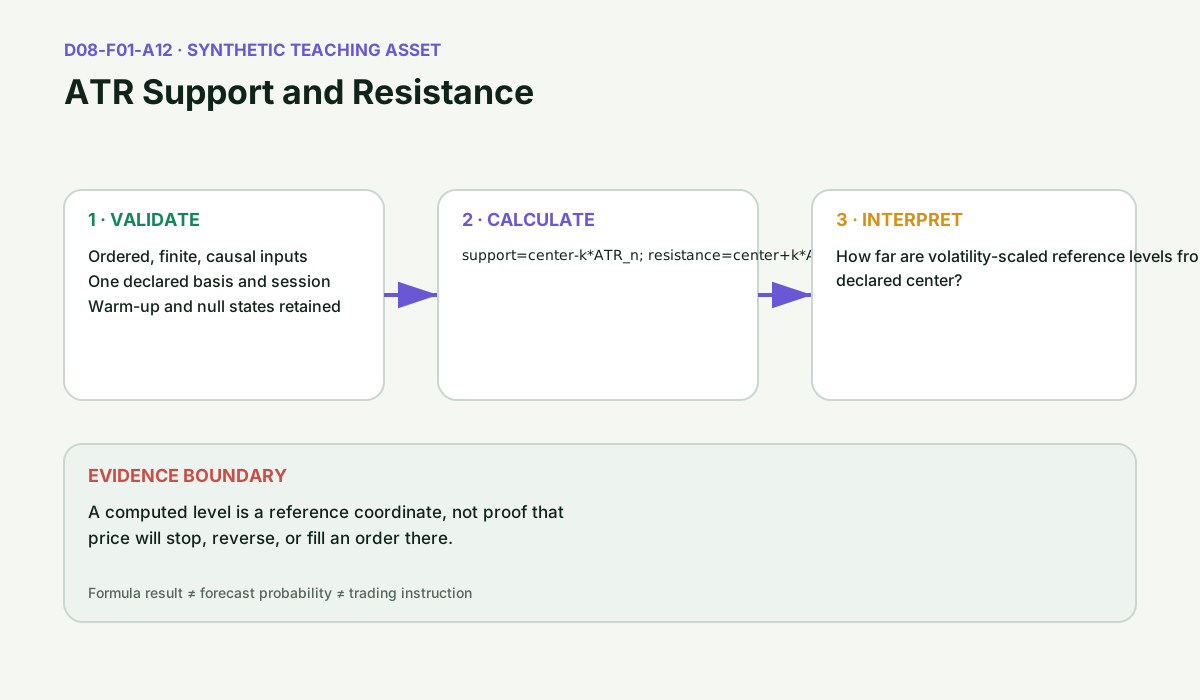
atrSupportAndResistance(input)Places support and resistance a volatility-scaled distance either side of a simple moving average of close: center ± multiplier × ATR(period), where the ATR is Wilder-smoothed true range.
Parameters#
| Name | Type | Notes |
|---|---|---|
input | TopicInput | bars is the required OHLCV history, strictly ordered by timestamp and on a single adjustment basis. parameters.period (default 20, integer of at least 2) sets both the moving average and the ATR length; parameters.multiplier (default 2, finite and at least 0) sets the band width. |
Returns#
TopicResult
series and latest carry center, support and resistance. The warm-up is period - 1 bars, because the moving average and the ATR seed both complete at index period - 1, so with the default ready_at is 19.
Warm-up#
The first period - 1 bars (19 by default) positions are null. The simple moving average and the Wilder ATR seed both need period observations, and true range is defined from index 0, so all three series turn non-null together at index period - 1.
Errors#
- When
multiplieris supplied as a negative number or is not finite — throws Error - When
periodis supplied as a non-integer or as a value below 2 — throws Error
Complexity: time O(n × period),
space O(n).
Worked example#
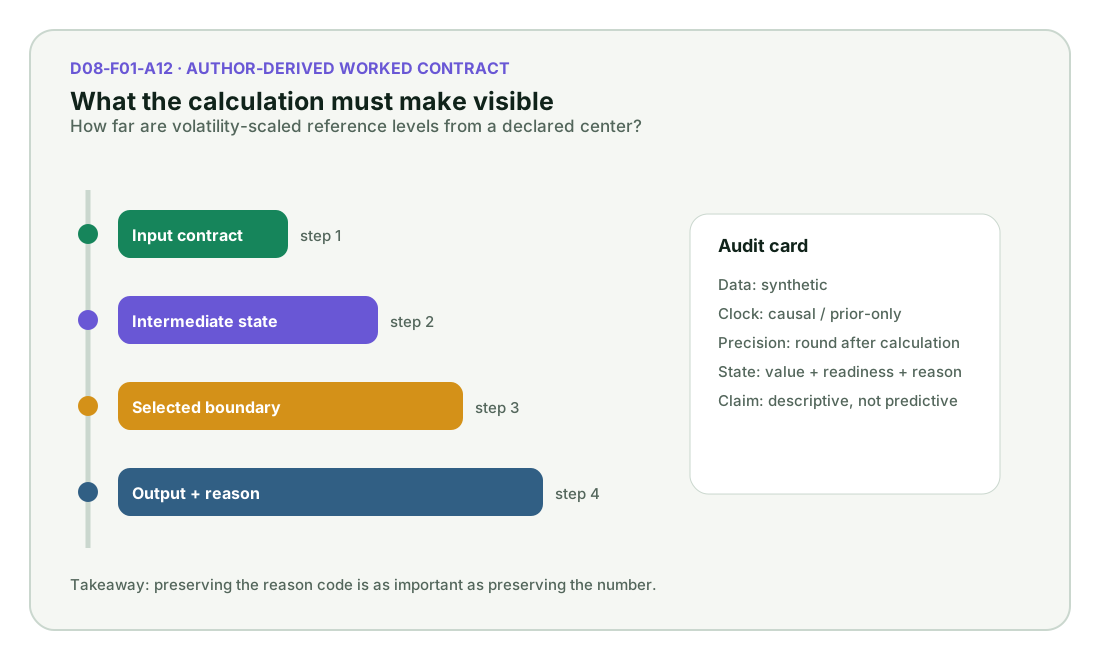
executed Captured by running this function on the input its own test provides. Real output of real code — but not asserted against a published figure.
Input#
{
  "bars": [
    {
      "timestamp": "2024-01-02",
      "basis": "synthetic-unadjusted",
      "open": 100,
      "high": 101.45,
      "low": 98.695,
      "close": 100,
      "volume": 750000,
      "benchmark": 200
    },
    {
      "timestamp": "2024-01-03",
      "basis": "synthetic-unadjusted",
      "open": 101.49111452,
      "high": 103.38381693,
      "low": 100.05480022,
      "close": 101.78791214,
      "volume": 795117,
      "benchmark": 200.56326135
    },
    {
      "timestamp": "2024-01-04",
      "basis": "synthetic-unadjusted",
      "open": 102.45519048,
      "high": 104.6701838,
      "low": 100.91147007,
      "close": 102.9549389,
      "volume": 840234,
      "benchmark": 201.11020913
    }
  ],
  "parameters": {}
}Call#
atrSupportAndResistance(input)Returns#
object with 9 fields: topic_id, title, state, ready, ready_at, series, latest, parameters, …
{
  "topic_id": "D08-F01-A12",
  "title": "ATR Support and Resistance",
  "state": "calculated",
  "ready": true,
  "ready_at": 19,
  "series": {
    "center": [null, null, null, null, null, null],
    "support": [null, null, null, null, null, null],
    "resistance": [null, null, null, null, null, null]
  },
  "latest": {
    "center": 104.20055051999998,
    "support": 97.75337766966595,
    "resistance": 110.647723370334
  },
  "parameters": {},
  "diagnostics": {
    "causal": true,
    "input_count": 96
  }
}Diagrams#
Calculation flow#
ATR Support and Resistance calculation flow
flowchart LR
    A["closed OHLC bars or causally confirmed pivots with session"] --> B["Validate order, basis, and finite values"]
    B --> C["Apply the selected ATR Support and Resistance convention"]
    C --> D["Emit value, readiness, and diagnostics"]
    D --> E["Interpret descriptively; test outcomes separately"]
    B -->|invalid or insufficient| X["Withhold output with a reason"]
ATR Support and Resistance readiness and evidence states
stateDiagram-v2
    [*] --> Waiting
    Waiting --> Ready: enough valid causal observations
    Waiting --> Rejected: malformed or unsupported input
    Ready --> Calculated: selected formula applied
    Calculated --> Interpreted: diagnostic and limitation retained
    Interpreted --> Ready: next observation arrives
    Rejected --> Waiting: corrected input and deterministic reset
How it works#
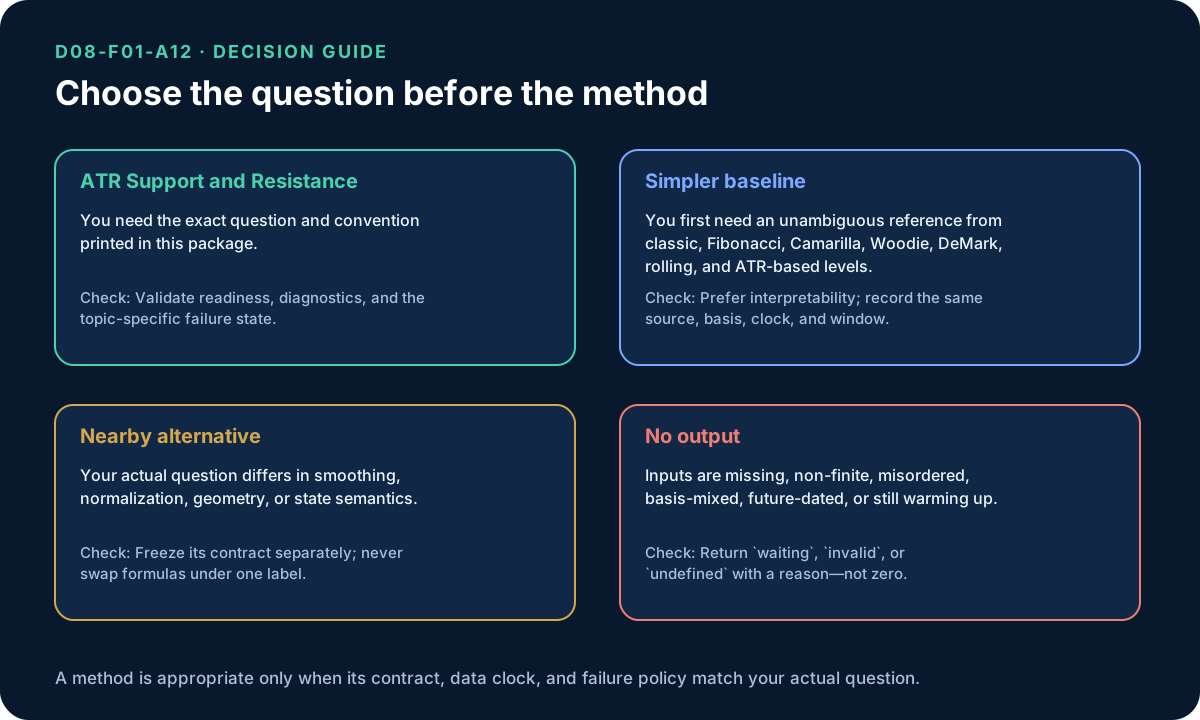
This page states the contract — how to call it correctly. The article explains the concept: why it works, and where it breaks.
References#
- Technical Analysis: Modern Perspectives (CFA Institute Research Foundation) — Gordon Scott, Michael Carr and Mark Cremonie; CFA Institute Research Foundation
- TA-Lib maintained source — TA-Lib project contributors
- Long-Term Storage Capacity of Reservoirs — H. E. Hurst
- Evidence decision
- Level 1 evidence map