Floating-Point Representation, Overflow, and Underflow
Install and import#
npm install fintech-algorithmsimport { floatingPointRepresentationOverflowAndUnderflow } from "fintech-algorithms/foundations/statistical-computing-and-reproducibility/floating-point-representation-overflow-and-underflow";Signature#
floatingPointRepresentationOverflowAndUnderflow(input)Inspects one double-precision number: whether it is finite, how large one representable step at its magnitude is, and whether squaring it would stay inside a stated magnitude ceiling.
Parameters#
| Name | Type | Notes |
|---|---|---|
input | D00Input | Reads floatingValue, the number under inspection, and maxSafeMagnitude, the largest magnitude the caller is willing to reach. A non-empty values list of finite numbers must also be present; it is validated but not used here. |
Returns#
D00Output
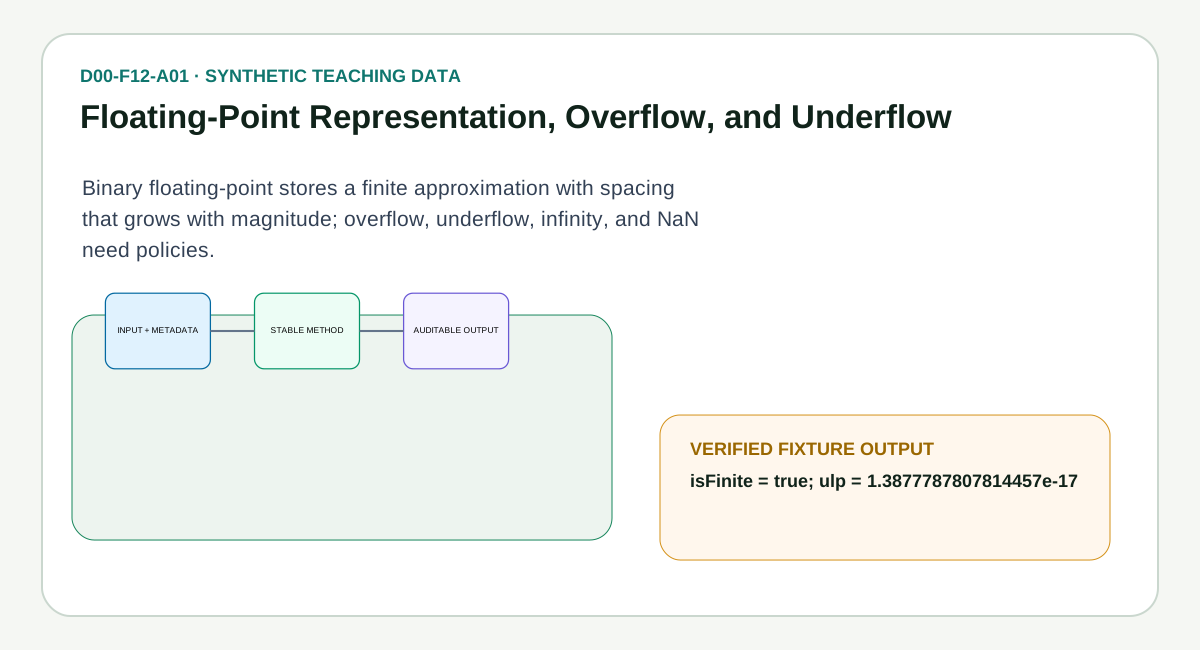
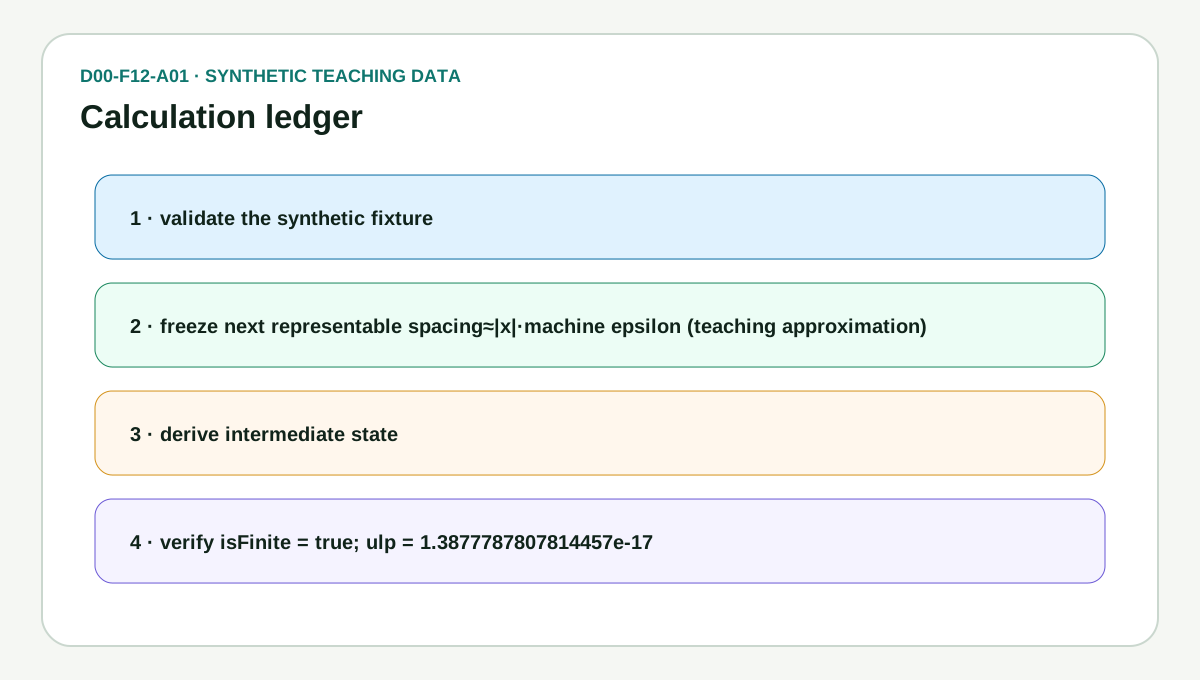
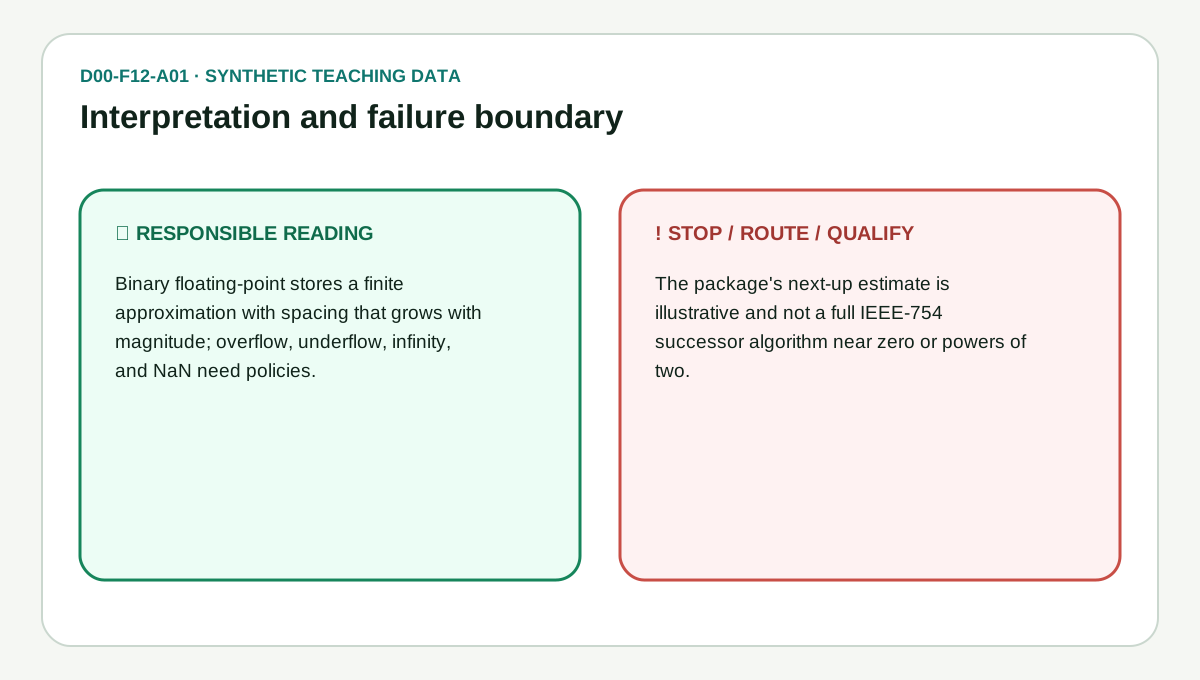
isFinite reports whether floatingValue is a finite number, nextUp is the next representable double above it, ulp is the spacing between adjacent doubles at its magnitude, and overflowGuard is true when the magnitude is at most the square root of maxSafeMagnitude. overflowGuard bounds only the overflow side of a squaring step: a value small enough to pass the guard can still square to zero, so underflow needs its own check.
Errors#
- When
valuesis absent, empty, or holds a non-finite number — throws RangeError
Complexity: time O(n),
space O(n).
Worked example#
verified This is the worked example published in the article, replayed by the test suite on every run. The output cannot drift.
Input#
{
  "values": [1, 2, 3, 4, 5],
  "floatingValue": 0.1,
  "maxSafeMagnitude": 1.7976931348623157e+308,
  "window": 3,
  "rawValues": [1, null, 2, "bad", 3],
  "invalidPolicy": "drop-and-report",
  "seed": 42,
  "sampleCount": 5,
  "leftVector": [
    {
      "index": "A",
      "value": 1
    },
    {
      "index": "B",
      "value": 2
    }
  ],
  "rightVector": [
    {
      "index": "B",
      "value": 20
    },
    {
      "index": "C",
      "value": 30
    }
  ],
  "train": [10, 12, 14, 16],
  "test": [18, 20],
  "actual": [1, 2.0000001, 3],
  "expected": [1, 2, 3]
}
Showing 14 of 18 fields.
Call#
floatingPointRepresentationOverflowAndUnderflow(input)Returns#
object with 4 fields: isFinite, ulp, nextUp, overflowGuard
{
  "isFinite": true,
  "ulp": 1.3877787807814457e-17,
  "nextUp": 0.10000000000000002,
  "overflowGuard": true
}Diagrams#
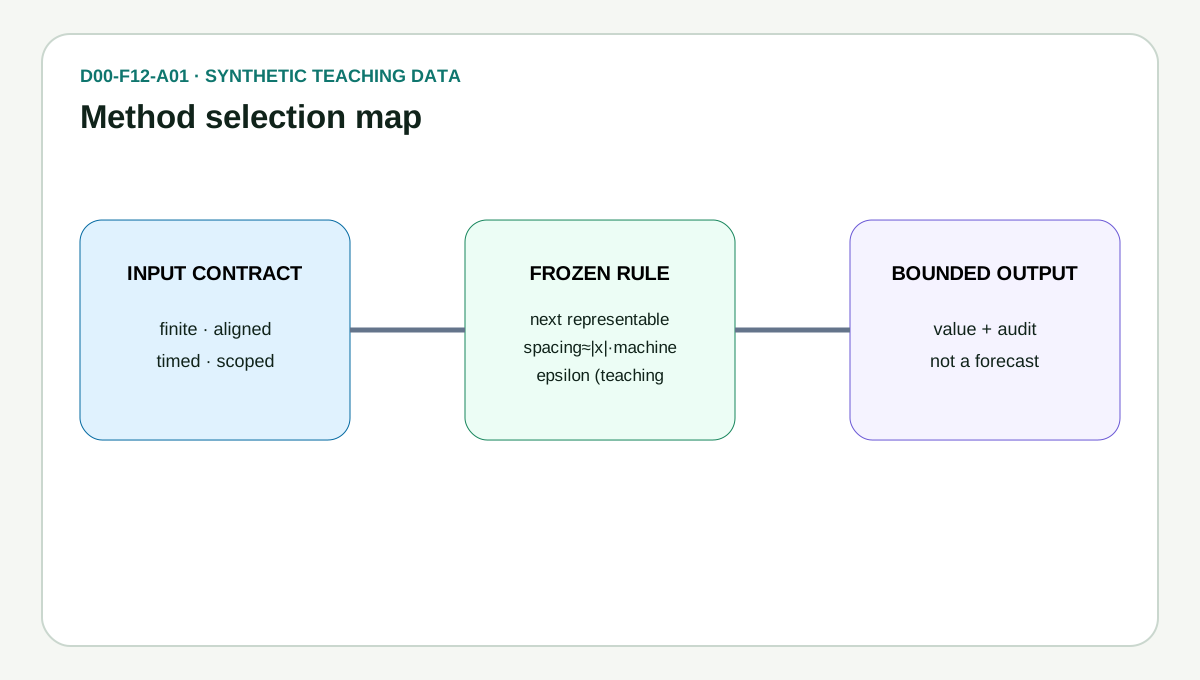
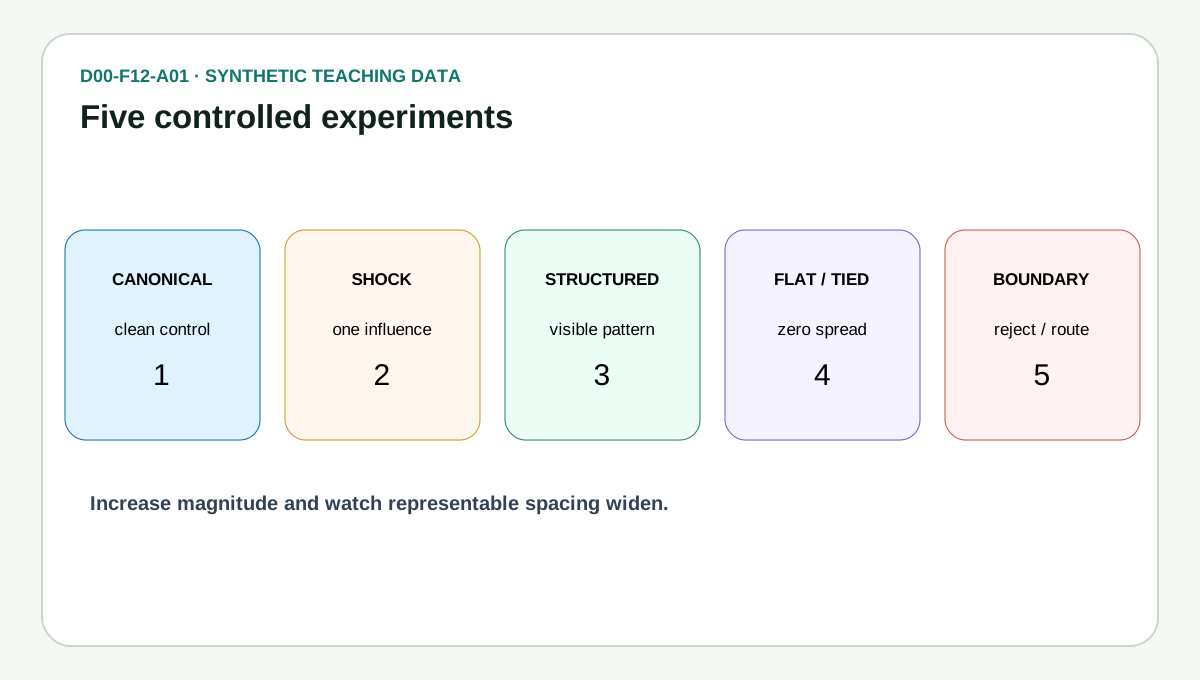
Calculation flow#
Reasoning flow — D00-F12-A01
flowchart LR
    A["Synthetic input + metadata"] --> B{"Contract valid?"}
    B -->|No| C["Reject or route with reason"]
    B -->|Yes| D["Apply Floating-Point Representation, Overflow, and Underflow"]
    D --> E["Formula: ulp(x) = spacing between adjacent doubles at |x|; nextUp(x) = next double above x"]
    E --> F["Verified fixture output"]
    F --> G{"Interpretation within boundary?"}
    G -->|Yes| H["Report value + convention + audit"]
    G -->|No| I["Add companion view or narrower claim"]
How it works#
This page states the contract — how to call it correctly. The article explains the concept: why it works, and where it breaks.
References#
- Floating-Point Arithmetic — IEEE 754-2019
- math.fsum — Python Documentation
- Random Sampling — NumPy Documentation
- Common Pitfalls and Recommended Practices — scikit-learn
- Historical-example decision