Time Order, Frequency, Regularity, and Financial Calendars
Install and import#
npm install fintech-algorithmsimport { timeOrderFrequencyRegularityAndFinancialCalendars } from "fintech-algorithms/foundations/financial-time-series-foundations/time-order-frequency-regularity-and-financial-calendars";Signature#
timeOrderFrequencyRegularityAndFinancialCalendars(input)Checks whether a timestamped series runs in chronological order and whether its observations are evenly spaced, reporting the common spacing in seconds when there is one.
Parameters#
| Name | Type | Notes |
|---|---|---|
input | D00Input | Reads timestamps, a list of parseable date-time strings, and values, a non-empty list of finite numbers of the same length. Only the timestamps drive this calculation; the values supply the count. |
Returns#
D00Output
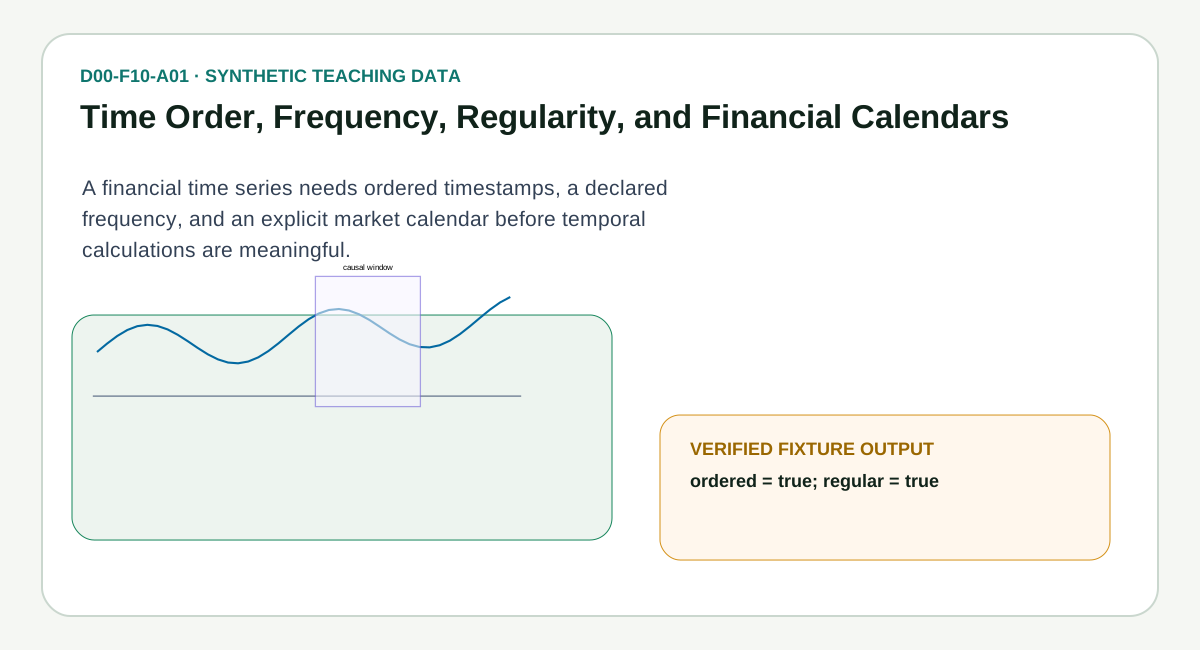
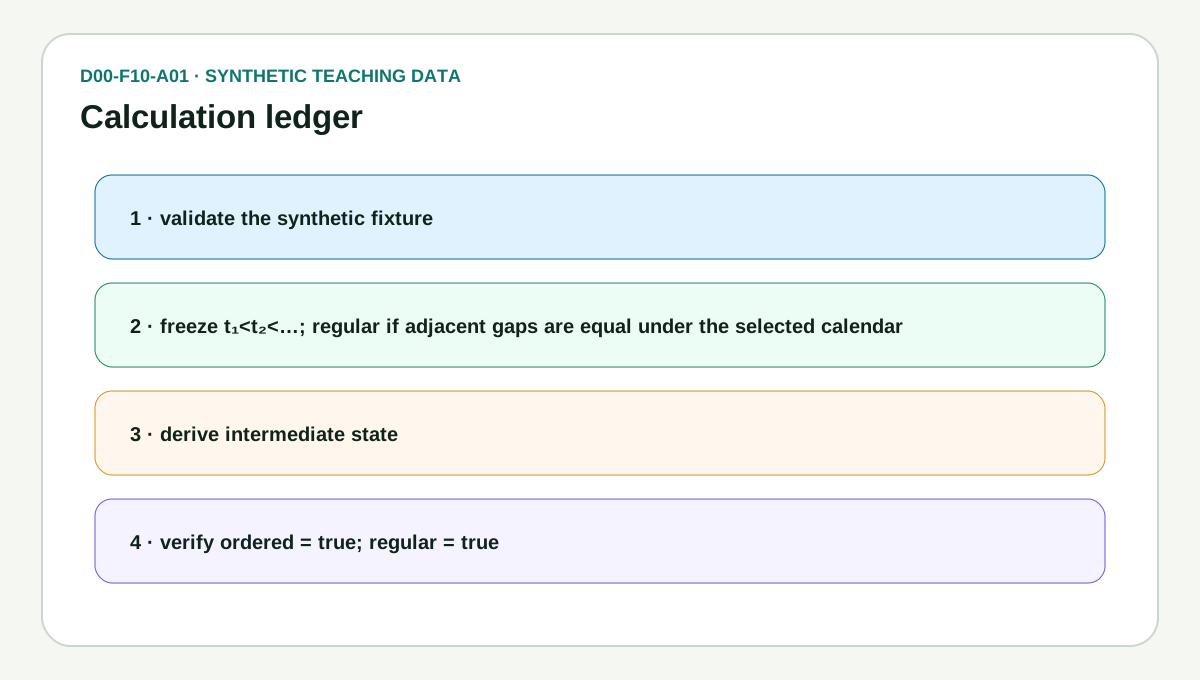
ordered is true when no timestamp precedes the one before it, regular is true when every consecutive gap is identical, observations is the series length, and frequencySeconds is that common gap in seconds or null when the spacing varies.
Errors#
- When
valuesis absent, empty, or holds a non-finite number — throws RangeError - When
timestampsandvalueshave different lengths — throws RangeError - When the series holds fewer than two observations — throws RangeError
Complexity: time O(n),
space O(n).
Worked example#
verified This is the worked example published in the article, replayed by the test suite on every run. The output cannot drift.
Input#
{
  "timestamps": [
    "2025-01-01T00:00:00Z",
    "2025-01-02T00:00:00Z",
    "2025-01-03T00:00:00Z",
    "2025-01-04T00:00:00Z",
    "2025-01-05T00:00:00Z",
    "2025-01-06T00:00:00Z"
  ],
  "values": [100, 102, 101, 104, 106, 105],
  "lag": 1,
  "window": 3,
  "resampleSize": 2,
  "period": 3,
  "stationarityTolerance": 3,
  "alpha": 0.4,
  "splitIndex": 4
}Call#
timeOrderFrequencyRegularityAndFinancialCalendars(input)Returns#
object with 4 fields: ordered, regular, observations, frequencySeconds
{
  "ordered": true,
  "regular": true,
  "observations": 6,
  "frequencySeconds": 86400
}Diagrams#
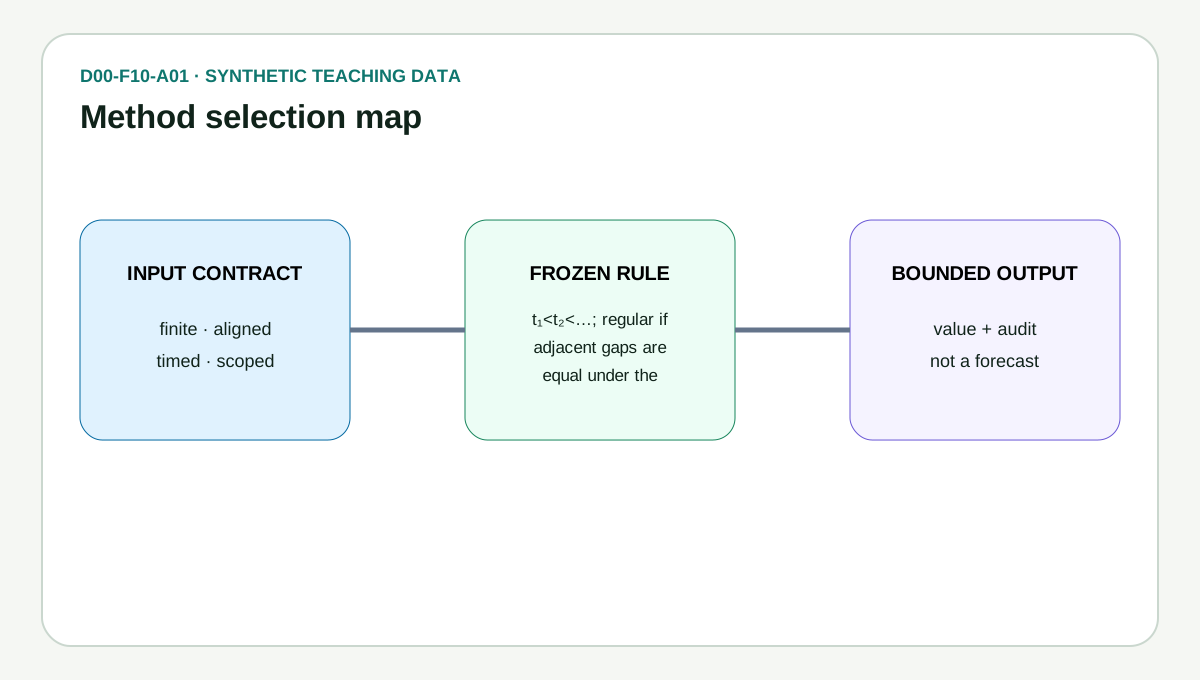
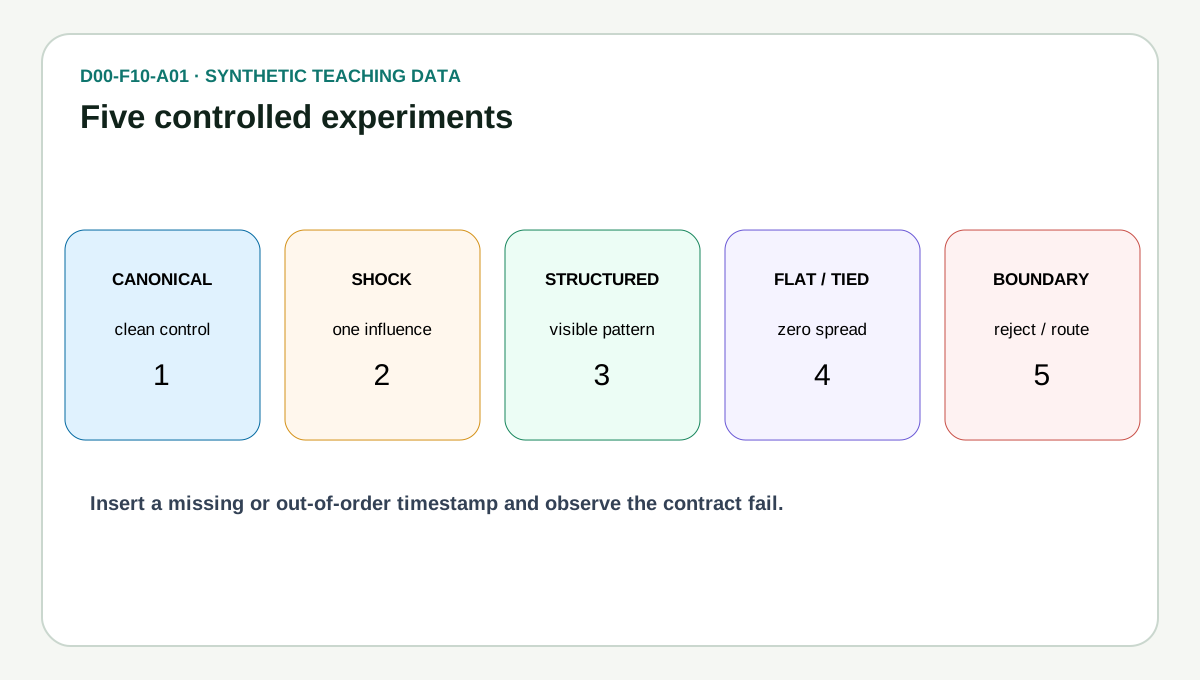
Calculation flow#
Reasoning flow — D00-F10-A01
flowchart LR
    A["Synthetic input + metadata"] --> B{"Contract valid?"}
    B -->|No| C["Reject or route with reason"]
    B -->|Yes| D["Apply Time Order, Frequency, Regularity, and Financial Calendars"]
    D --> E["Formula: ordered if t₁≤t₂≤…; regular if every adjacent UTC gap is identical"]
    E --> F["Verified fixture output"]
    F --> G{"Interpretation within boundary?"}
    G -->|Yes| H["Report value + convention + audit"]
    G -->|No| I["Add companion view or narrower claim"]
How it works#
This page states the contract — how to call it correctly. The article explains the concept: why it works, and where it breaks.
References#
- Time Series Plot — NIST/SEMATECH e-Handbook
- Common Pitfalls and Recommended Practices — scikit-learn
- Historical-example decision