Fundamental Metric Direction and Peer Normalization
Install and import#
npm install fintech-algorithmsimport { fundamentalMetricDirectionAndPeerNormalization } from "fintech-algorithms/fundamental-analysis-and-valuation/integrated-equity-scoring/fundamental-metric-direction-and-peer-normalization";Signature#
fundamentalMetricDirectionAndPeerNormalization(data)Turns each metric's target value into a midrank empirical percentile against its peer values, flips that percentile where lower is better, and averages the resulting scores across metrics.
Parameters#
| Name | Type | Notes |
|---|---|---|
data | { min_peers: number; metrics: Array<{ name: string; target: number; peers: number[]; higher_is_better: boolean }> } | The normalisation request. min_peers is truncated to an integer and is the number of finite peers each metric must supply. Each metric needs a text name, a finite target, a peers list whose non-finite entries are dropped, and a boolean higher_is_better that decides whether the percentile is kept or subtracted from 100. |
Returns#
{ state: string; method: string; metrics: Array<{ name: string; target: number; peer_count: number; percentile: number; higher_is_better: boolean; normalized_score: number }>; aggregate_score: number; metric_count: number; invariant: string }
One row per input metric carrying peer_count, the percentile formed as peers strictly below the target plus half the ties, over the peer count and times 100, and the direction-adjusted normalized_score. aggregate_score is the unweighted mean of those scores and metric_count their number.
Errors#
- When metrics is not a nonempty list, or a metric lacks a text name or a peers list — throws TypeError
- When a metric target is not a finite number, or higher_is_better is not a boolean — throws TypeError
- When min_peers is not positive — throws RangeError
- When a metric supplies fewer finite peer values than min_peers — throws RangeError
Complexity: time O(m * p),
space O(m + p).
Worked example#
executed Captured by running this function on the input its own test provides. Real output of real code — but not asserted against a published figure.
Input#
{
  "min_peers": 3,
  "metrics": [
    {
      "name": "roic",
      "target": 0.12,
      "peers": [0.08, 0.1, 0.14, 0.16],
      "higher_is_better": true
    },
    {
      "name": "net_debt_to_ebitda",
      "target": 1.5,
      "peers": [0.8, 1.2, 2, 3],
      "higher_is_better": false
    },
    {
      "name": "fcf_margin",
      "target": 0.1,
      "peers": [0.04, 0.08, 0.12, 0.16],
      "higher_is_better": true
    }
  ]
}Call#
fundamentalMetricDirectionAndPeerNormalization(data)Returns#
object with 6 fields: state, method, metrics, aggregate_score, metric_count, invariant
{
  "state": "calculated",
  "method": "midrank-empirical-percentile-with-direction",
  "metrics": [
    {
      "name": "roic",
      "target": 0.12,
      "peer_count": 4,
      "percentile": 50,
      "higher_is_better": true,
      "normalized_score": 50
    },
    {
      "name": "net_debt_to_ebitda",
      "target": 1.5,
      "peer_count": 4,
      "percentile": 50,
      "higher_is_better": false,
      "normalized_score": 50
    },
    {
      "name": "fcf_margin",
      "target": 0.1,
      "peer_count": 4,
      "percentile": 50,
      "higher_is_better": true,
      "normalized_score": 50
    }
  ],
  "aggregate_score": 50,
  "metric_count": 3,
  "invariant": "higher-is-better reverses the percentile only; peer values are not z-scored"
}
Other exports#
This module also exports
calculate, pointInTimeStockScoringInputAssembly, stockScoringPeerCohortResolver, modelApplicabilityAndVariantRouter, accountingFinancialHealthComposite, earningsQualityComposite, dividendSafetyScore, balanceSheetResilienceScore, distressModelEnsemble, crossModelConflictAndDoubleCountingResolver, overallExplainableStockScore, scoreConfidenceMissingDataPenaltyAndAbstention, marketWideStockScreeningAndRanking, stockScoreHistoryMigrationAndChangeAttribution. Every module additionally exports run as an alias of its
primary function, and a meta object carrying its catalog id, domain, family,
shape and article URL.
Diagrams#
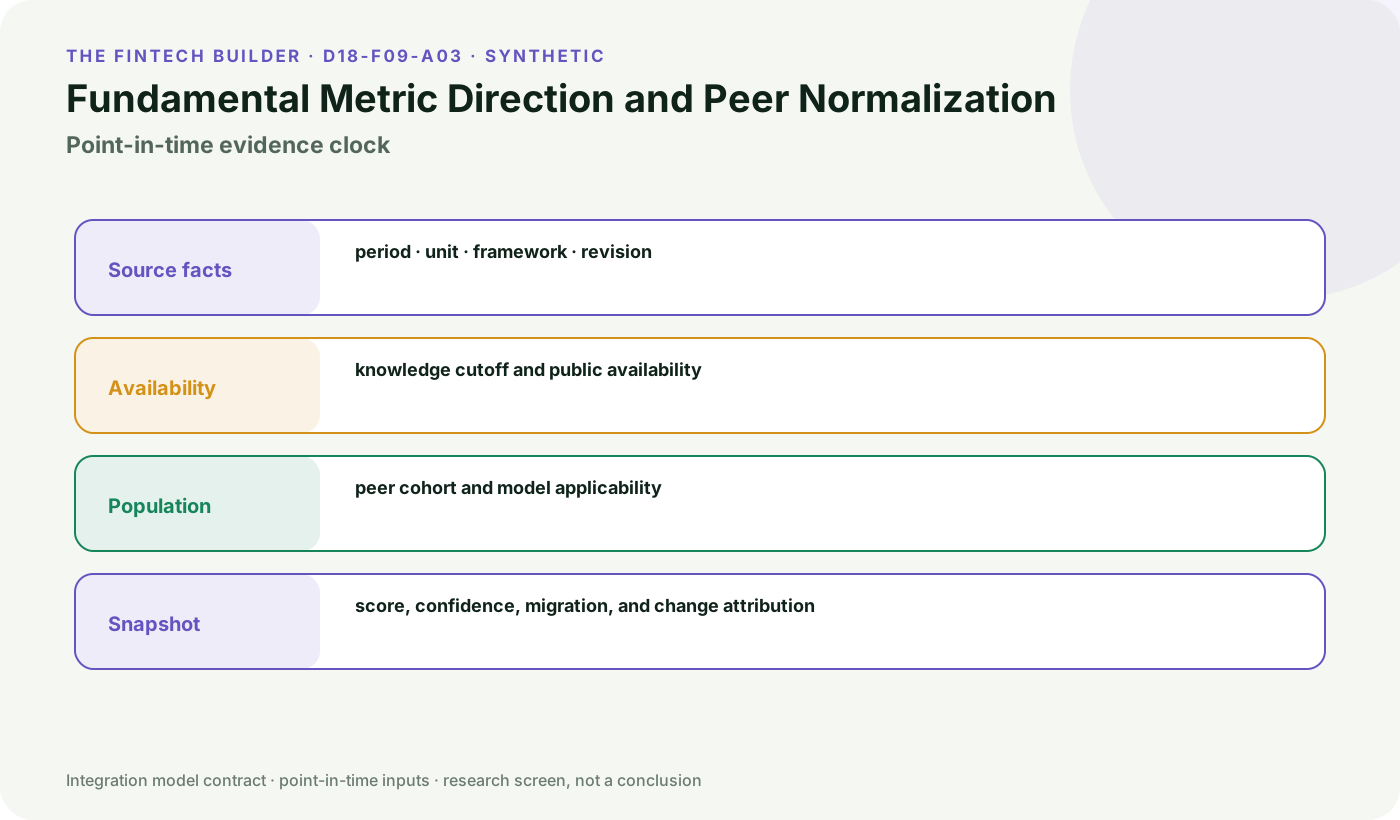
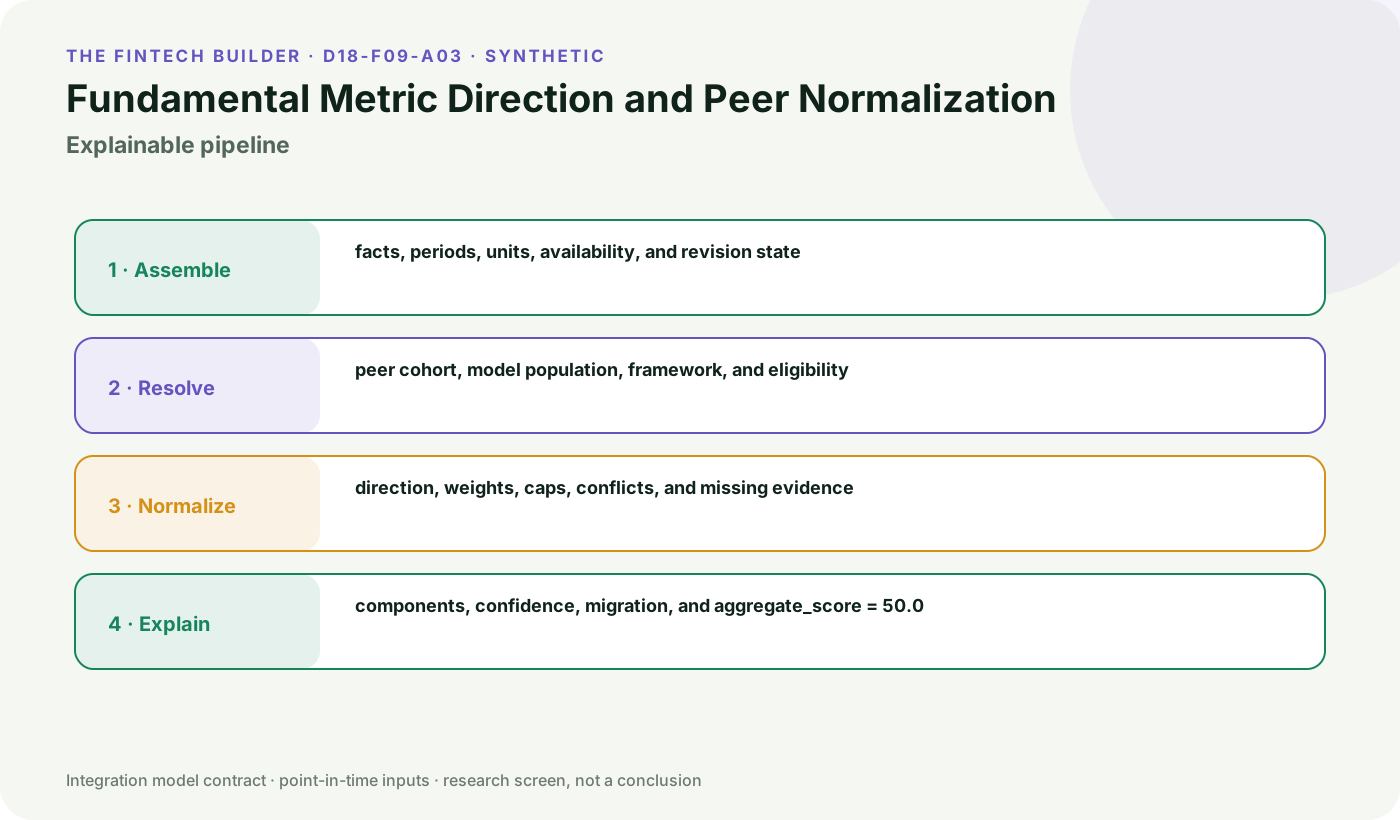

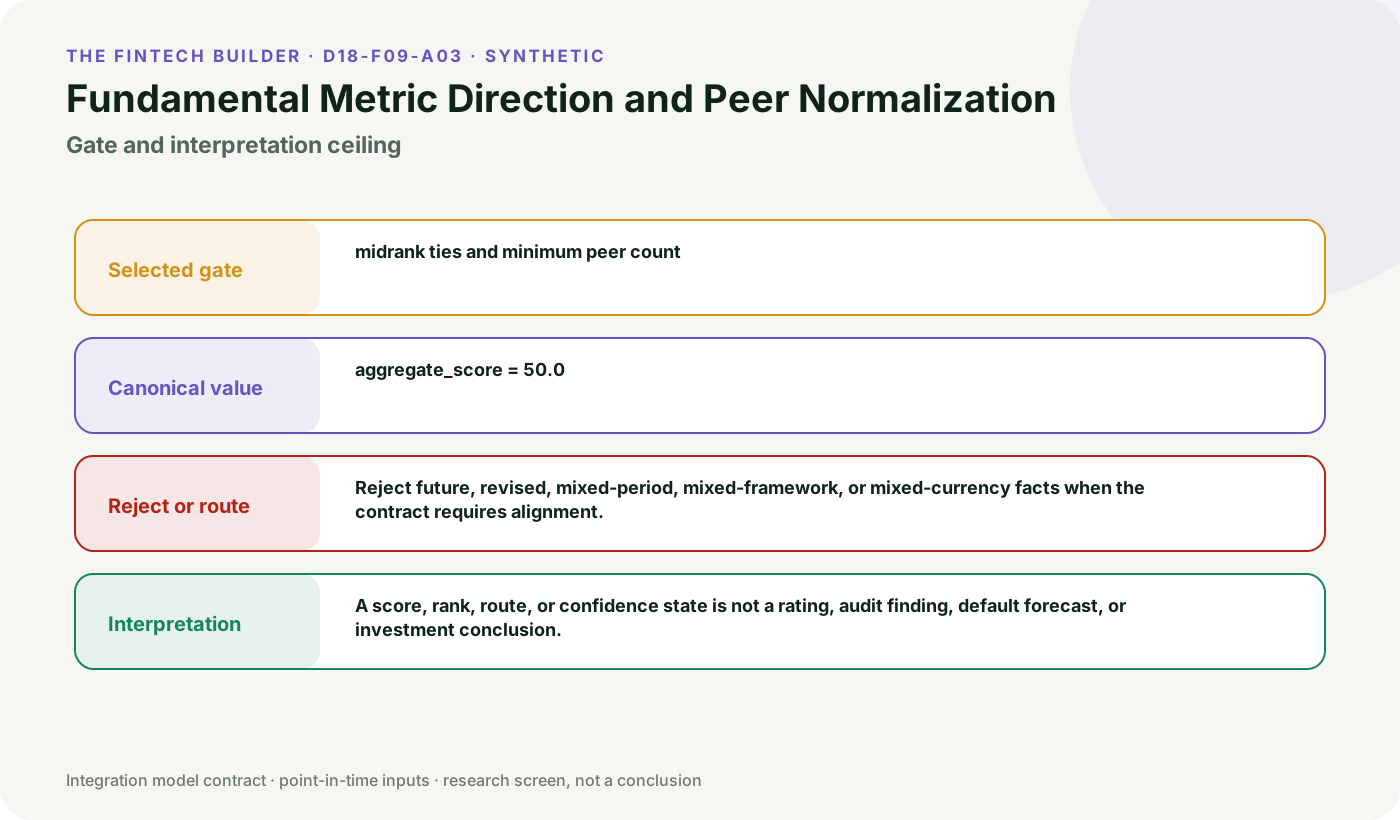
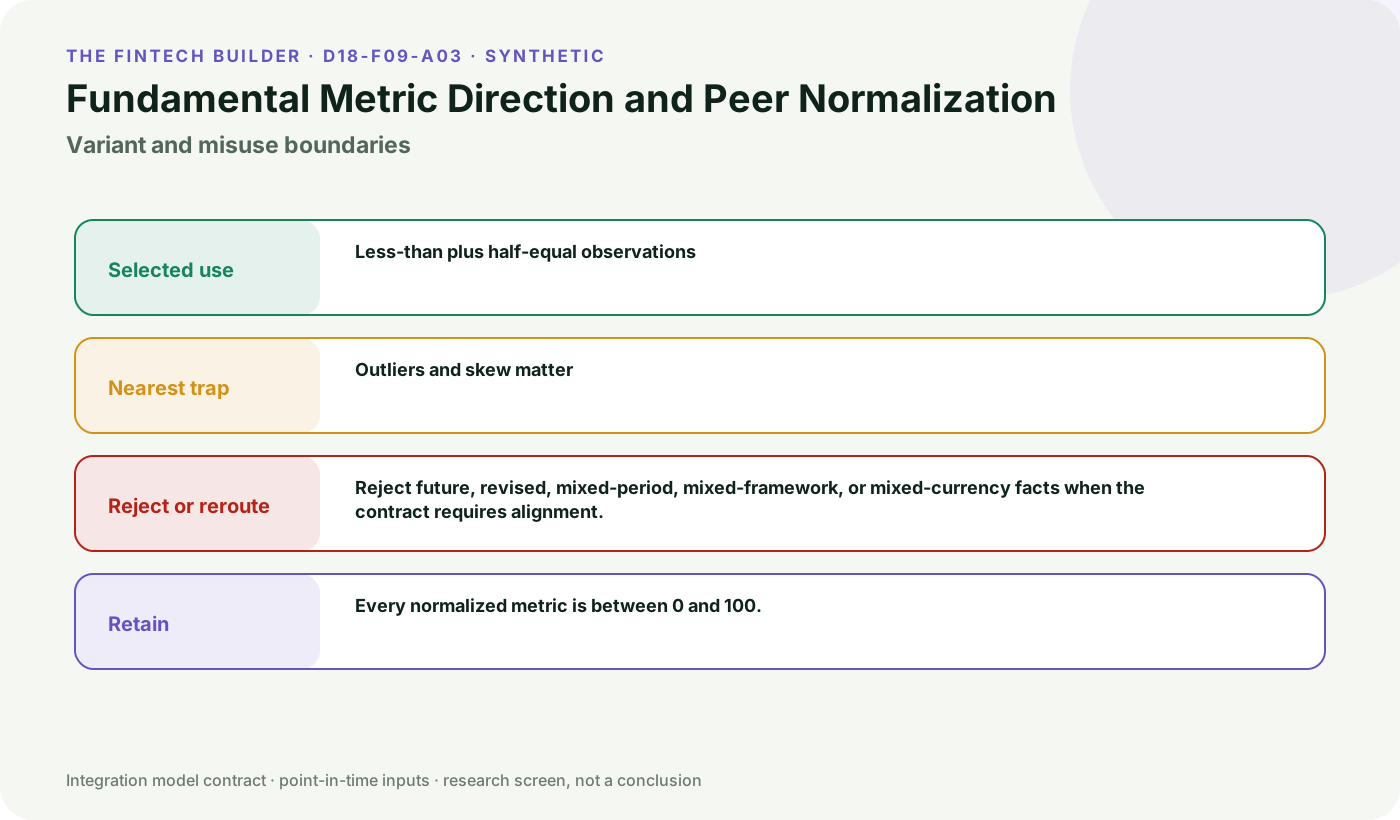
Calculation flow#
Fundamental Metric Direction and Peer Normalization calculation flow
flowchart LR
    S1["Validate metric names targets peer values minimum peer"]
    S2["Count values below and equal to the target"]
    S3["Calculate the midrank percentile and directionadjusted"]
    S4["Average metric scores and retain each metrics evidence"]
    S1 --> S2
    S2 --> S3
    S3 --> S4
    S4 --> D{"midrank ties and minimum peer count"}
    D --> O["aggregate_score + diagnostics"]
    O --> A["Audit: Every normalized metric is between 0 and 100"]
How it works#
This page states the contract — how to call it correctly. The article explains the concept: why it works, and where it breaks.
References#
- Percentiles — National Institute of Standards and Technology
- Beginners' Guide to Financial Statements — U.S. Securities and Exchange Commission
- Conceptual Framework for Financial Reporting — International Accounting Standards Board
- Evidence boundary