Piotroski F-Score
Install and import#
npm install fintech-algorithmsimport { piotroskiFScore } from "fintech-algorithms/fundamental-analysis-and-valuation/quality-and-distress/piotroski-f-score";Signature#
piotroskiFScore(data)Scores the nine binary Piotroski signals covering profitability, leverage and liquidity, and operating efficiency across the current and prior year, and sums them into an F-Score from 0 to 9.
Parameters#
| Name | Type | Notes |
|---|---|---|
data | { net_income: number; prior_net_income: number; operating_cash_flow: number; beginning_total_assets: number; prior_beginning_total_assets: number; long_term_debt: number; prior_long_term_debt: number; current_assets: number; current_liabilities: number; prior_current_assets: number; prior_current_liabilities: number; equity_issued: number; gross_profit: number; prior_gross_profit: number; sales: number; prior_sales: number } | Current and prior-year accounting values in one flat record. The function reads beginning_total_assets and prior_beginning_total_assets as the ROA and turnover denominators, net_income, prior_net_income and operating_cash_flow for the profitability signals, long_term_debt, prior_long_term_debt, current_assets, current_liabilities, prior_current_assets, prior_current_liabilities and equity_issued for the leverage and liquidity signals, and gross_profit, prior_gross_profit, sales and prior_sales for the efficiency signals. |
Returns#
{ state: string; method: string; signals: { positive_roa: number; positive_cfo: number; improving_roa: number; cash_exceeds_income: number; lower_leverage: number; higher_current_ratio: number; no_equity_issue: number; higher_gross_margin: number; higher_asset_turnover: number }; f_score: number; band: string; signal_count: number }
signals carries each of the nine tests as 0 or 1 and f_score is their sum. band is weak-signals at 2 or below, strong-signals at 8 or above and mixed-signals between. signal_count is always 9, method is piotroski-2000-nine-signal and state is calculated.
Errors#
- When data is not a plain object — throws TypeError
- When any field read is missing or not a finite number — throws TypeError
- When any of beginning_total_assets, prior_beginning_total_assets, current_assets, current_liabilities, prior_current_assets, prior_current_liabilities, sales or prior_sales is zero or negative — throws RangeError
- When equity_issued is negative — throws RangeError
Complexity: time O(1),
space O(1).
Worked example#
executed Captured by running this function on the input its own test provides. Real output of real code — but not asserted against a published figure.
Input#
{
  "net_income": 80,
  "prior_net_income": 50,
  "operating_cash_flow": 110,
  "beginning_total_assets": 900,
  "prior_beginning_total_assets": 850,
  "long_term_debt": 260,
  "prior_long_term_debt": 300,
  "current_assets": 500,
  "current_liabilities": 250,
  "prior_current_assets": 430,
  "prior_current_liabilities": 250,
  "equity_issued": 0,
  "gross_profit": 480,
  "prior_gross_profit": 390
}
Showing 14 of 16 fields.
Call#
piotroskiFScore(data)Returns#
object with 6 fields: state, method, signals, f_score, band, signal_count
{
  "state": "calculated",
  "method": "piotroski-2000-nine-signal",
  "signals": {
    "positive_roa": 1,
    "positive_cfo": 1,
    "improving_roa": 1,
    "cash_exceeds_income": 1,
    "lower_leverage": 1,
    "higher_current_ratio": 1,
    "no_equity_issue": 1,
    "higher_gross_margin": 1,
    "higher_asset_turnover": 1
  },
  "f_score": 9,
  "band": "strong-signals",
  "signal_count": 9
}
Other exports#
This module also exports
calculate, altmanZScore, beneishMScore, sloanAccrualMeasure, ohlsonOScore, zmijewskiXScore, springateSScore, tafflerZScore, fulmerHScore, groverGScore, dechowFScoreForMisstatementRisk, dechowDichevAccrualQuality, modifiedJonesDiscretionaryAccrualModel. Every module additionally exports run as an alias of its
primary function, and a meta object carrying its catalog id, domain, family,
shape and article URL.
Diagrams#
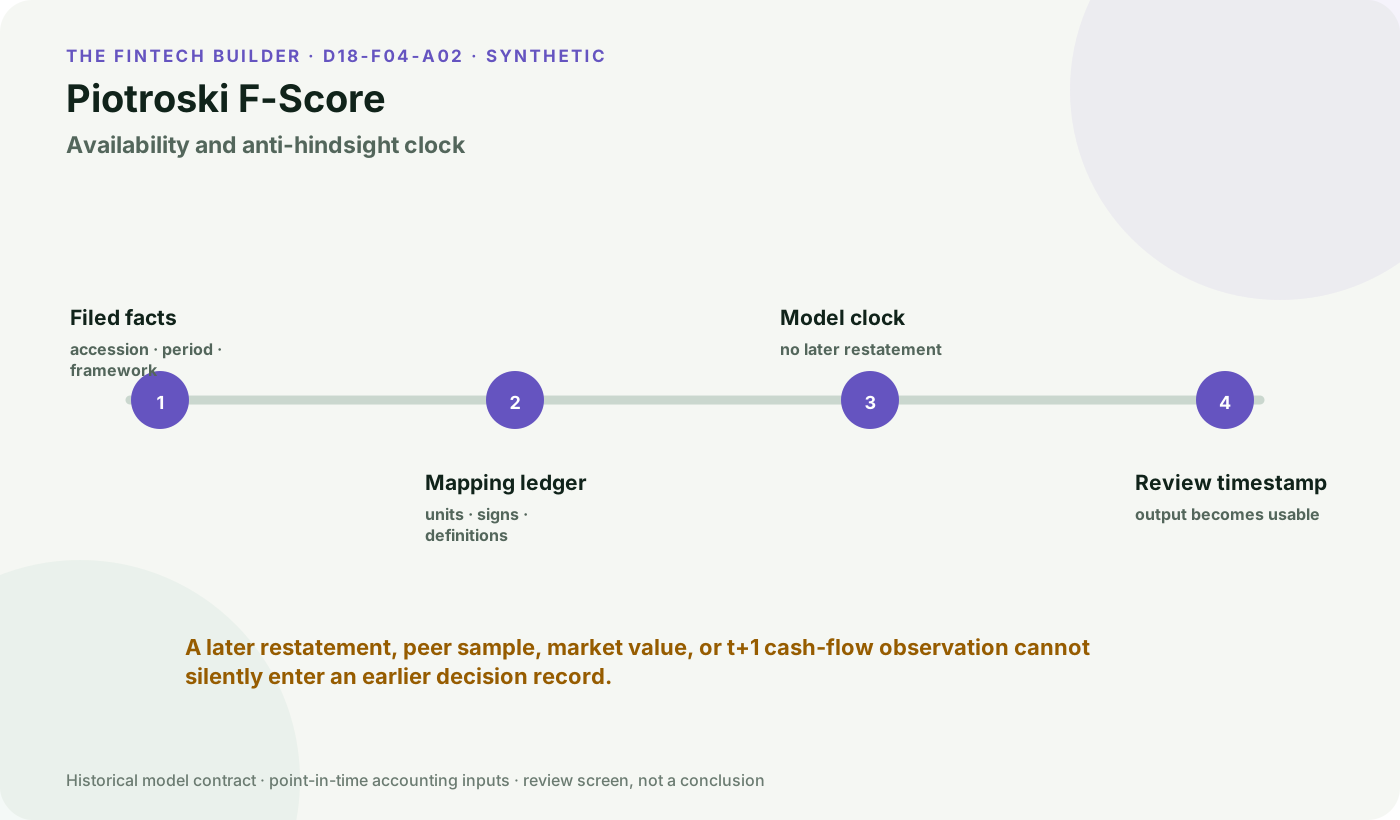
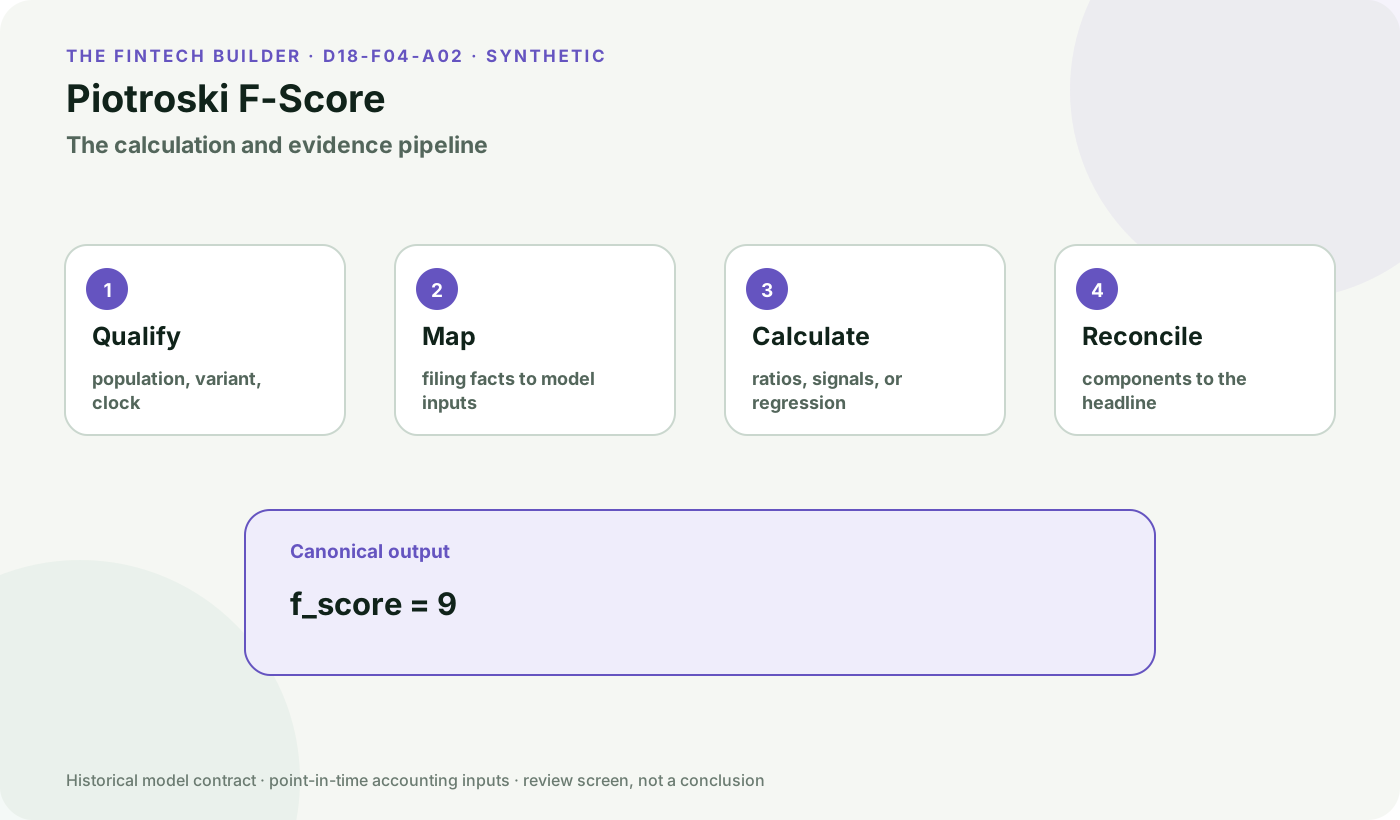

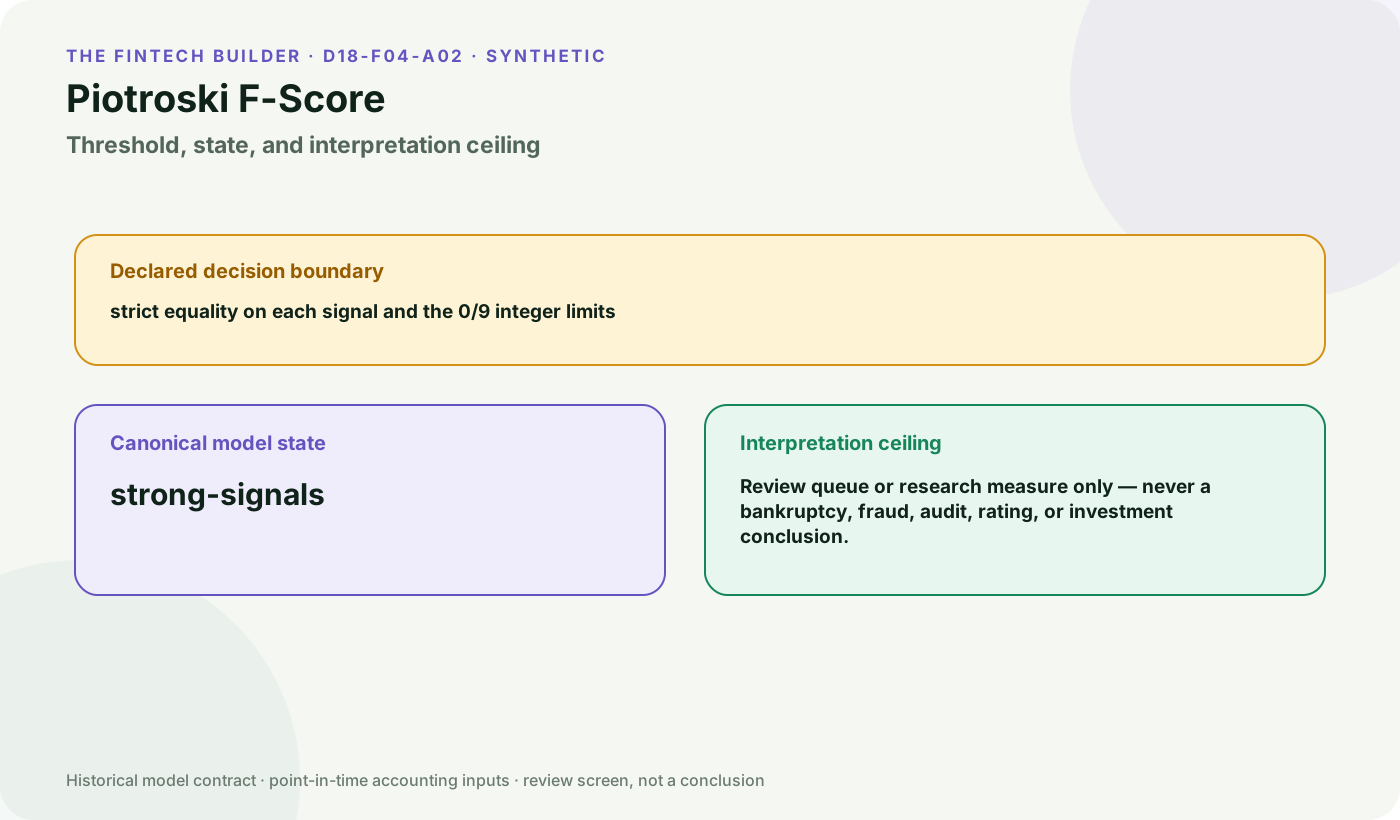
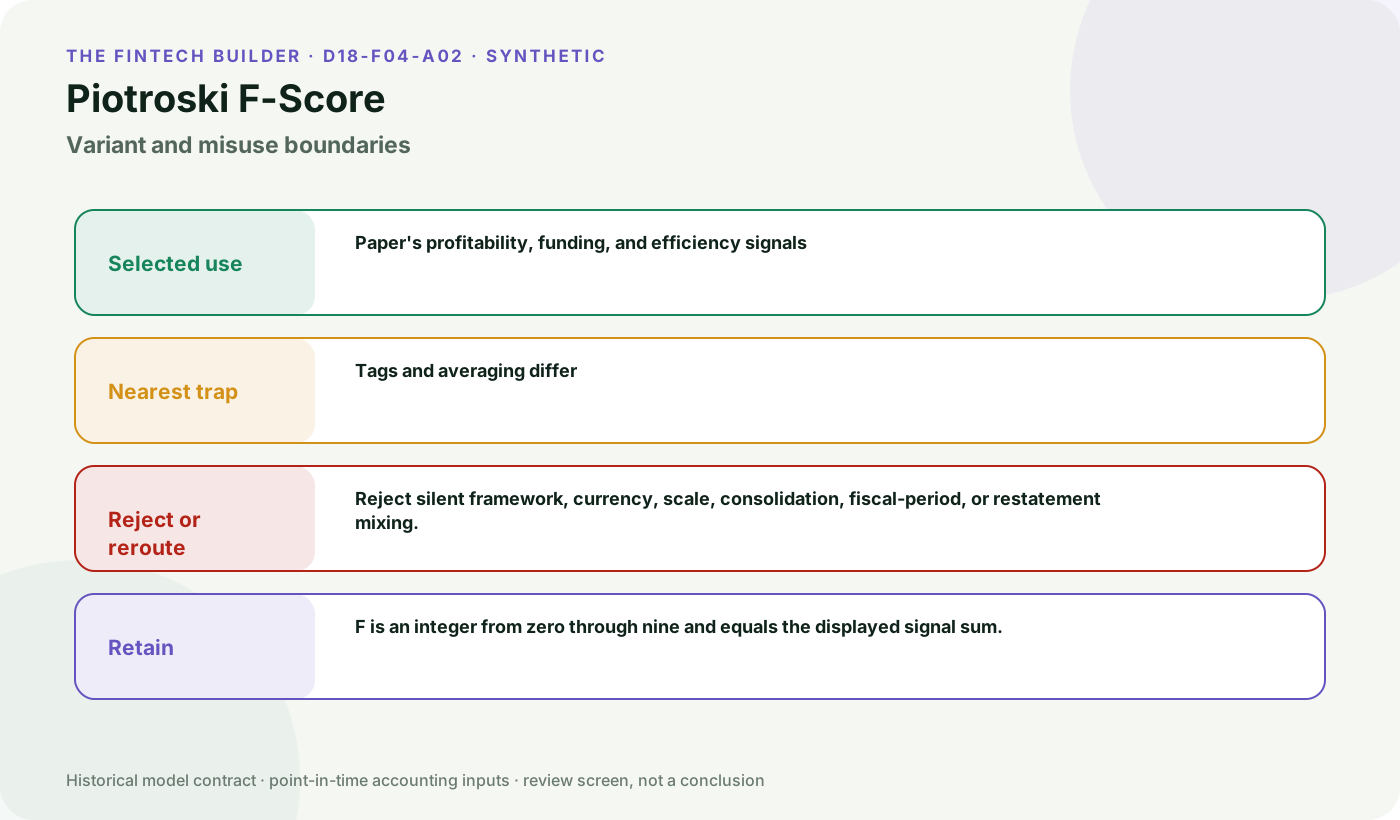
Calculation flow#
Piotroski F-Score calculation flow
flowchart LR
    S1["Align current and prior annual statements"]
    S2["Calculate four profitabilitycash signals"]
    S3["Calculate three leverageliquidityfunding signals"]
    S4["Calculate two efficiency signals and sum the nine bool"]
    S1 --> S2
    S2 --> S3
    S3 --> S4
    S4 --> D{"strict equality on each signal and the 09 integer limits"}
    D --> O["f_score + diagnostics"]
    O --> A["Audit: F is an integer from zero through nine and equals the disp"]
How it works#
This page states the contract — how to call it correctly. The article explains the concept: why it works, and where it breaks.
References#
- Value Investing: The Use of Historical Financial Statement Information to Separate Winners from Losers — Joseph D. Piotroski
- Beginners' Guide to Financial Statements — U.S. Securities and Exchange Commission
- Conceptual Framework for Financial Reporting — International Accounting Standards Board
- Evidence boundary