Point-in-Time Stock-Scoring Input Assembly
Install and import#
npm install fintech-algorithmsimport { pointInTimeStockScoringInputAssembly } from "fintech-algorithms/fundamental-analysis-and-valuation/integrated-equity-scoring/point-in-time-stock-scoring-input-assembly";Signature#
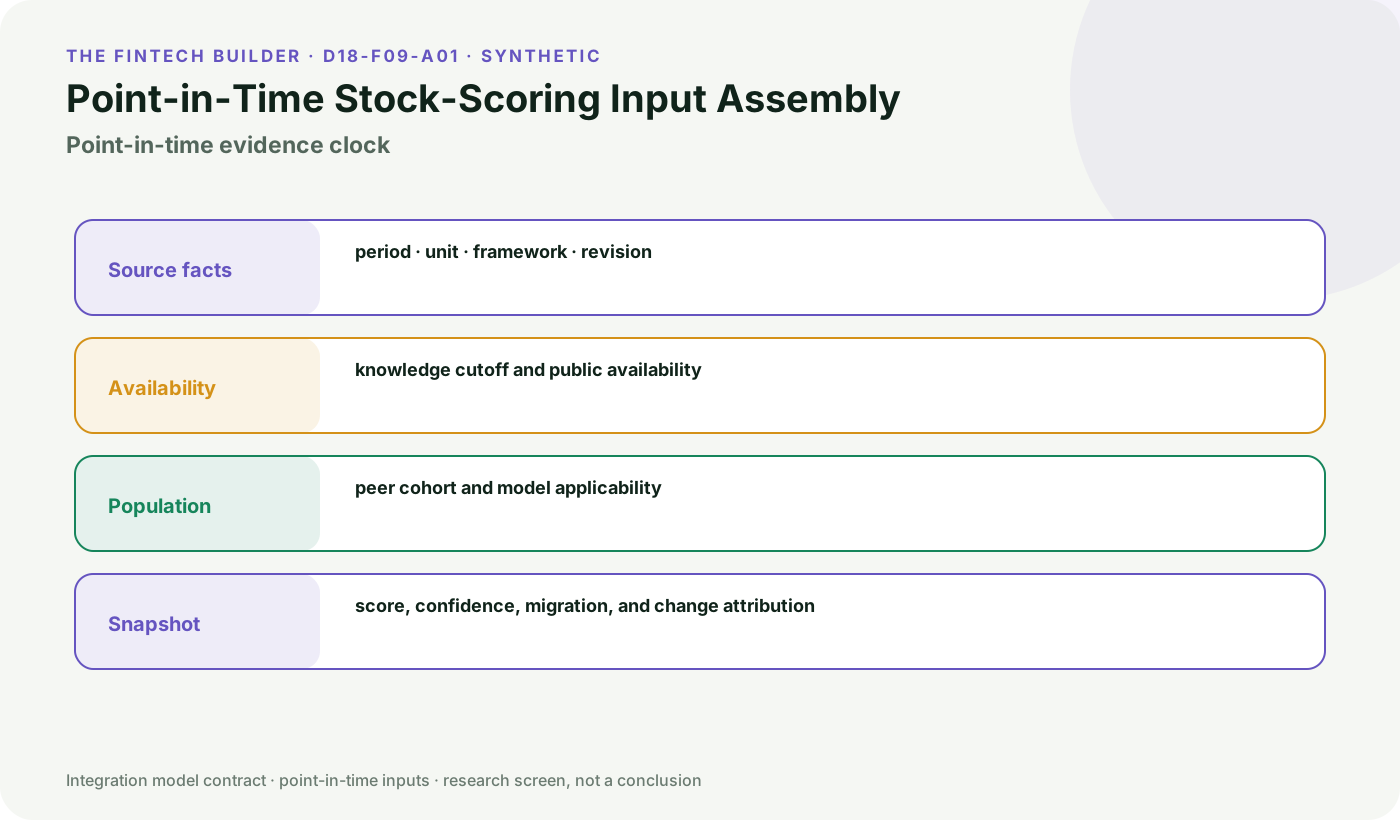
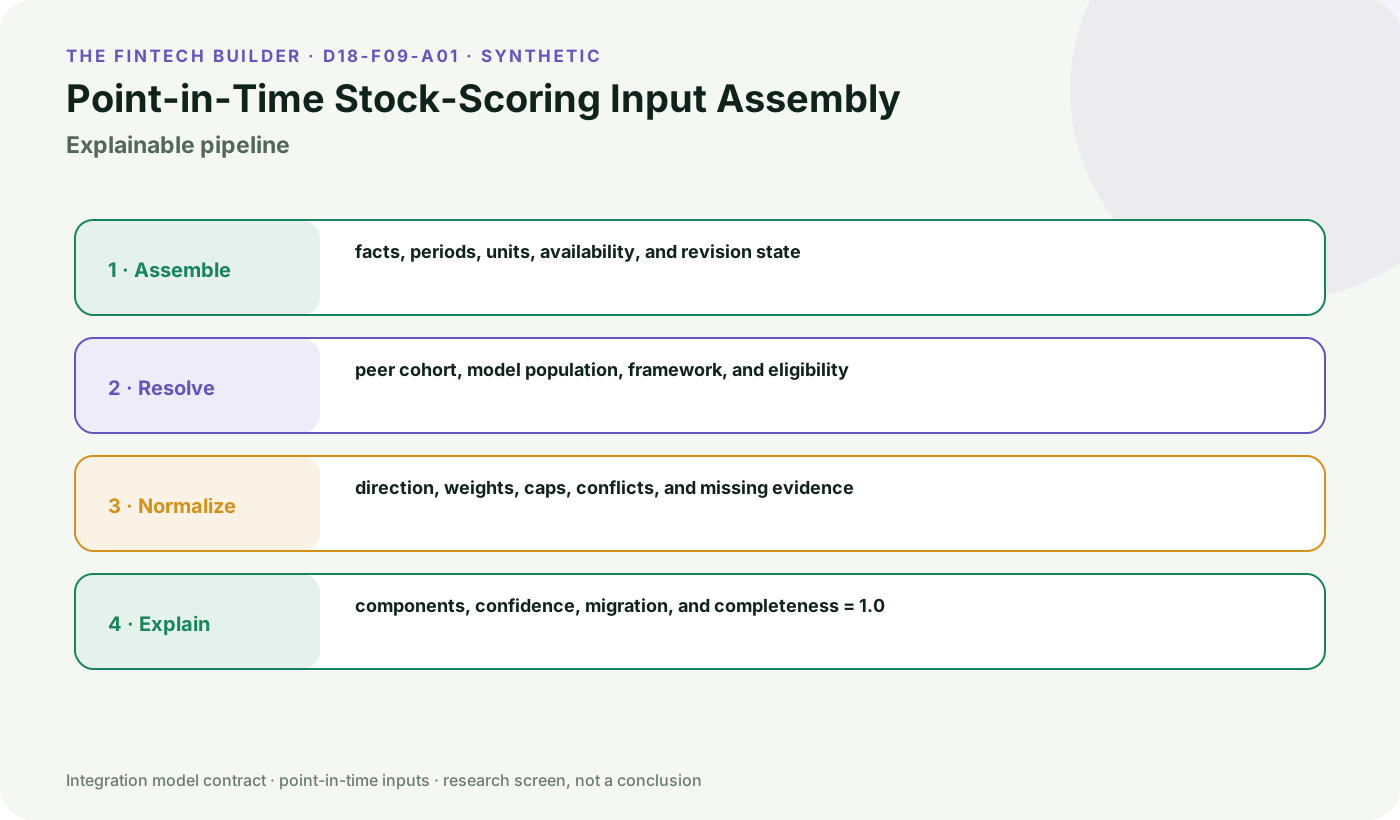
pointInTimeStockScoringInputAssembly(data)Resolves each required field to the latest original filing fact that was already available at the knowledge cutoff and that matches the requested period, currency and scale, and reports what could not be resolved.
Parameters#
| Name | Type | Notes |
|---|---|---|
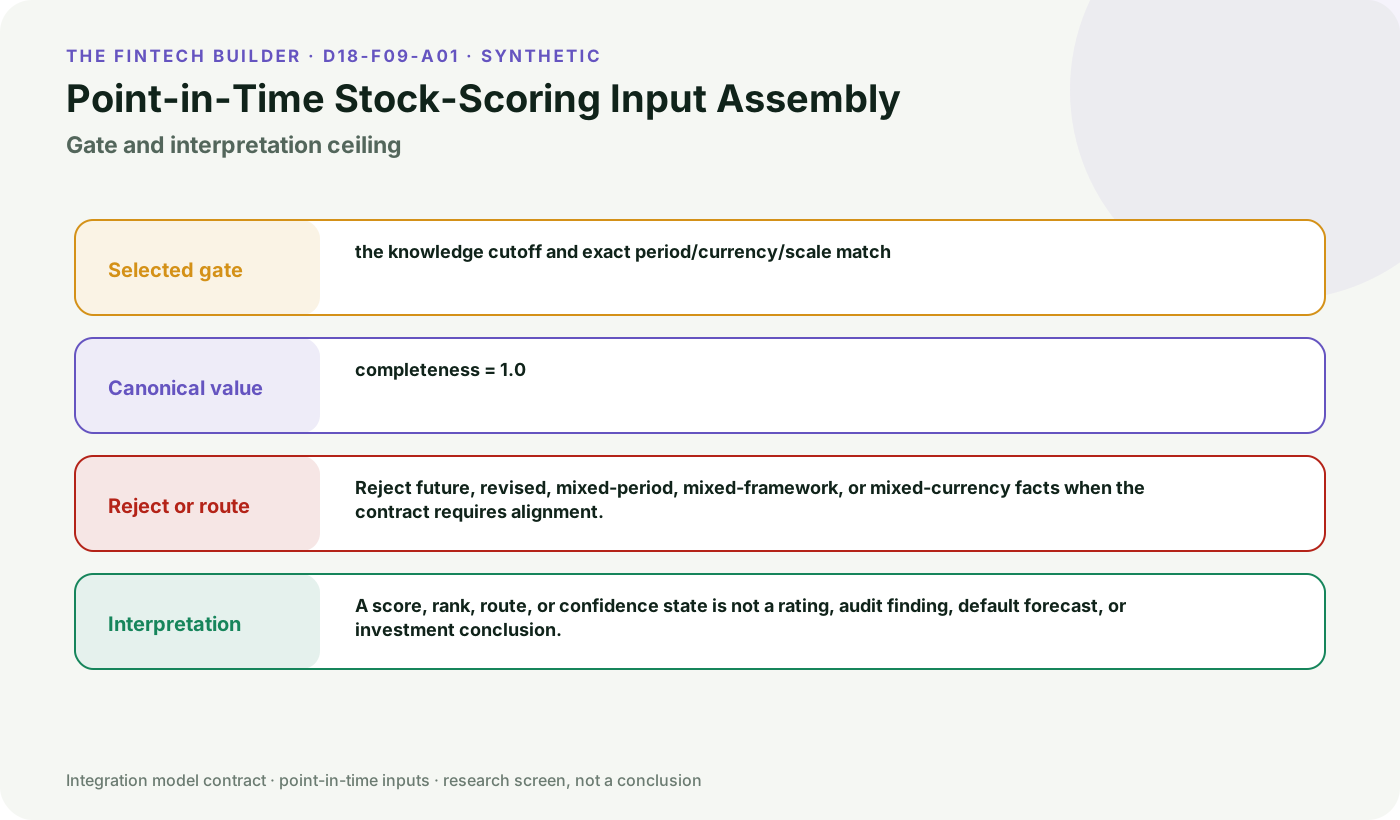
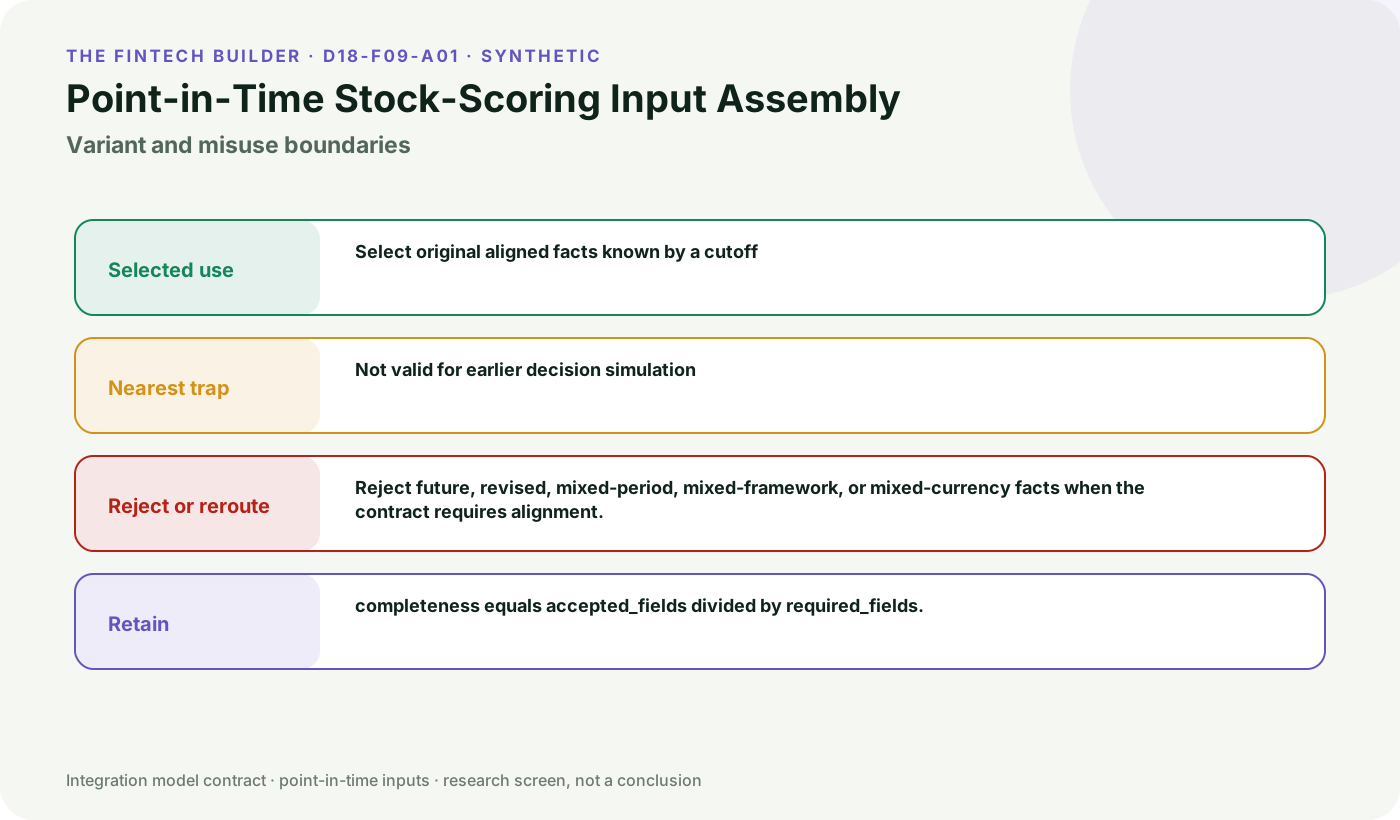
data | { knowledge_cutoff: string; period_end: string; currency: string; scale: string; required_fields: string[]; facts: Array<{ field: string; value: number; available_at: string; period_end: string; currency: string; scale: string; revision: string }> } | The assembly request. knowledge_cutoff and period_end are YYYY-MM-DD strings and required_fields names the fields to resolve. A row of facts is a candidate only when its field matches, its value is a finite number, its available_at is at or before the cutoff, its period_end equals the requested one, its currency and scale equal the requested ones, and its revision is original; the candidate with the latest available_at wins. |
Returns#
{ state: string; method: string; as_of: string; accepted_fields: string[]; selected_values: Record<string, number>; rejected_fields: Array<{ field: string; reason: string }>; completeness: number; ready: boolean; clock_policy: string }
selected_values holds one value per resolved field and accepted_fields their sorted names, rejected_fields carries a reason for each unresolved field, completeness is the resolved share of required_fields, ready is true when that share is one, and state is ready or incomplete accordingly. as_of echoes the knowledge cutoff.
Errors#
- When knowledge_cutoff or period_end is not a YYYY-MM-DD string — throws TypeError
- When currency or scale is not nonempty text — throws TypeError
- When required_fields is not a nonempty list of nonempty strings, or facts is not a list — throws TypeError
Complexity: time O(m * n log n),
space O(m + n).
Worked example#
executed Captured by running this function on the input its own test provides. Real output of real code — but not asserted against a published figure.
Input#
{
  "knowledge_cutoff": "2025-03-31",
  "period_end": "2024-12-31",
  "currency": "USD",
  "scale": "millions",
  "required_fields": ["revenue", "total_assets", "net_income", "operating_cash_flow"],
  "facts": [
    {
      "field": "revenue",
      "value": 1200,
      "period_end": "2024-12-31",
      "available_at": "2025-02-15",
      "revision": "original",
      "currency": "USD",
      "scale": "millions"
    },
    {
      "field": "total_assets",
      "value": 1000,
      "period_end": "2024-12-31",
      "available_at": "2025-02-15",
      "revision": "original",
      "currency": "USD",
      "scale": "millions"
    },
    {
      "field": "net_income",
      "value": 90,
      "period_end": "2024-12-31",
      "available_at": "2025-02-15",
      "revision": "original",
      "currency": "USD",
      "scale": "millions"
    }
  ]
}Call#
pointInTimeStockScoringInputAssembly(data)Returns#
object with 9 fields: state, method, as_of, accepted_fields, selected_values, rejected_fields, completeness, ready, …
{
  "state": "ready",
  "method": "point-in-time-filing-fact-assembly",
  "as_of": "2025-03-31",
  "accepted_fields": ["net_income", "operating_cash_flow", "revenue", "total_assets"],
  "selected_values": {
    "revenue": 1200,
    "total_assets": 1000,
    "net_income": 90,
    "operating_cash_flow": 120
  },
  "rejected_fields": [],
  "completeness": 1,
  "ready": true,
  "clock_policy": "availability_at <= knowledge_cutoff; original revision; exact period/currency/scale"
}
Other exports#
This module also exports
calculate, stockScoringPeerCohortResolver, fundamentalMetricDirectionAndPeerNormalization, modelApplicabilityAndVariantRouter, accountingFinancialHealthComposite, earningsQualityComposite, dividendSafetyScore, balanceSheetResilienceScore, distressModelEnsemble, crossModelConflictAndDoubleCountingResolver, overallExplainableStockScore, scoreConfidenceMissingDataPenaltyAndAbstention, marketWideStockScreeningAndRanking, stockScoreHistoryMigrationAndChangeAttribution. Every module additionally exports run as an alias of its
primary function, and a meta object carrying its catalog id, domain, family,
shape and article URL.
Diagrams#

Calculation flow#
Point-in-Time Stock-Scoring Input Assembly calculation flow
flowchart LR
    S1["Validate the cutoff period currency scale required fie"]
    S2["Reject facts published after the cutoff or carrying th"]
    S3["Select the latest eligible original fact per required "]
    S4["Report completeness and a readyincomplete state before"]
    S1 --> S2
    S2 --> S3
    S3 --> S4
    S4 --> D{"the knowledge cutoff and exact periodcurrencyscale match"}
    D --> O["completeness + diagnostics"]
    O --> A["Audit: completeness equals acceptedfields divided by requiredfiel"]
How it works#
This page states the contract — how to call it correctly. The article explains the concept: why it works, and where it breaks.
References#
- EDGAR XBRL Guide — U.S. Securities and Exchange Commission
- Beginners' Guide to Financial Statements — U.S. Securities and Exchange Commission
- Conceptual Framework for Financial Reporting — International Accounting Standards Board
- Evidence boundary