Expected Value
Install and import#
npm install fintech-algorithmsimport { expectedValue } from "fintech-algorithms/foundations/probability-and-random-variables/expected-value";Signature#
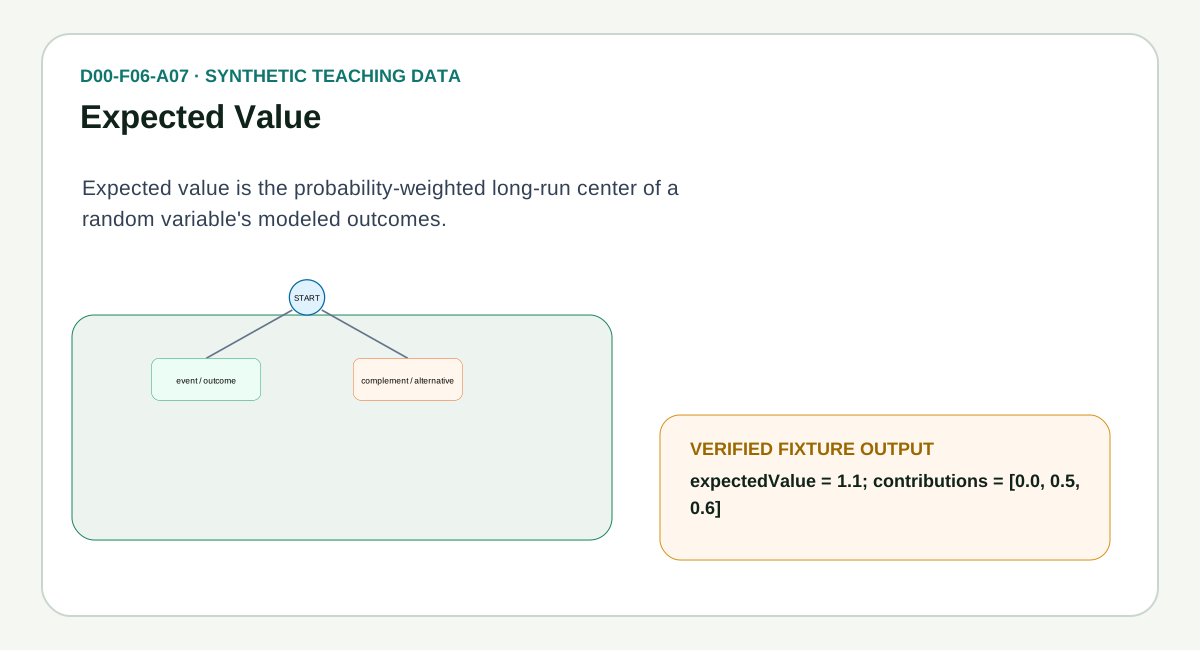
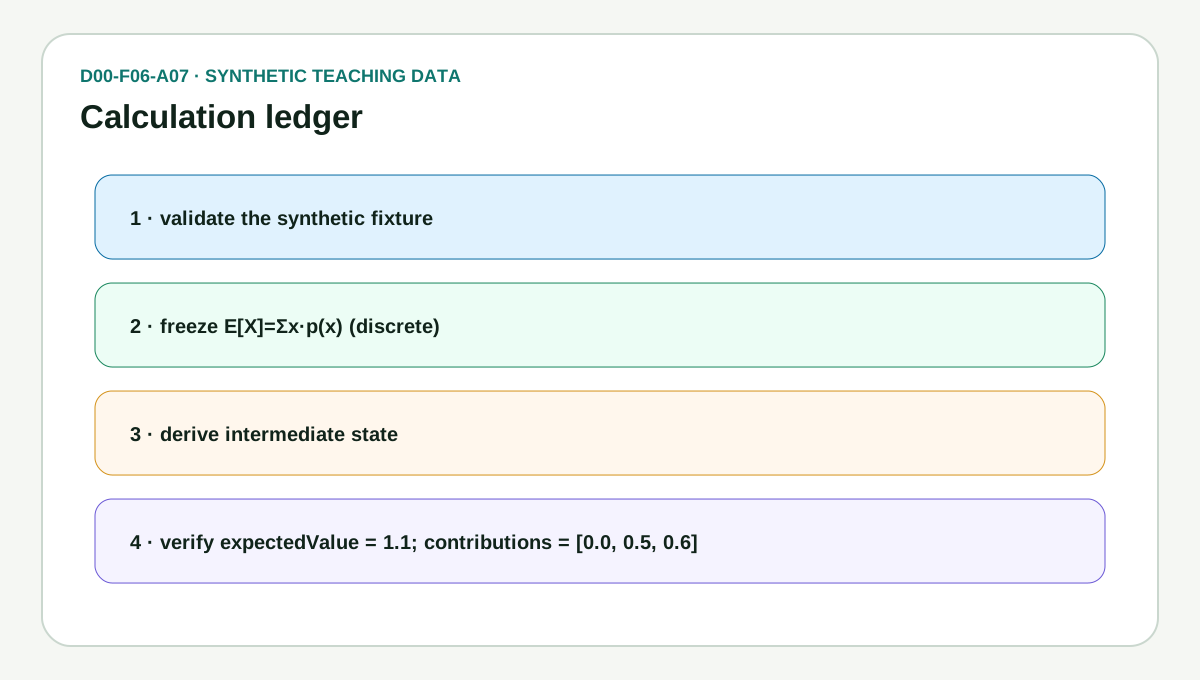
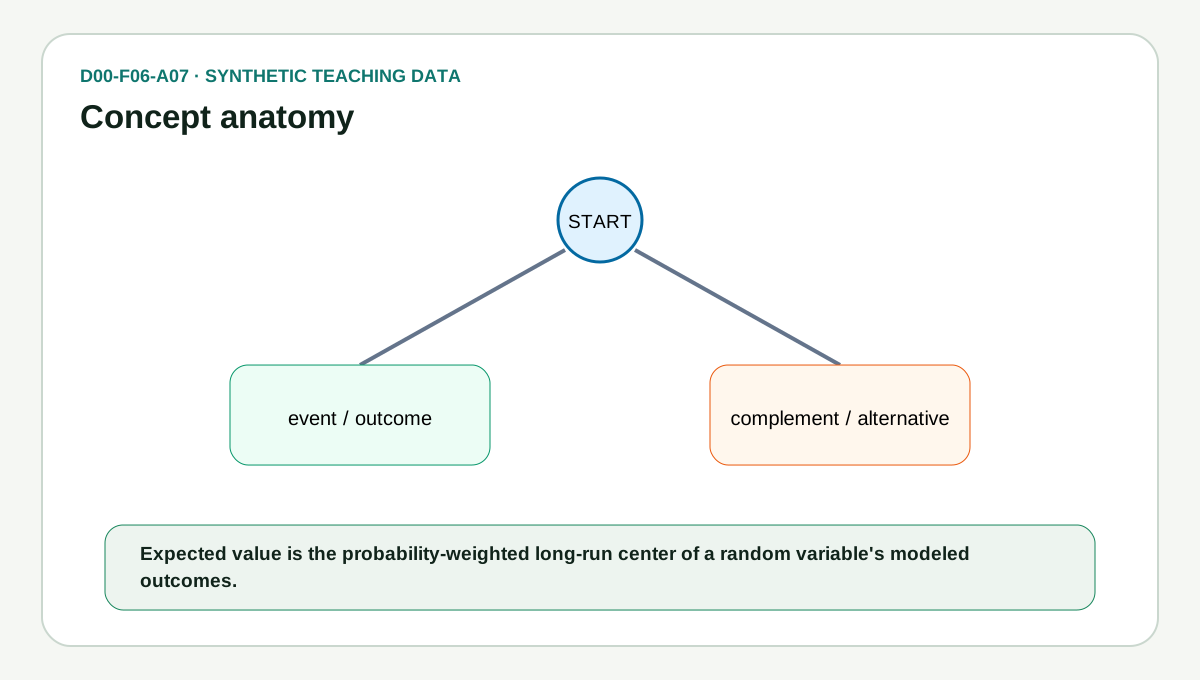
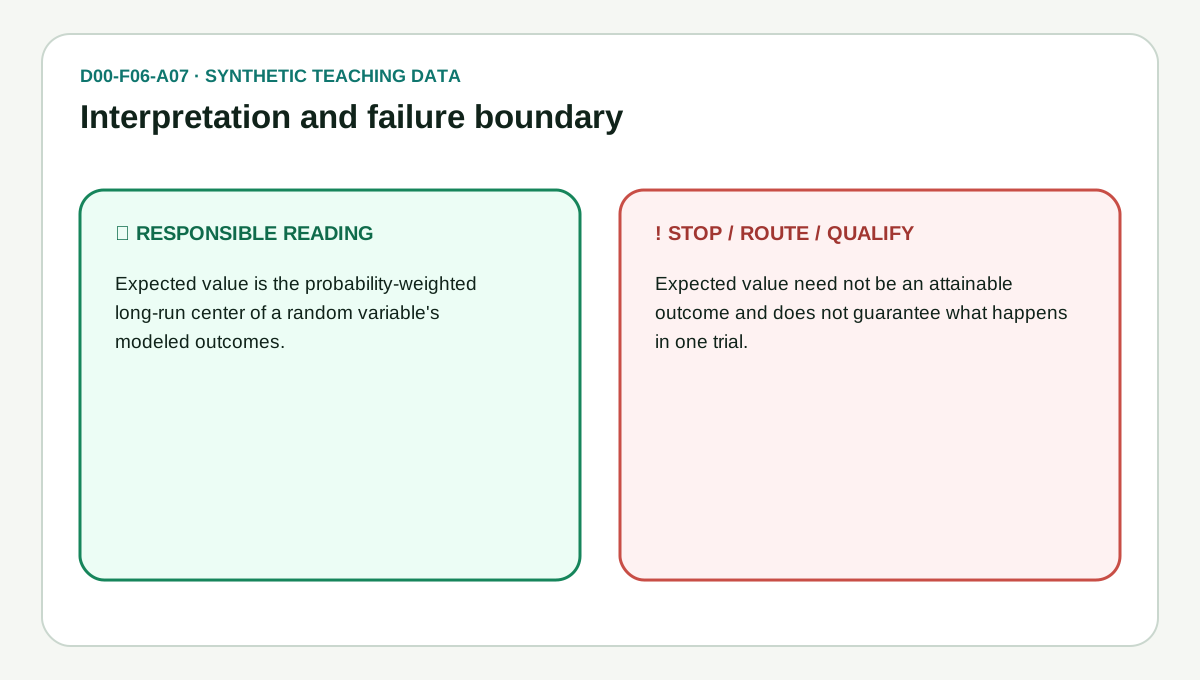
expectedValue(input)Weights each value of a discrete random variable by its probability and sums the result, keeping the individual products so the total can be read term by term.
Parameters#
| Name | Type | Notes |
|---|---|---|
input | { pA: number; pB: number; pAB: number; randomValues: number[]; probabilities: number[] } | randomValues is the support and probabilities the mass on each point, position by position. The family-wide pA, pB, and pAB are validated on every call even though this topic does not use their values.pA: 0 <= pA <= 1 · pB: 0 <= pB <= 1 · pAB: 0 <= pAB <= min(pA, pB) · probabilities: same length as `randomValues`, every entry nonnegative, summing to 1 within 1e-12 |
Returns#
{ expectedValue: number; contributions: number[] }
expectedValue is the probability-weighted sum, and contributions holds each value * probability term in support order, so one outcome dominating the mean is visible rather than buried.
Errors#
- When
inputis null, an array, or not an object — throws TypeError - When
pA,pB, orpABfalls outside [0, 1], orpABexceedsmin(pA, pB)— throws RangeError - When
randomValuesorprobabilitiesis missing, empty, or holds a non-finite entry — throws RangeError - When
randomValuesandprobabilitiesdiffer in length, a probability is negative, or the probabilities do not sum to one within 1e-12 — throws RangeError
Complexity: time O(n),
space O(n).
Worked example#
verified This is the worked example published in the article, replayed by the test suite on every run. The output cannot drift.
Input#
{
  "pA": 0.6,
  "pB": 0.5,
  "pAB": 0.3,
  "outcomes": ["up", "flat", "down"],
  "event": ["up", "flat"],
  "prior": 0.01,
  "sensitivity": 0.9,
  "falsePositiveRate": 0.05,
  "randomValues": [0, 1, 2],
  "probabilities": [0.2, 0.5, 0.3],
  "randomVariableKind": "discrete",
  "joint": [
    {
      "x": 0,
      "y": 0,
      "p": 0.3
    },
    {
      "x": 0,
      "y": 1,
      "p": 0.2
    },
    {
      "x": 1,
      "y": 0,
      "p": 0.1
    }
  ],
  "conditionY": 1
}Call#
expectedValue(input)Returns#
object with 2 fields: expectedValue, contributions
{
  "expectedValue": 1.1,
  "contributions": [0, 0.5, 0.6]
}Diagrams#
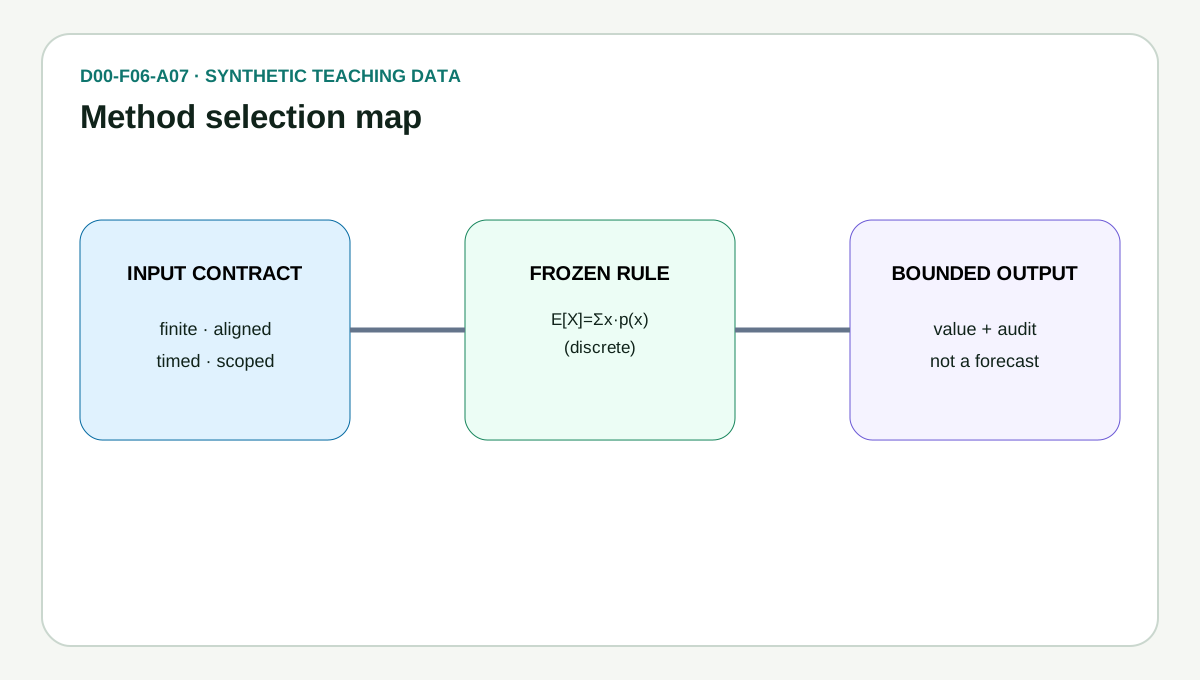
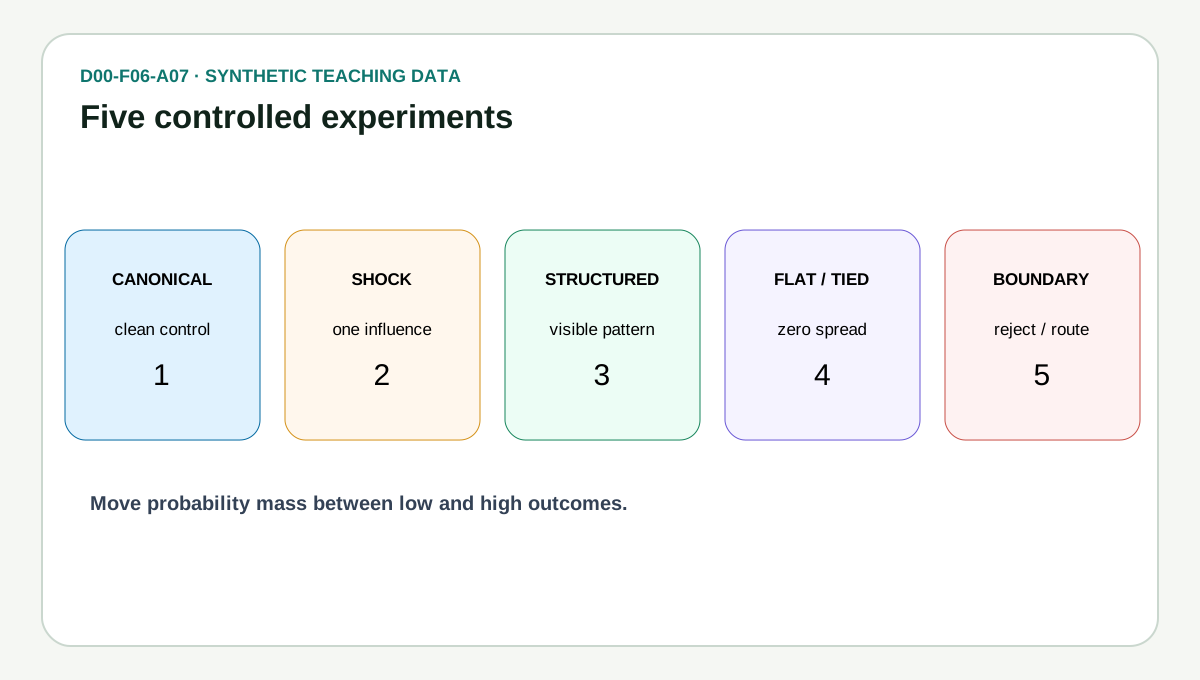
Calculation flow#
Reasoning flow — D00-F06-A07
flowchart LR
    A["Synthetic input + metadata"] --> B{"Contract valid?"}
    B -->|No| C["Reject or route with reason"]
    B -->|Yes| D["Apply Expected Value"]
    D --> E["Formula: E[X]=Σx·p(x) (discrete)"]
    E --> F["Verified fixture output"]
    F --> G{"Interpretation within boundary?"}
    G -->|Yes| H["Report value + convention + audit"]
    G -->|No| I["Add companion view or narrower claim"]
How it works#
This page states the contract — how to call it correctly. The article explains the concept: why it works, and where it breaks.
References#
- Probability Distributions — NIST/SEMATECH e-Handbook
- Probability Distributions — SciPy User Guide
- Historical-example decision