Projection Bands
Install and import#
npm install fintech-algorithmsimport { projectionBands } from "fintech-algorithms/technical-indicators/bands-envelopes-and-squeezes/projection-bands";Signature#
projectionBands(input)Projection Bands: fits a least-squares slope to the highs and to the lows of the last period bars, projects every bar in the window forward along that slope, and takes the highest projected high and the lowest projected low.
Parameters#
| Name | Type | Notes |
|---|---|---|
input | TopicInput | bars is the required OHLCV array -- each bar carries timestamp, open, high, low, close, volume and an optional basis, strictly ordered by timestamp. From parameters this topic reads only period (default 20, integer >= 2), the regression and projection window. period (default 20, integer >= 2) and multiplier (default 2, a finite number >= 0) are read and validated by the band family for every topic in it. multiplier is not used by this branch. |
Returns#
TopicResult
series holds only upper and lower -- this topic emits no center -- and latest carries the last of each. Both share a warm-up of period - 1 leading nulls, so ready_at is 19 at the default period.
Warm-up#
The first `period - 1` bars (19 at the default period) positions are null. Each band is recomputed from a full window of highs or lows; there is no partial-window output and no carry forward between windows.
Errors#
- When
parameters.periodis not an integer >= 2 — throws Error - When a bar is missing open, high, low, close, or volume, or one of them is not a finite number — throws Error
- When bars are not strictly ordered by timestamp, or a bar's high is below its open, low, or close — throws Error
Complexity: time O(n * period),
space O(n).
Worked example#
executed Captured by running this function on the input its own test provides. Real output of real code — but not asserted against a published figure.
Input#
{
  "bars": [
    {
      "timestamp": "2024-01-02",
      "basis": "synthetic-unadjusted",
      "open": 100,
      "high": 101.45,
      "low": 98.695,
      "close": 100,
      "volume": 750000,
      "benchmark": 200
    },
    {
      "timestamp": "2024-01-03",
      "basis": "synthetic-unadjusted",
      "open": 101.49111452,
      "high": 103.38381693,
      "low": 100.05480022,
      "close": 101.78791214,
      "volume": 795117,
      "benchmark": 200.56326135
    },
    {
      "timestamp": "2024-01-04",
      "basis": "synthetic-unadjusted",
      "open": 102.45519048,
      "high": 104.6701838,
      "low": 100.91147007,
      "close": 102.9549389,
      "volume": 840234,
      "benchmark": 201.11020913
    }
  ],
  "parameters": {}
}Call#
projectionBands(input)Returns#
object with 9 fields: topic_id, title, state, ready, ready_at, series, latest, parameters, …
{
  "topic_id": "D07-F07-A09",
  "title": "Projection Bands",
  "state": "calculated",
  "ready": true,
  "ready_at": 19,
  "series": {
    "upper": [null, null, null, null, null, null],
    "lower": [null, null, null, null, null, null]
  },
  "latest": {
    "upper": 109.63429948293232,
    "lower": 98.68874251
  },
  "parameters": {},
  "diagnostics": {
    "causal": true,
    "input_count": 96
  }
}Diagrams#
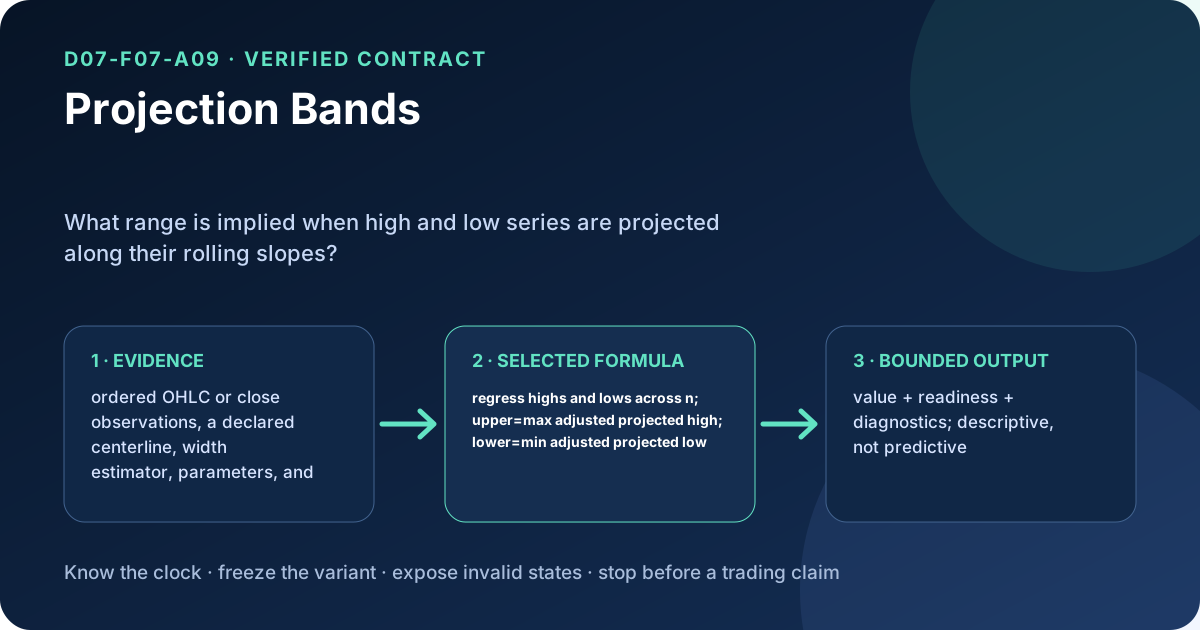
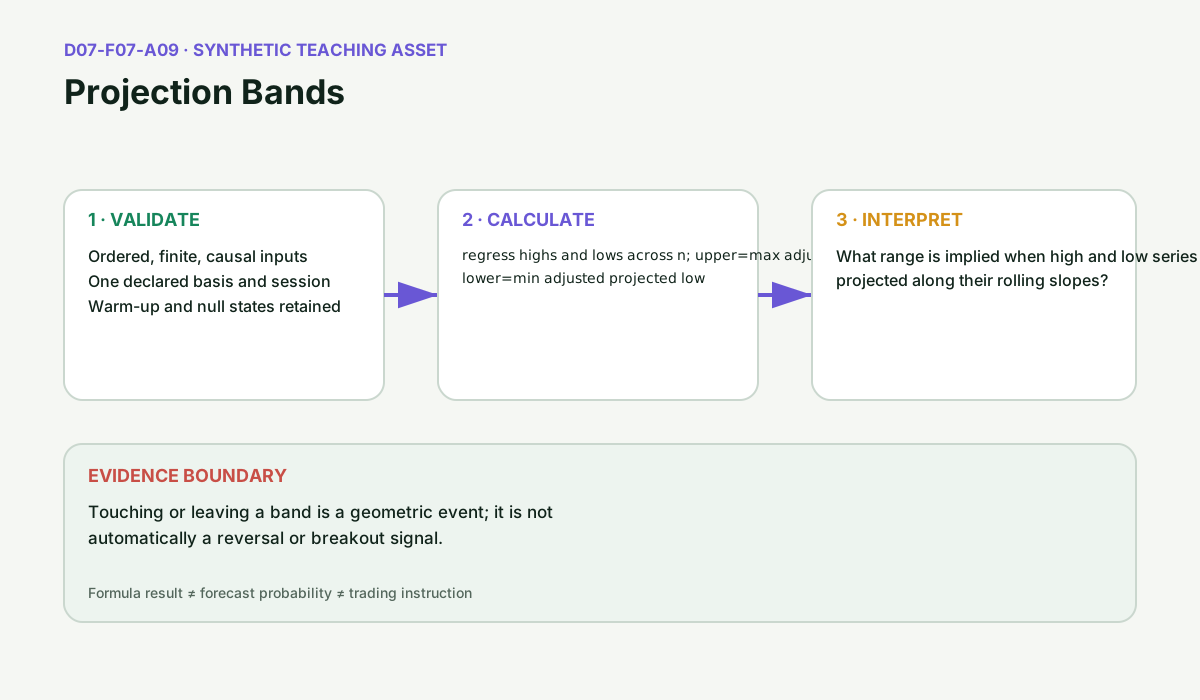
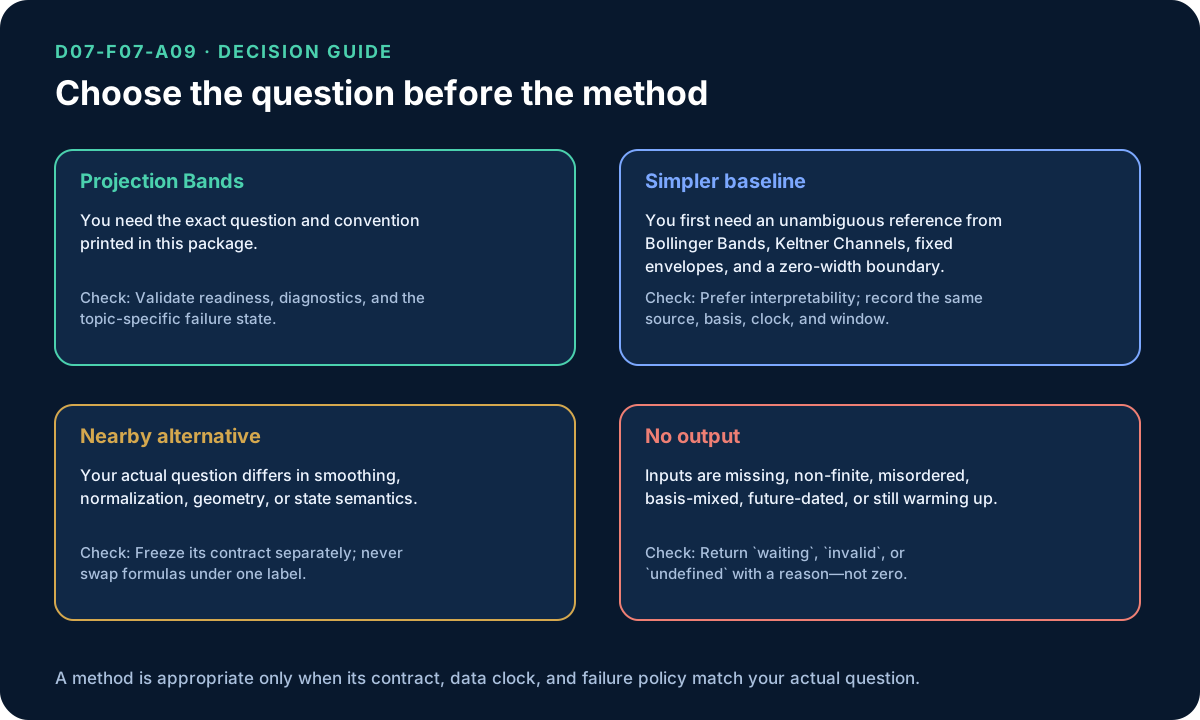
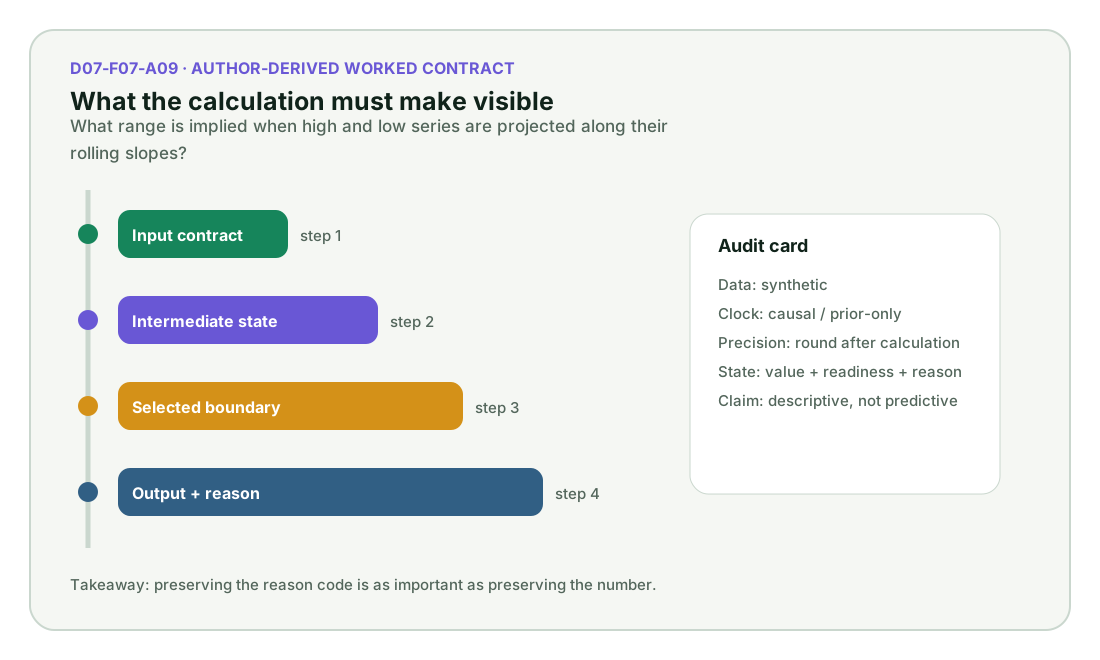
Calculation flow#
Projection Bands calculation flow
flowchart LR
    A["ordered OHLC or close observations, a declared centerline,"] --> B["Validate order, basis, and finite values"]
    B --> C["Apply the selected Projection Bands convention"]
    C --> D["Emit value, readiness, and diagnostics"]
    D --> E["Interpret descriptively; test outcomes separately"]
    B -->|invalid or insufficient| X["Withhold output with a reason"]
Projection Bands readiness and evidence states
stateDiagram-v2
    [*] --> Waiting
    Waiting --> Ready: enough valid causal observations
    Waiting --> Rejected: malformed or unsupported input
    Ready --> Calculated: selected formula applied
    Calculated --> Interpreted: diagnostic and limitation retained
    Interpreted --> Ready: next observation arrives
    Rejected --> Waiting: corrected input and deterministic reset
How it works#
This page states the contract — how to call it correctly. The article explains the concept: why it works, and where it breaks.
References#
- TA-Lib function groups — TA-Lib project contributors
- TA-Lib C/C++ API — TA-Lib project contributors
- TA-Lib maintained source — TA-Lib project contributors
- Evidence decision
- Level 1 evidence map