Market-Wide Stock Screening and Ranking
Install and import#
npm install fintech-algorithmsimport { marketWideStockScreeningAndRanking } from "fintech-algorithms/fundamental-analysis-and-valuation/integrated-equity-scoring/market-wide-stock-screening-and-ranking";Signature#
marketWideStockScreeningAndRanking(data)Applies eligibility, score, confidence and liquidity floors to a universe of scored names, ranks the survivors, and records why each excluded name failed.
Parameters#
| Name | Type | Notes |
|---|---|---|
data | { screen_floor: number; min_confidence: number; min_liquidity: number; universe: Array<{ id: string; eligible: boolean; score: number; confidence: number; liquidity: number; sector?: string }> } | screen_floor is the minimum score and must be between 0 and 100, min_confidence a fraction between 0 and 1, and min_liquidity a nonnegative floor. Each universe row needs a text id, a score between 0 and 100, a confidence between 0 and 1 and a nonnegative liquidity; its eligible must be exactly true to pass, and sector falls back to unspecified. |
Returns#
{ state: string; method: string; ranked: Array<{ rank: number; id: string; score: number; confidence: number; liquidity: number; sector: string }>; screened_count: number; universe_count: number; coverage: number; score_floor: number; confidence_floor: number; liquidity_floor: number; excluded: Array<{ id: string; score: number; confidence: number; liquidity: number; sector: string; reasons: string[] }>; tie_break: string }
ranked holds the survivors ordered by score descending, then confidence descending, then id ascending, each carrying a 1-based rank. excluded carries every failed row with its reasons list. screened_count over universe_count gives coverage, the three floor keys echo the thresholds, and state is ranked when anything survives, otherwise abstain.
Errors#
- When universe is not a nonempty list, or a row lacks a text id — throws TypeError
- When min_confidence or a row confidence is not a finite number — throws TypeError
- When screen_floor or a row score is below 0 or above 100 — throws RangeError
- When min_confidence or a row confidence is below 0 or above 1 — throws RangeError
- When min_liquidity or a row liquidity is negative — throws RangeError
Complexity: time O(n log n),
space O(n).
Worked example#
executed Captured by running this function on the input its own test provides. Real output of real code — but not asserted against a published figure.
Input#
{
  "screen_floor": 70,
  "min_confidence": 0.75,
  "min_liquidity": 50,
  "universe": [
    {
      "id": "AAA",
      "score": 82,
      "confidence": 0.96,
      "liquidity": 100,
      "eligible": true,
      "sector": "industrial"
    },
    {
      "id": "BBB",
      "score": 82,
      "confidence": 0.88,
      "liquidity": 80,
      "eligible": true,
      "sector": "software"
    },
    {
      "id": "CCC",
      "score": 76,
      "confidence": 0.81,
      "liquidity": 60,
      "eligible": true,
      "sector": "software"
    }
  ]
}Call#
marketWideStockScreeningAndRanking(data)Returns#
object with 11 fields: state, method, ranked, screened_count, universe_count, coverage, score_floor, confidence_floor, …
{
  "state": "ranked",
  "method": "eligibility-confidence-score-floor-ranking",
  "ranked": [
    {
      "rank": 1,
      "id": "AAA",
      "score": 82,
      "confidence": 0.96,
      "liquidity": 100,
      "sector": "industrial"
    },
    {
      "rank": 2,
      "id": "BBB",
      "score": 82,
      "confidence": 0.88,
      "liquidity": 80,
      "sector": "software"
    },
    {
      "rank": 3,
      "id": "CCC",
      "score": 76,
      "confidence": 0.81,
      "liquidity": 60,
      "sector": "software"
    }
  ],
  "screened_count": 3,
  "universe_count": 6,
  "coverage": 0.5,
  "score_floor": 70,
  "confidence_floor": 0.75,
  "liquidity_floor": 50,
  "excluded": [
    {
      "id": "DDD",
      "score": 74,
      "confidence": 0.62,
      "liquidity": 90,
      "sector": "bank",
      "reasons": ["below confidence floor"]
    },
    {
      "id": "EEE",
      "score": 68,
      "confidence": 0.95,
      "liquidity": 110,
      "sector": "industrial",
      "reasons": ["below score floor"]
    },
    {
      "id": "FFF",
      "score": 90,
      "confidence": 0.99,
      "liquidity": 100,
      "sector": "industrial",
      "reasons": ["not eligible"]
    }
  ],
  "tie_break": "score descending, confidence descending, stable id ascending"
}
Other exports#
This module also exports
calculate, pointInTimeStockScoringInputAssembly, stockScoringPeerCohortResolver, fundamentalMetricDirectionAndPeerNormalization, modelApplicabilityAndVariantRouter, accountingFinancialHealthComposite, earningsQualityComposite, dividendSafetyScore, balanceSheetResilienceScore, distressModelEnsemble, crossModelConflictAndDoubleCountingResolver, overallExplainableStockScore, scoreConfidenceMissingDataPenaltyAndAbstention, stockScoreHistoryMigrationAndChangeAttribution. Every module additionally exports run as an alias of its
primary function, and a meta object carrying its catalog id, domain, family,
shape and article URL.
Diagrams#
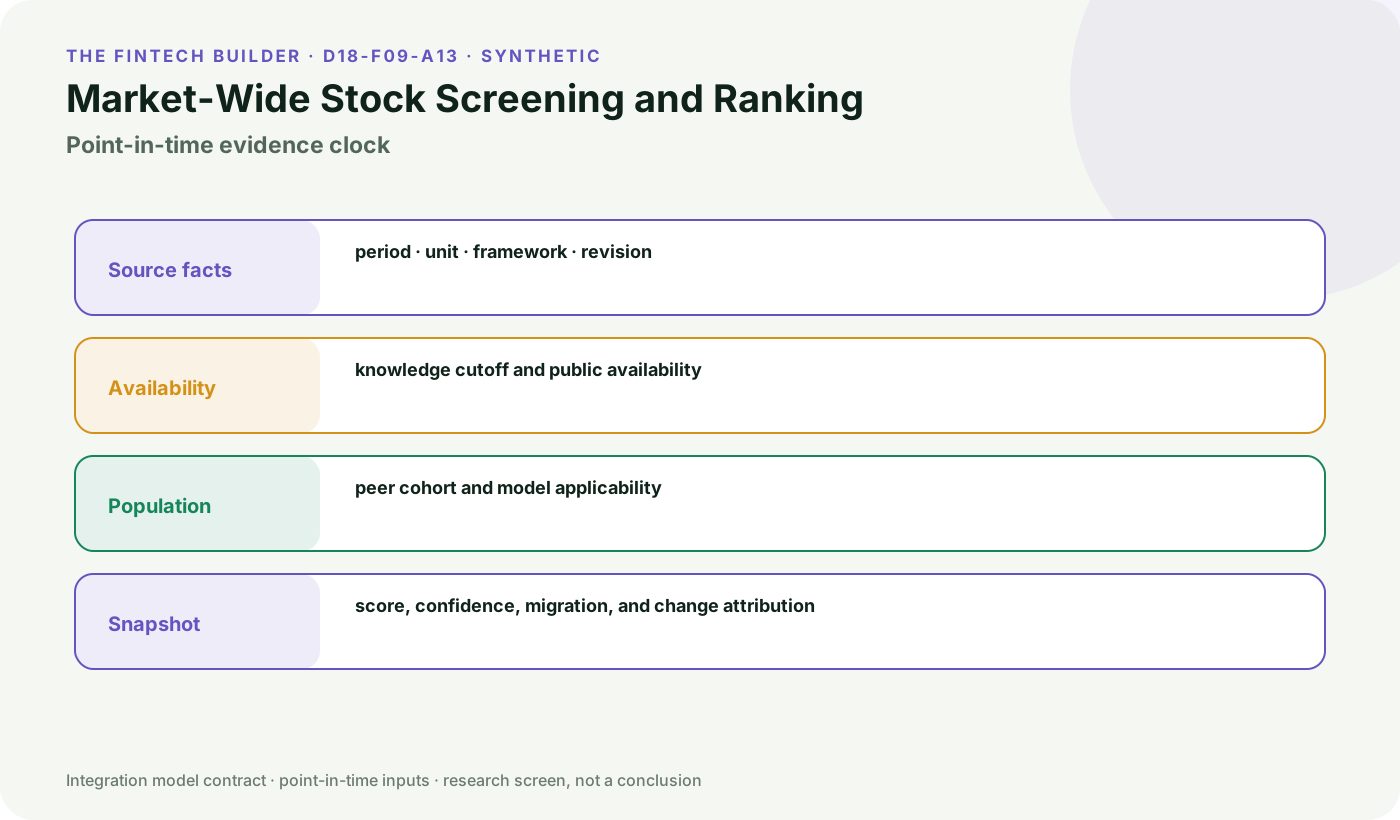
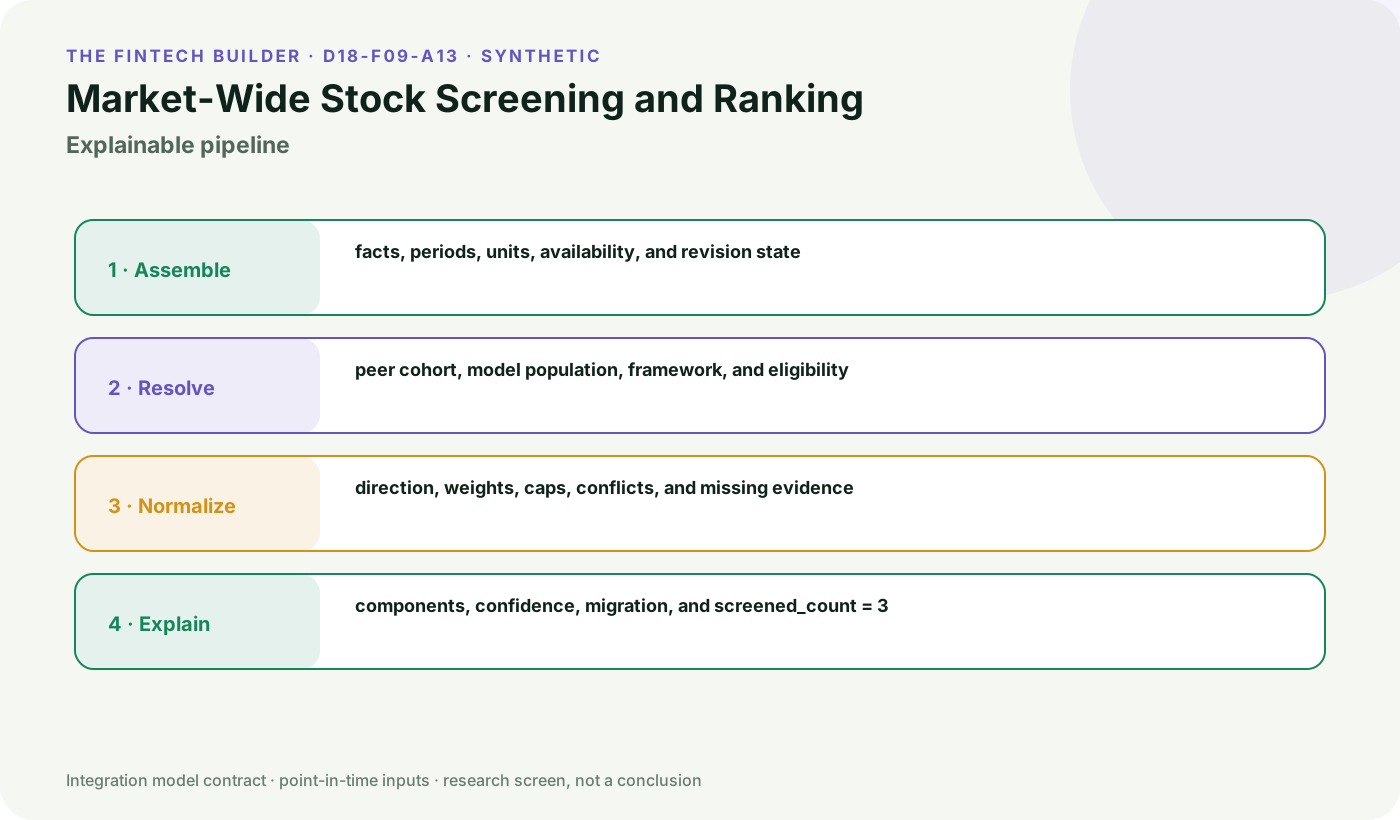

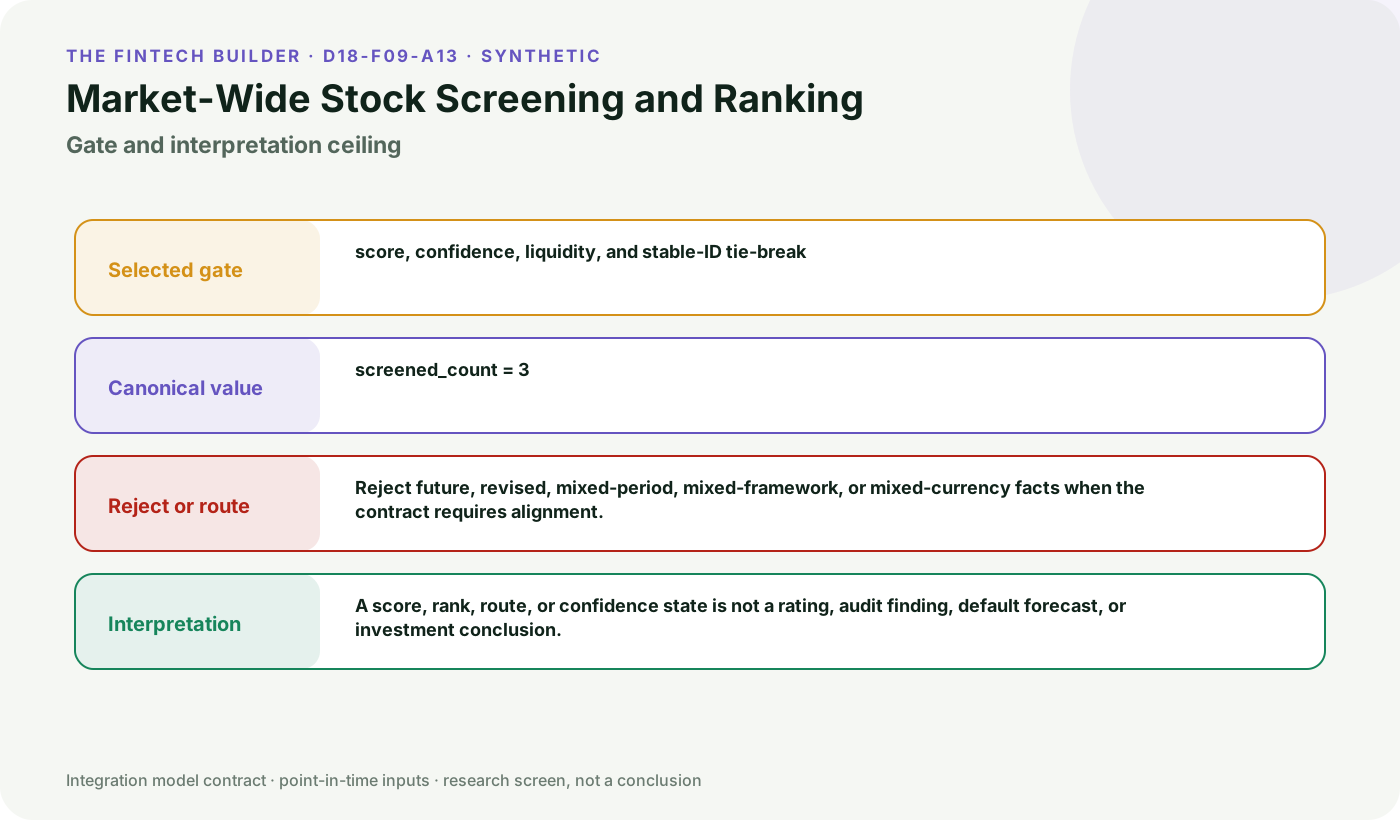
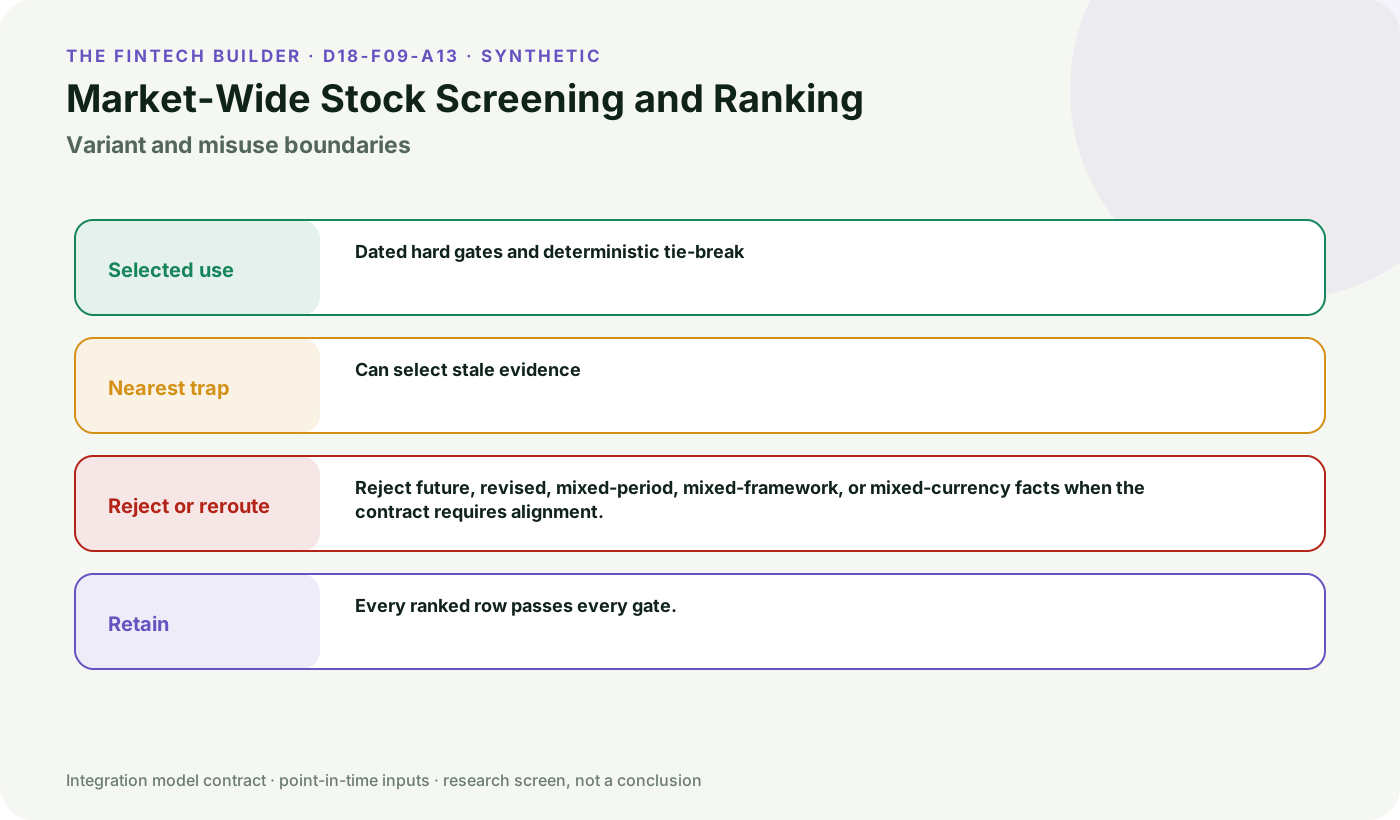
Calculation flow#
Market-Wide Stock Screening and Ranking calculation flow
flowchart LR
    S1["Validate floors and universe rows"]
    S2["Filter eligibility score confidence and liquidity"]
    S3["Sort survivors by score confidence and stable ID"]
    S4["Return ranks coverage and exclusion reasons"]
    S1 --> S2
    S2 --> S3
    S3 --> S4
    S4 --> D{"score confidence liquidity and stableID tiebreak"}
    D --> O["screened_count + diagnostics"]
    O --> A["Audit: Every ranked row passes every gate"]
How it works#
This page states the contract — how to call it correctly. The article explains the concept: why it works, and where it breaks.
References#
- Percentiles — National Institute of Standards and Technology
- EDGAR XBRL Guide — U.S. Securities and Exchange Commission
- Beginners' Guide to Financial Statements — U.S. Securities and Exchange Commission
- Conceptual Framework for Financial Reporting — International Accounting Standards Board
- Evidence boundary