Downside Deviation and Target Shortfall
Install and import#
npm install fintech-algorithmsimport { downsideDeviationAndTargetShortfall } from "fintech-algorithms/foundations/financial-risk-and-performance-statistics/downside-deviation-and-target-shortfall";Signature#
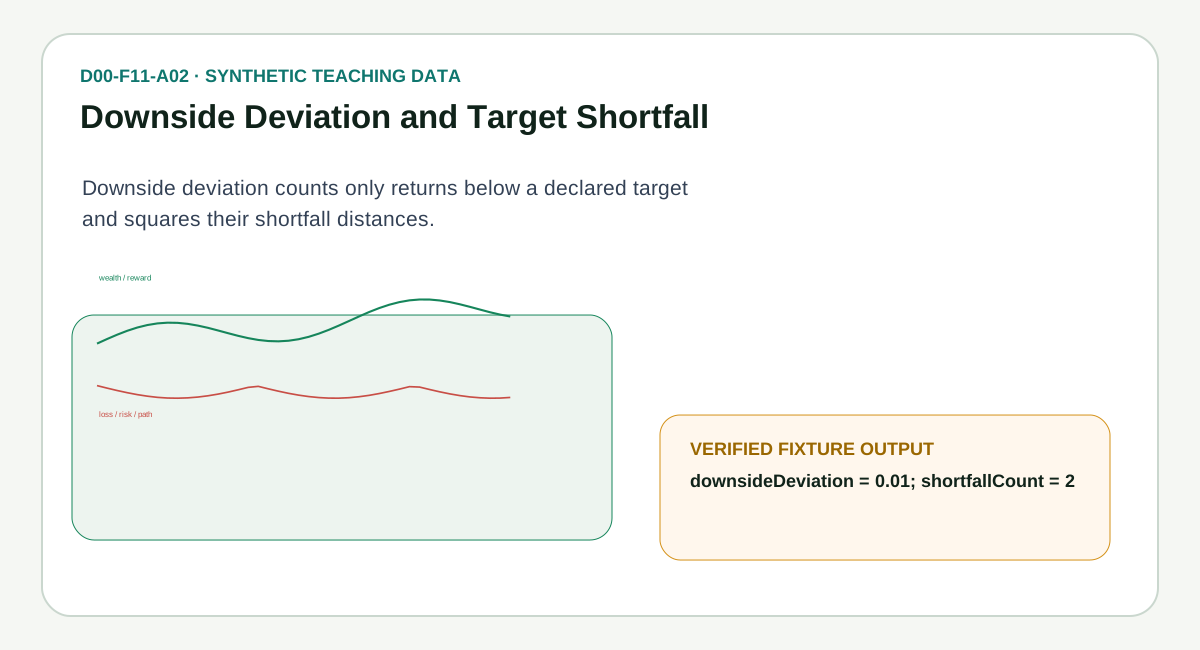
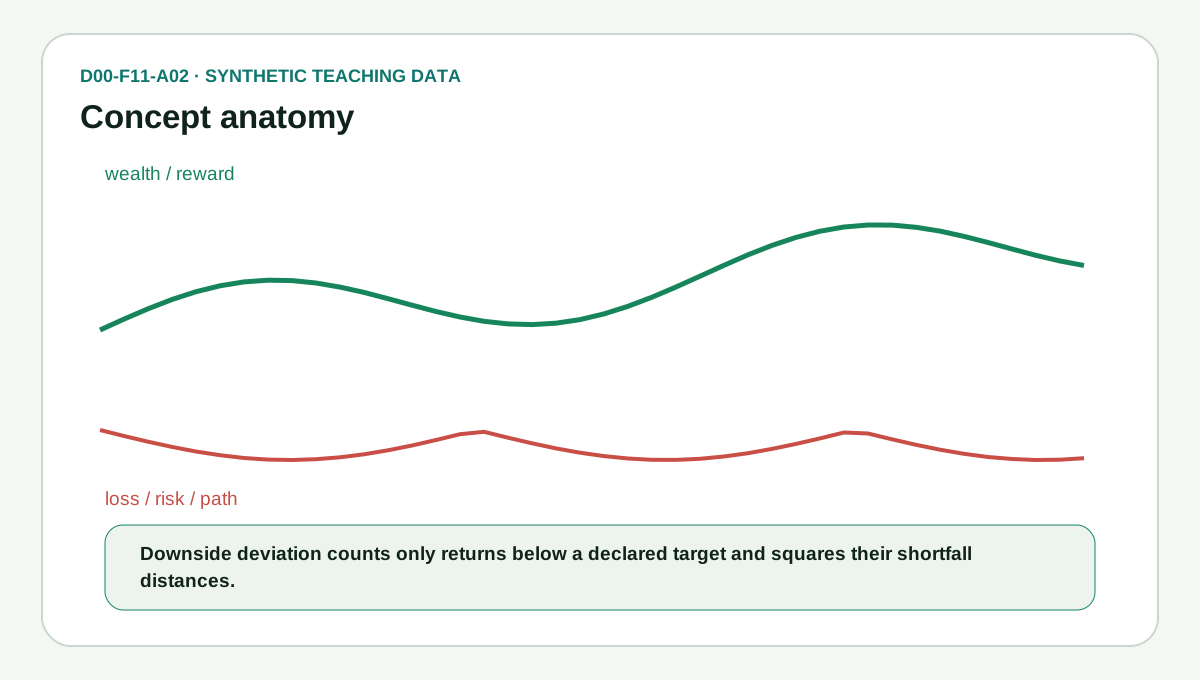
downsideDeviationAndTargetShortfall(input)Measures dispersion of returns below a target only, so upside swings do not count as risk.
Parameters#
| Name | Type | Notes |
|---|---|---|
input | D00Input | Reads returns and benchmark, two aligned non-empty lists of finite periodic returns, frequency, the number of periods per year, and target, the return level below which a period counts as a shortfall. |
Returns#
D00Output
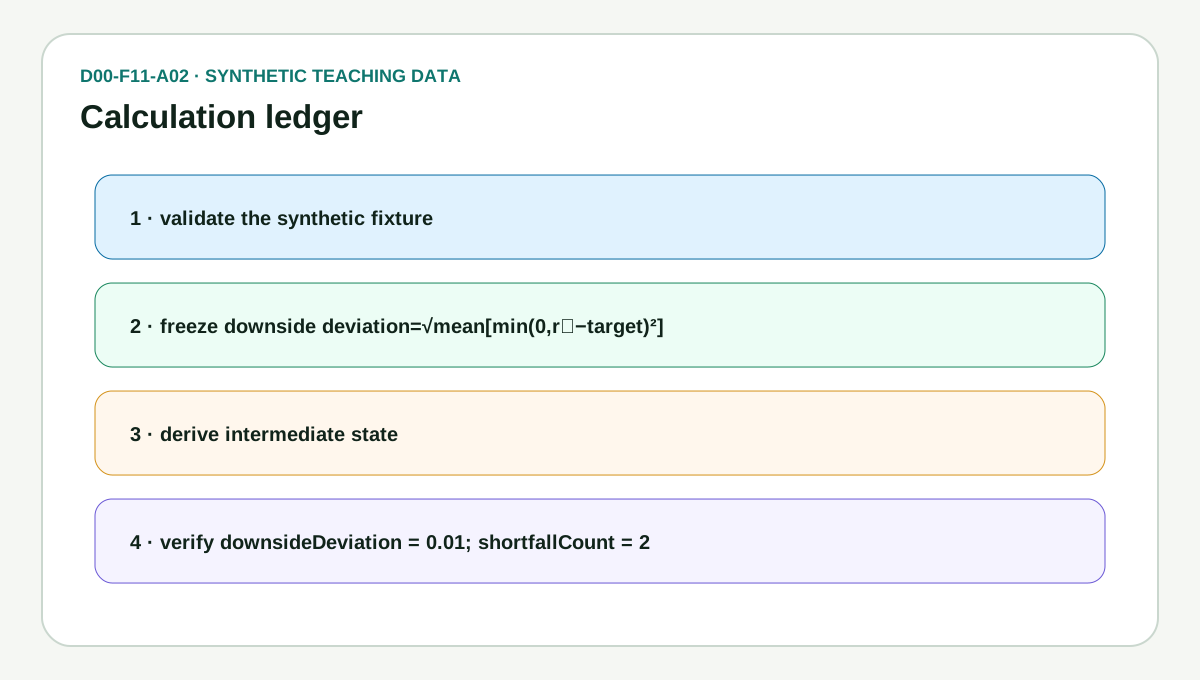
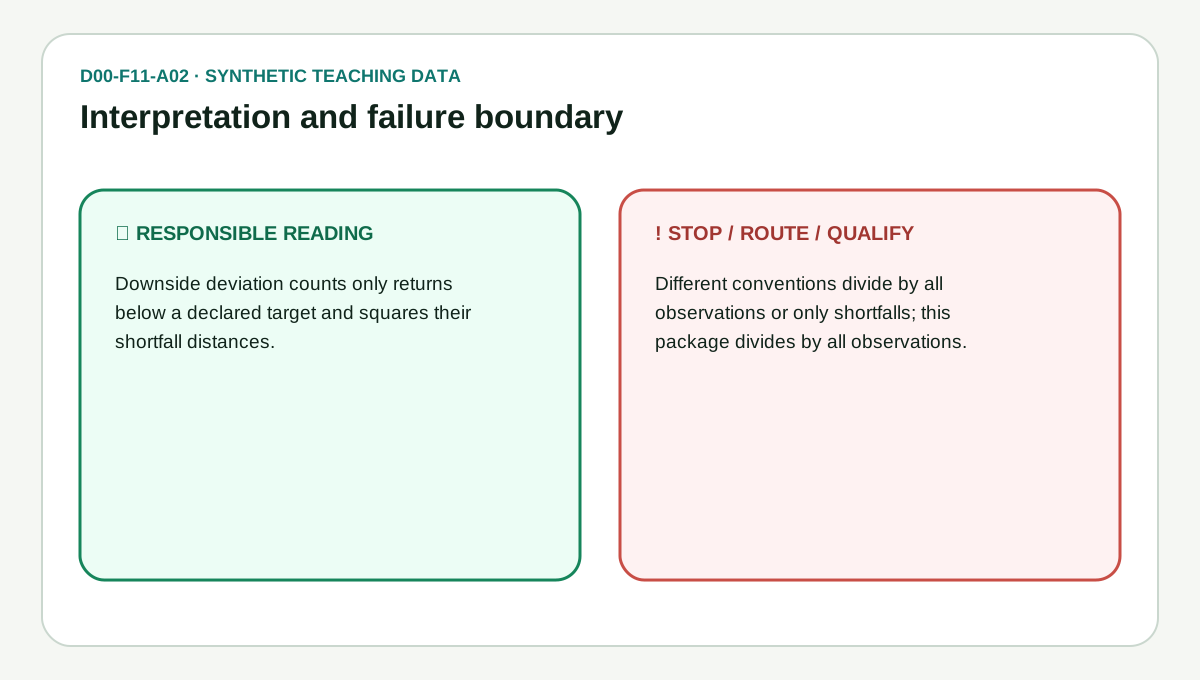
downsideDeviation is the root mean square of the shortfalls below target, averaged over every observation rather than only the shortfalls. shortfallCount counts the returns strictly below the target, and target is echoed back.
Errors#
- When
returnsorbenchmarkis absent, empty, or holds a non-finite number — throws RangeError - When
returnsandbenchmarkdiffer in length, or hold fewer than two observations — throws RangeError - When
frequencyis zero or negative — throws RangeError
Complexity: time O(n),
space O(n).
Worked example#
verified This is the worked example published in the article, replayed by the test suite on every run. The output cannot drift.
Input#
{
  "returns": [0.01, -0.02, 0.015, -0.01, 0.03],
  "benchmark": [0.008, -0.01, 0.012, -0.006, 0.02],
  "frequency": 252,
  "target": 0,
  "confidence": 0.8,
  "riskFree": 0.0001,
  "weights": [0.6, 0.4],
  "covarianceMatrix": [
    [0.04, 0.01],
    [0.01, 0.09]
  ]
}Call#
downsideDeviationAndTargetShortfall(input)Returns#
object with 2 fields: downsideDeviation, shortfallCount
{
  "downsideDeviation": 0.01,
  "shortfallCount": 2
}Diagrams#
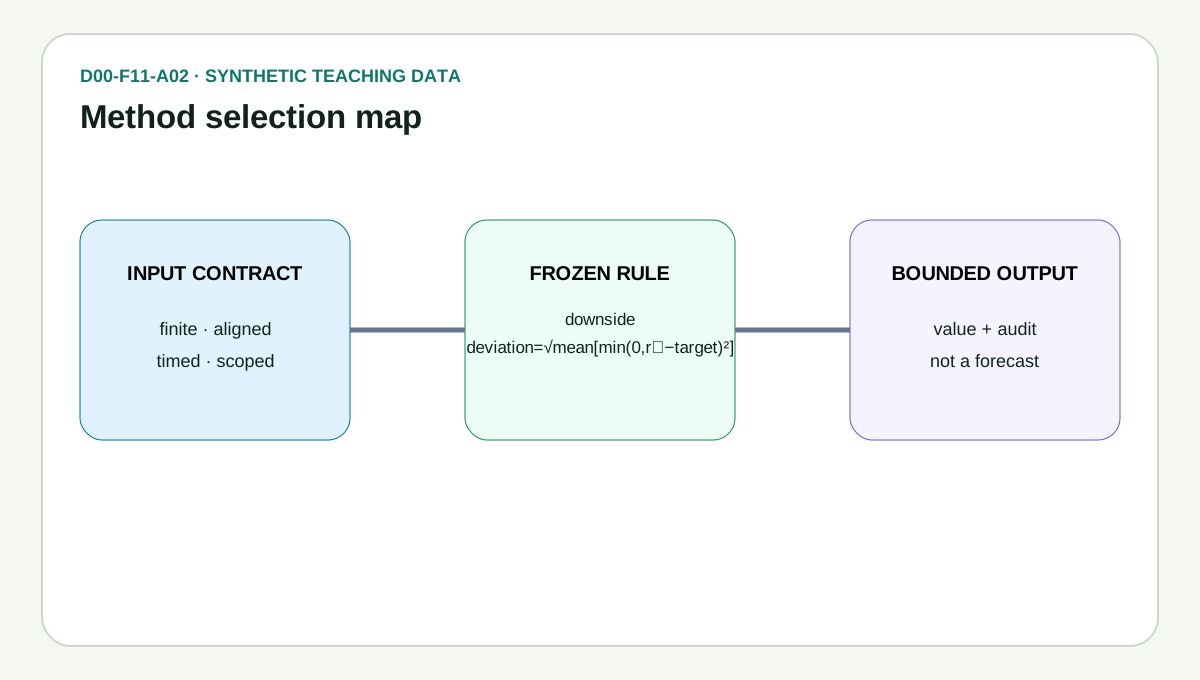
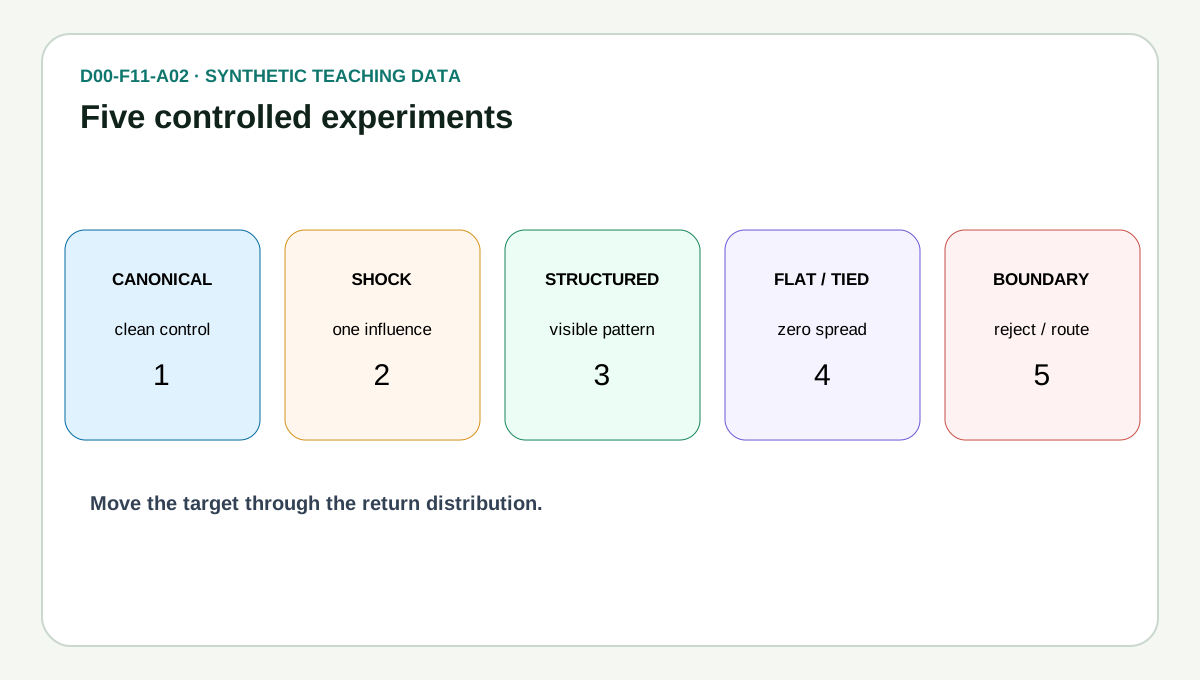
Calculation flow#
Reasoning flow — D00-F11-A02
flowchart LR
    A["Synthetic input + metadata"] --> B{"Contract valid?"}
    B -->|No| C["Reject or route with reason"]
    B -->|Yes| D["Apply Downside Deviation and Target Shortfall"]
    D --> E["Formula: downside deviation=√mean[min(0,rₜ−target)²]"]
    E --> F["Verified fixture output"]
    F --> G{"Interpretation within boundary?"}
    G -->|Yes| H["Report value + convention + audit"]
    G -->|No| I["Add companion view or narrower claim"]
How it works#
This page states the contract — how to call it correctly. The article explains the concept: why it works, and where it breaks.
References#
- Expected Shortfall — Basel Framework MAR33
- Mutual Fund Performance — William F. Sharpe
- Measures of Scale — NIST/SEMATECH e-Handbook
- Historical-example decision