Exponential, Gamma, and Weibull Waiting-Time Models
Install and import#
npm install fintech-algorithmsimport { exponentialGammaAndWeibullWaitingTimeModels } from "fintech-algorithms/foundations/probability-distributions-and-simulation-basics/exponential-gamma-and-weibull-waiting-time-models";Signature#
exponentialGammaAndWeibullWaitingTimeModels(input)Evaluates three waiting-time models at the same point input.x: the exponential survival function, the gamma density, and the Weibull survival function, all sharing shape and scale.
Parameters#
| Name | Type | Notes |
|---|---|---|
input | D00Input | One record carrying x (the waiting time to evaluate), shape (the gamma and Weibull shape parameter) and scale (the common scale), plus p and sigma, which the family entry point validates before dispatching.sigma: strictly positive · p: between 0 and 1 inclusive |
Returns#
D00Output
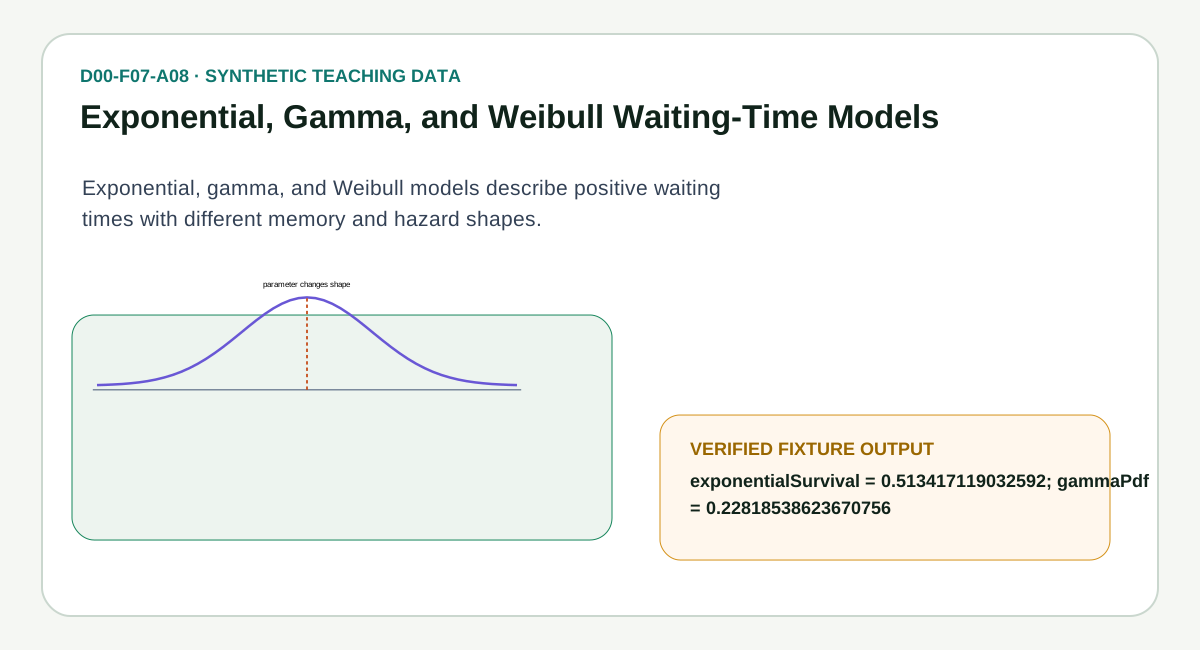
An object with exponentialSurvival (probability of waiting longer than x under an exponential with mean scale), gammaPdf (the gamma density at x) and weibullSurvival (the Weibull survival at x).
Errors#
- When p is missing or outside 0 to 1 — this check runs for every topic in the family — throws RangeError
- When sigma is zero or negative — this check runs for every topic from A05 onward — throws RangeError
Complexity: time O(1),
space O(1).
Worked example#
verified This is the worked example published in the article, replayed by the test suite on every run. The output cannot drift.
Input#
{
  "values": [0.2, 0.5, 0.7, 1, 1.4],
  "x": 1,
  "p": 0.3,
  "n": 5,
  "k": 2,
  "lambda": 2,
  "seed": 42,
  "sampleCount": 8,
  "mu": 0,
  "sigma": 1,
  "df": 5,
  "shape": 2,
  "scale": 1.5,
  "components": [
    {
      "weight": 0.7,
      "mean": 0,
      "sd": 1
    },
    {
      "weight": 0.3,
      "mean": 3,
      "sd": 0.8
    }
  ]
}Call#
exponentialGammaAndWeibullWaitingTimeModels(input)Returns#
object with 2 fields: exponentialSurvival, gammaPdf
{
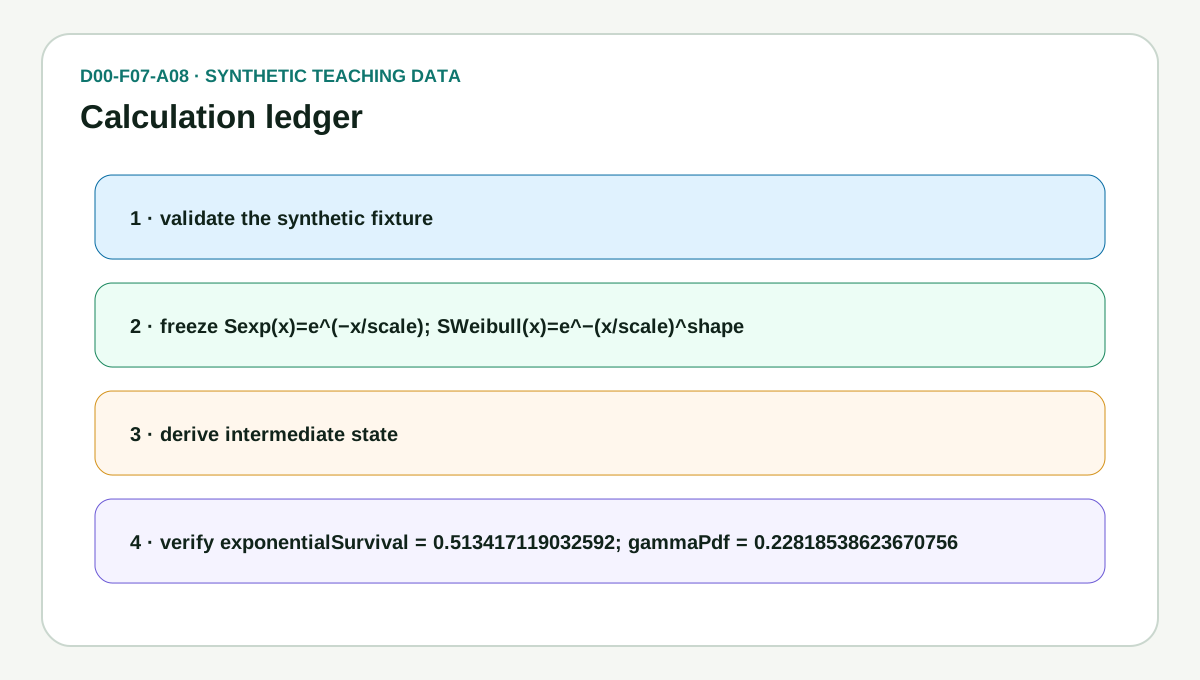
  "exponentialSurvival": 0.513417119032592,
  "gammaPdf": 0.22818538623670756
}Diagrams#
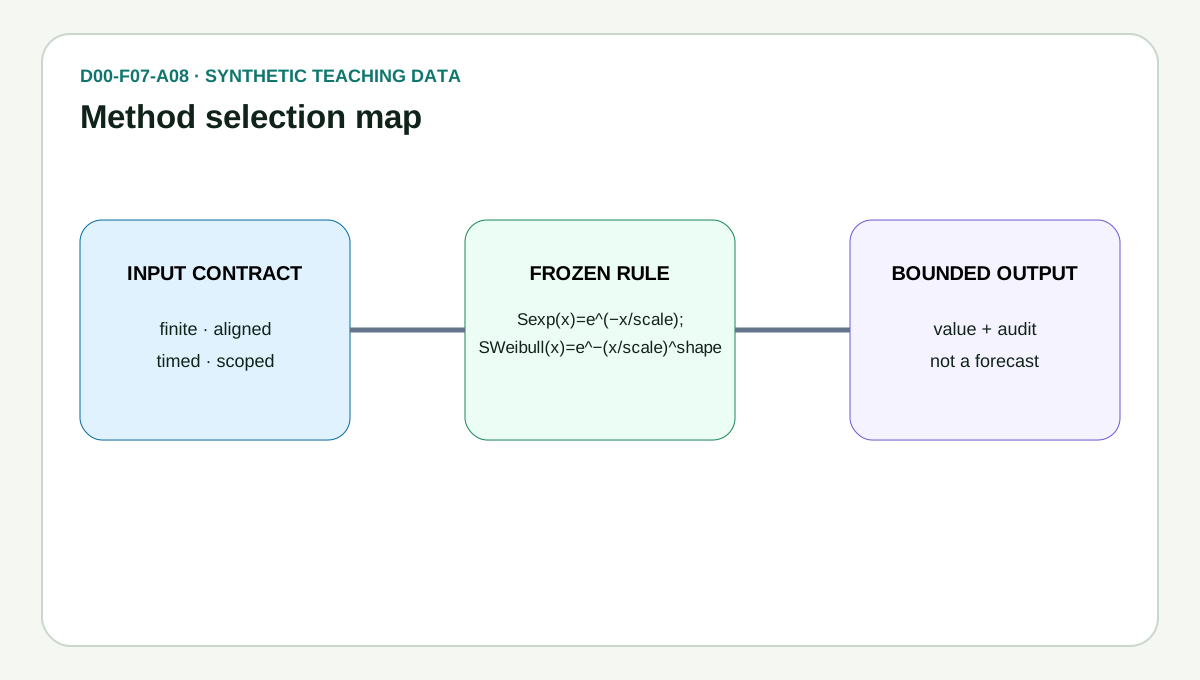
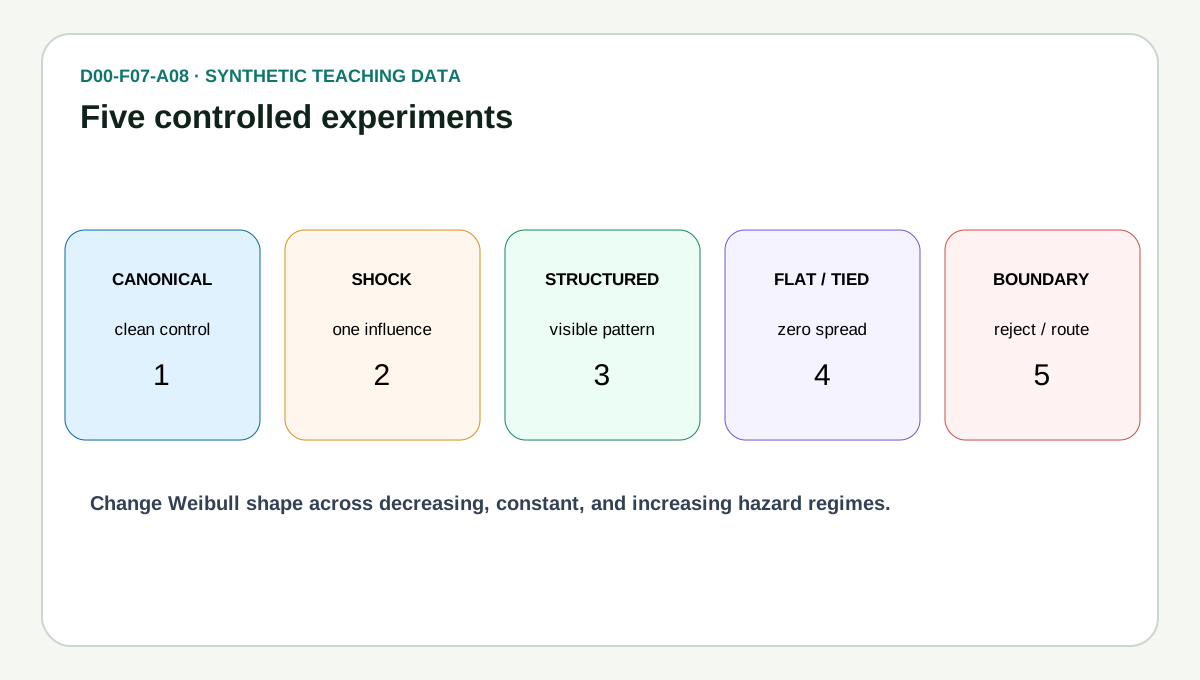
Calculation flow#
Reasoning flow — D00-F07-A08
flowchart LR
    A["Synthetic input + metadata"] --> B{"Contract valid?"}
    B -->|No| C["Reject or route with reason"]
    B -->|Yes| D["Apply Exponential, Gamma, and Weibull Waiting-Time Models"]
    D --> E["Formula: Sexp(x)=e^(−x/scale); SWeibull(x)=e^−(x/scale)^shape"]
    E --> F["Verified fixture output"]
    F --> G{"Interpretation within boundary?"}
    G -->|Yes| H["Report value + convention + audit"]
    G -->|No| I["Add companion view or narrower claim"]
How it works#
This page states the contract — how to call it correctly. The article explains the concept: why it works, and where it breaks.
References#
- Probability Distributions — NIST/SEMATECH e-Handbook
- Probability Distributions — SciPy User Guide
- Random Sampling — NumPy Documentation
- Historical-example decision