Covariance Matrices, Portfolio Variance, and Diversification
Install and import#
npm install fintech-algorithmsimport { covarianceMatricesPortfolioVarianceAndDiversification } from "fintech-algorithms/foundations/financial-risk-and-performance-statistics/covariance-matrices-portfolio-variance-and-diversification";Signature#
covarianceMatricesPortfolioVarianceAndDiversification(input)Combines portfolio weights with a covariance matrix into portfolio variance, and isolates the share of it that comes from the off-diagonal terms.
Parameters#
| Name | Type | Notes |
|---|---|---|
input | D00Input | Reads returns and benchmark, two aligned non-empty lists of finite periodic returns, frequency, confidence, plus weights, the asset weights summing to one, and covarianceMatrix, a square matrix of the same order as weights. |
Returns#
D00Output
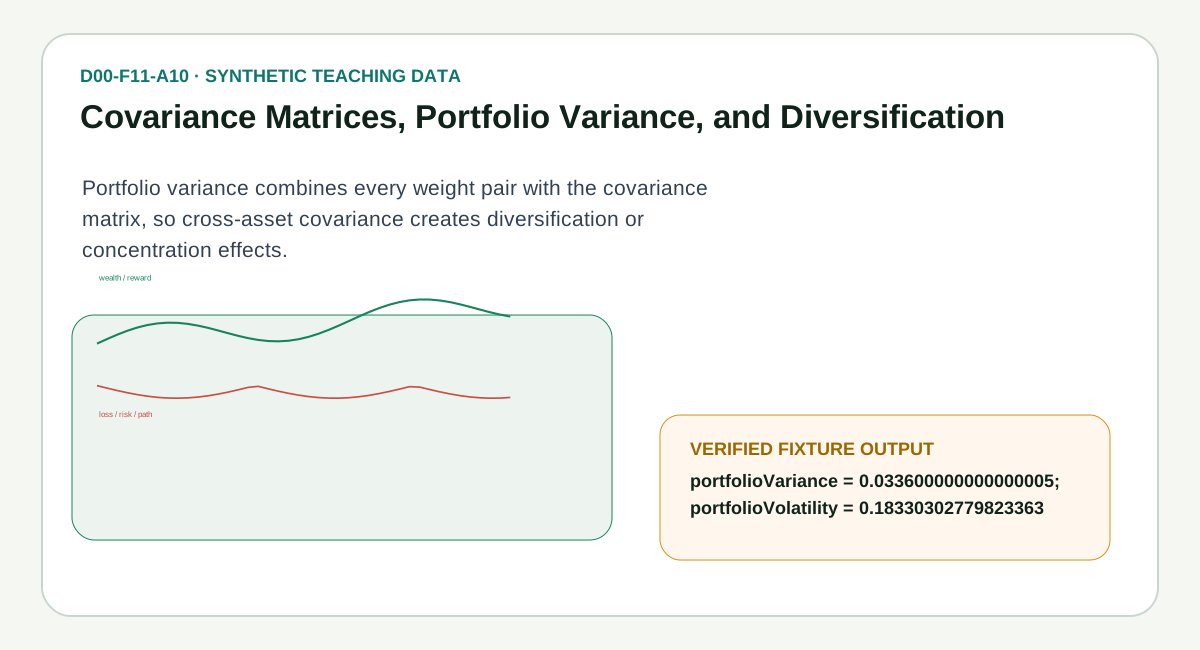
portfolioVariance is the quadratic form of the weights against the matrix, floored at zero, portfolioVolatility its square root, covarianceContribution the amount by which it exceeds the sum of the squared weights times the diagonal variances, and weightsSum the total of the supplied weights.
Errors#
- When
returnsorbenchmarkis absent, empty, or holds a non-finite number — throws RangeError - When
returnsandbenchmarkdiffer in length, or hold fewer than two observations — throws RangeError - When
frequencyis zero or negative — throws RangeError - When
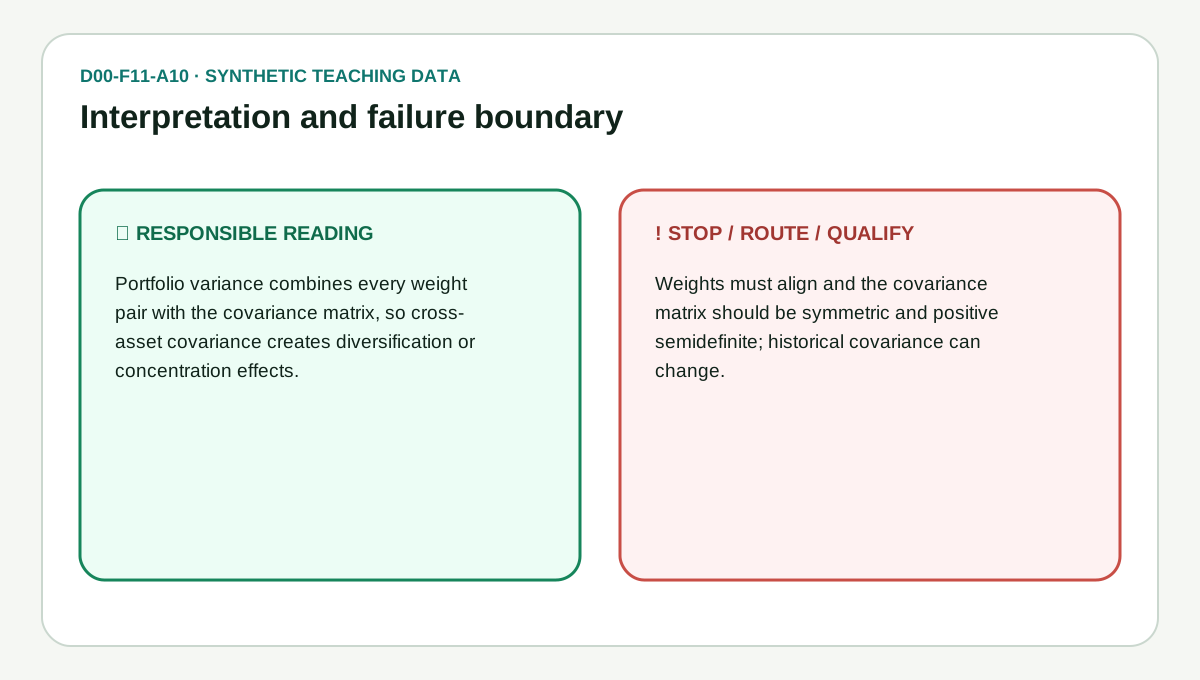
weightsandcovarianceMatrixare not square-aligned, orweightsdoes not sum to one within 1e-12 — throws RangeError - When the quadratic form comes out below -1e-12, so the matrix is not positive semi-definite — throws RangeError
- When
confidenceis absent, or outside the range zero to one — the engine reads it for every topic from A04 onward, including those that never use it — throws RangeError
Complexity: time O(n log n + k^2),
space O(n).
Worked example#
verified This is the worked example published in the article, replayed by the test suite on every run. The output cannot drift.
Input#
{
  "returns": [0.01, -0.02, 0.015, -0.01, 0.03],
  "benchmark": [0.008, -0.01, 0.012, -0.006, 0.02],
  "frequency": 252,
  "target": 0,
  "confidence": 0.8,
  "riskFree": 0.0001,
  "weights": [0.6, 0.4],
  "covarianceMatrix": [
    [0.04, 0.01],
    [0.01, 0.09]
  ]
}Call#
covarianceMatricesPortfolioVarianceAndDiversification(input)Returns#
object with 2 fields: portfolioVariance, portfolioVolatility
{
  "portfolioVariance": 0.033600000000000005,
  "portfolioVolatility": 0.18330302779823363
}Diagrams#
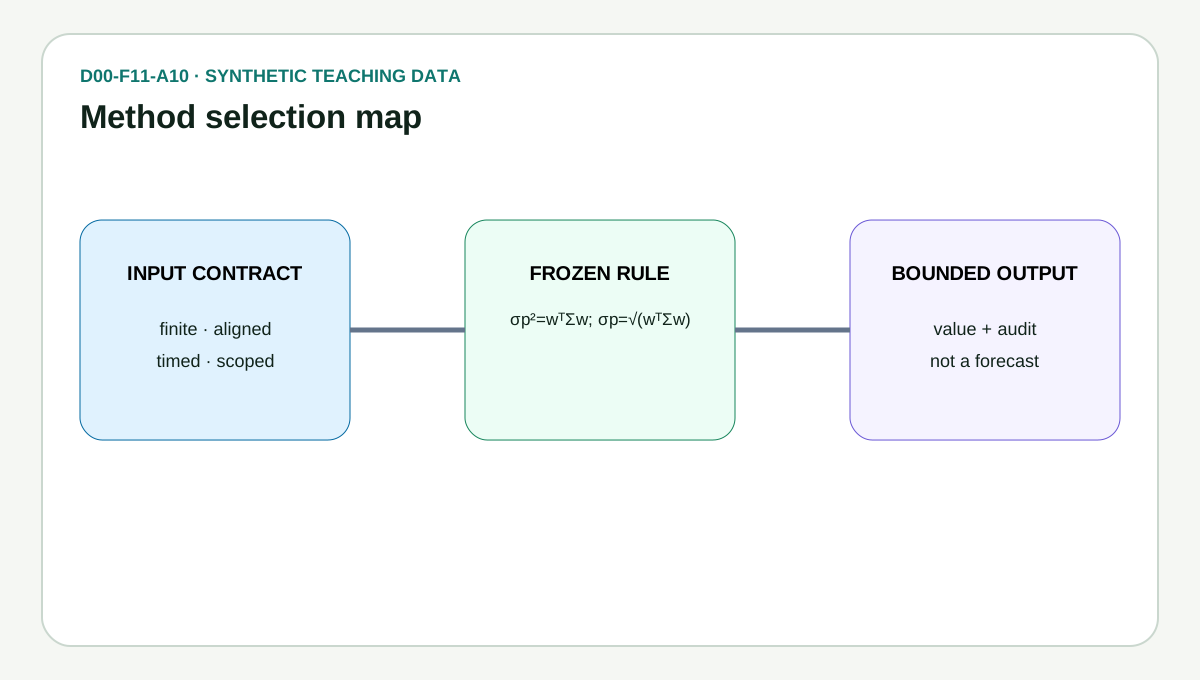
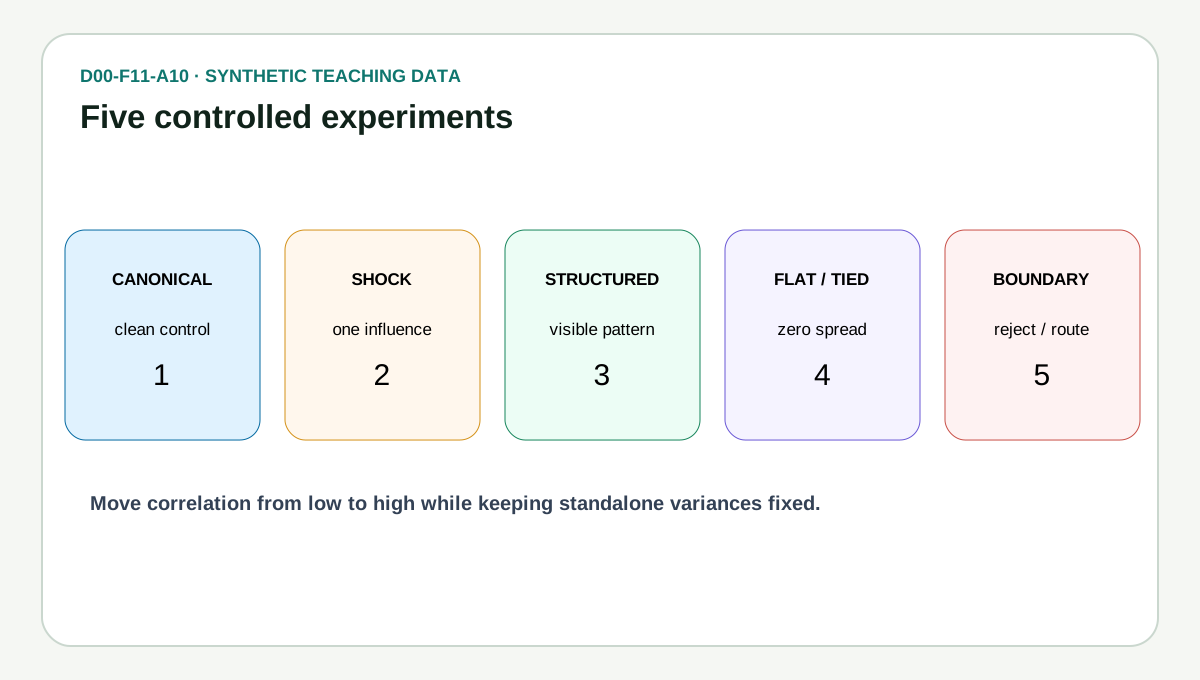
Calculation flow#
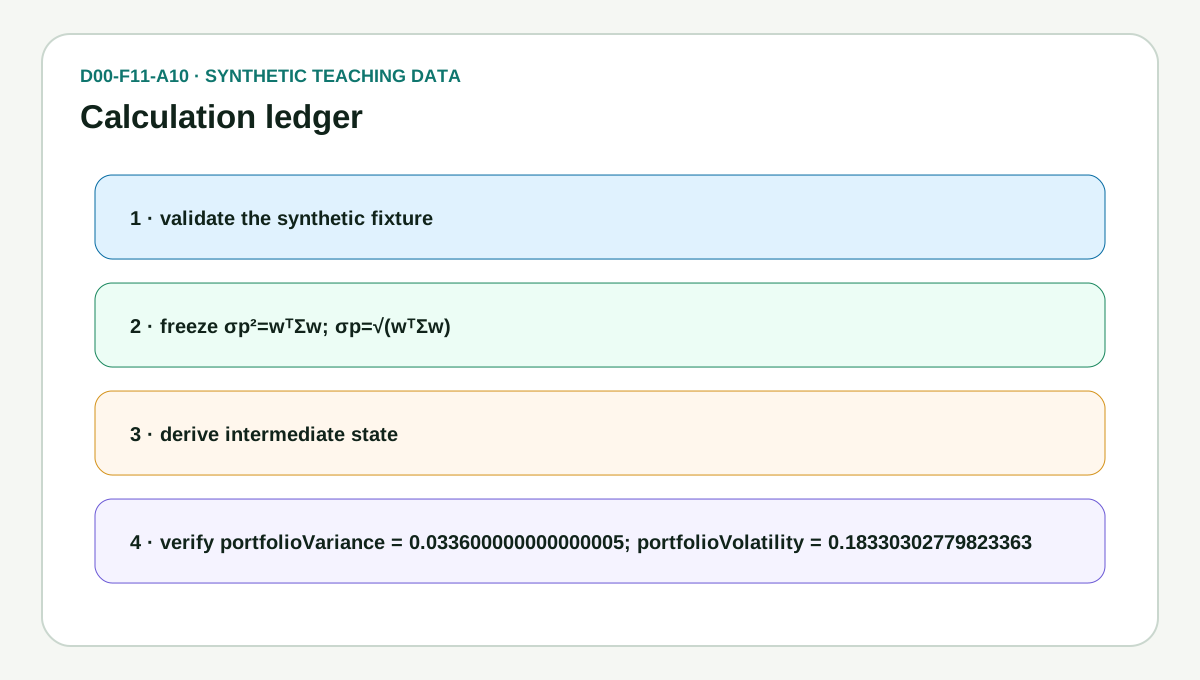
Reasoning flow — D00-F11-A10
flowchart LR
    A["Synthetic input + metadata"] --> B{"Contract valid?"}
    B -->|No| C["Reject or route with reason"]
    B -->|Yes| D["Apply Covariance Matrices, Portfolio Variance, and Diversification"]
    D --> E["Formula: σp²=wᵀΣw; σp=√(wᵀΣw)"]
    E --> F["Verified fixture output"]
    F --> G{"Interpretation within boundary?"}
    G -->|Yes| H["Report value + convention + audit"]
    G -->|No| I["Add companion view or narrower claim"]
How it works#
This page states the contract — how to call it correctly. The article explains the concept: why it works, and where it breaks.
References#
- Expected Shortfall — Basel Framework MAR33
- Mutual Fund Performance — William F. Sharpe
- Measures of Scale — NIST/SEMATECH e-Handbook
- Historical-example decision