Cash Conversion Cycle
Install and import#
npm install fintech-algorithmsimport { cashConversionCycle } from "fintech-algorithms/fundamental-analysis-and-valuation/statement-ratios/cash-conversion-cycle";Signature#
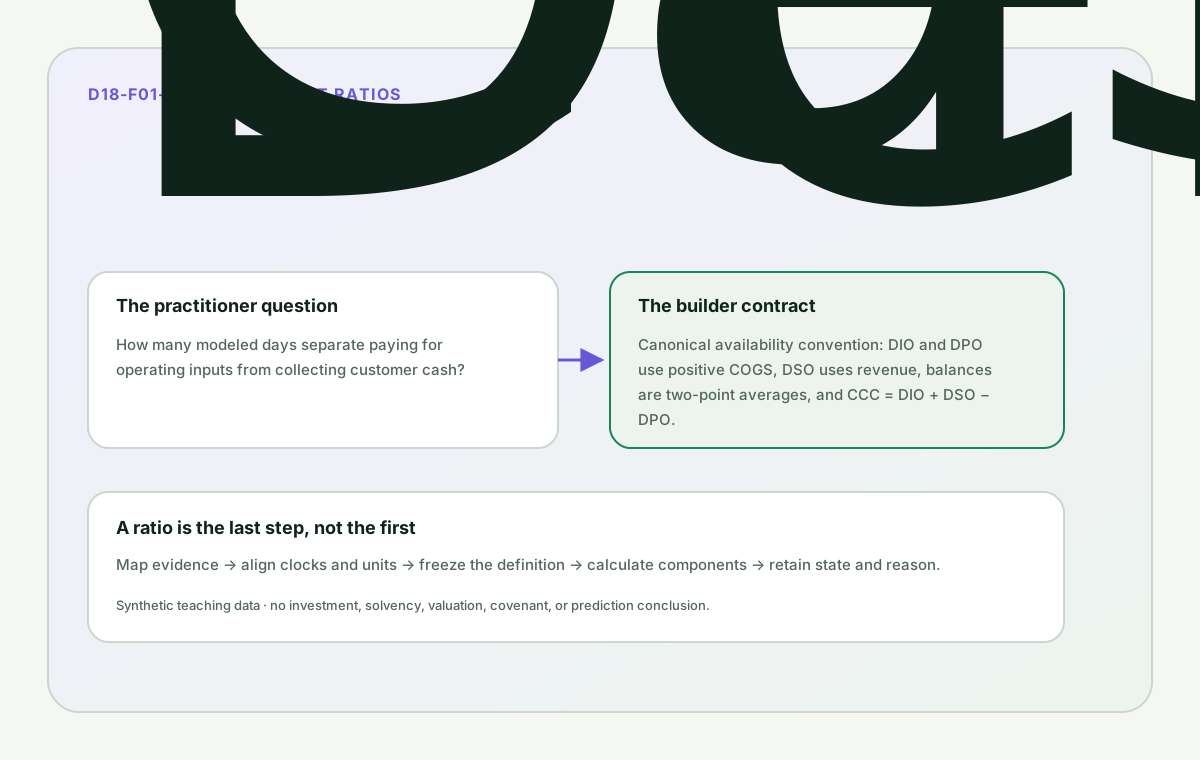
cashConversionCycle(input)Turns average receivables, inventory and trade payables into days sales outstanding, days inventory outstanding and days payables outstanding over a stated day count, then reports the cash conversion cycle as DIO plus DSO minus DPO.
Parameters#
| Name | Type | Notes |
|---|---|---|
input | { revenue: number; cost_of_goods_sold: number; day_count: number; beginning_receivables: number; ending_receivables: number; beginning_inventory: number; ending_inventory: number; beginning_trade_payables: number; ending_trade_payables: number } | A plain object. revenue scales DSO while cost_of_goods_sold scales DIO and DPO; day_count is the number of days the period is annualized over. The three balance pairs — beginning_receivables and ending_receivables, beginning_inventory and ending_inventory, beginning_trade_payables and ending_trade_payables — are each averaged. Every key must be a finite number. |
Returns#
{ average_receivables: number; average_inventory: number; average_trade_payables: number; days_sales_outstanding: number | null; days_inventory_outstanding: number | null; days_payables_outstanding: number | null; cash_conversion_cycle_days: number | null; state: string; reason: string }
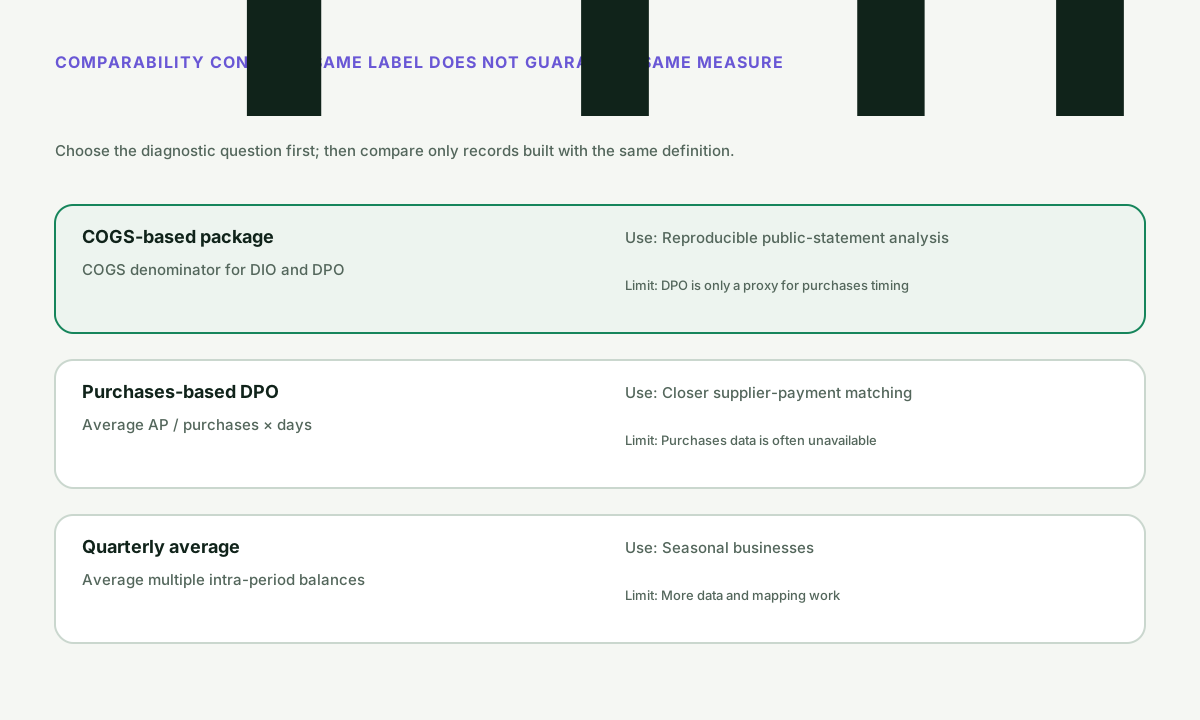
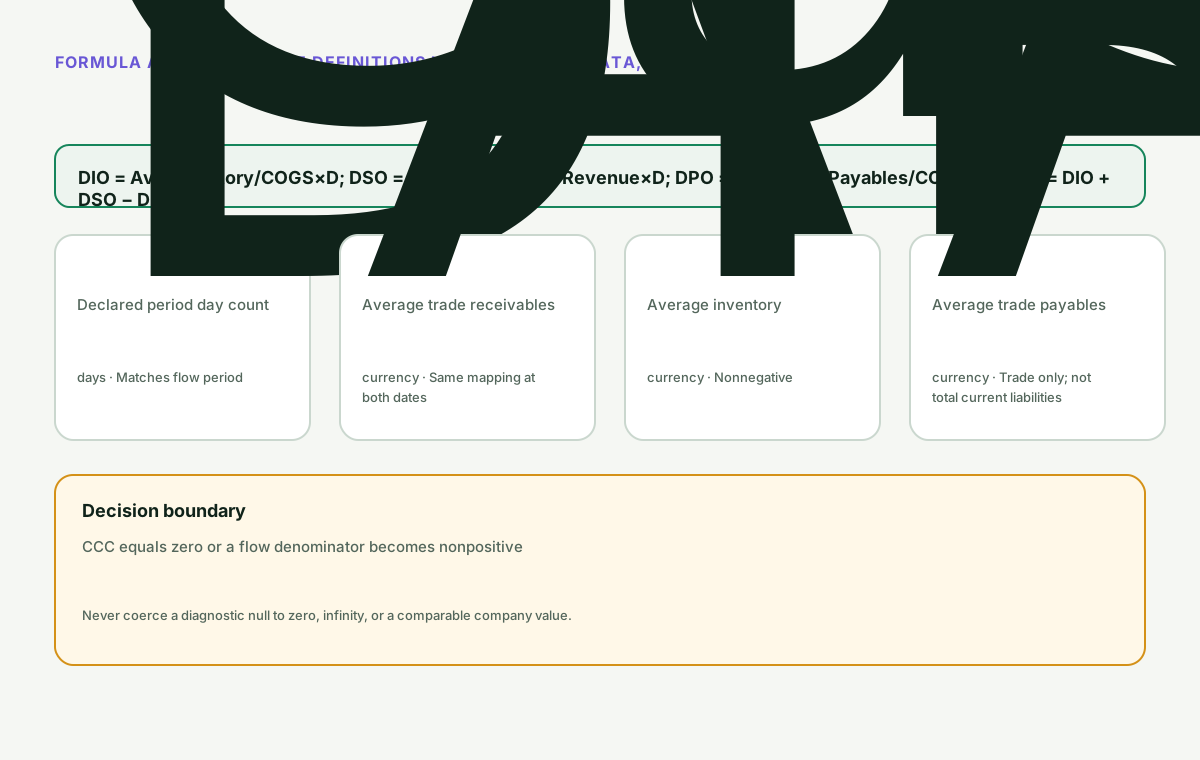
average_receivables, average_inventory and average_trade_payables are always emitted. days_sales_outstanding divides average receivables by revenue, days_inventory_outstanding and days_payables_outstanding divide by cost of goods sold, and each is multiplied by day_count; cash_conversion_cycle_days sums DIO and DSO and subtracts DPO. When revenue or cost of goods sold is not positive the four day figures are null, state is not-meaningful and reason is nonpositive-revenue or nonpositive-cogs; otherwise state is negative-cycle for a cycle below zero or calculated, with reason dio-plus-dso-minus-dpo.
Errors#
- When any of the nine inputs is not a finite number — throws RangeError
- When day_count is zero or negative — throws RangeError
- When any receivables, inventory or trade payables balance is negative — throws RangeError
Complexity: time O(1),
space O(1).
Worked example#
verified This is the worked example published in the article, replayed by the test suite on every run. The output cannot drift.
Input#
{
  "revenue": 2400,
  "cost_of_goods_sold": 1440,
  "beginning_receivables": 280,
  "ending_receivables": 320,
  "beginning_inventory": 340,
  "ending_inventory": 380,
  "beginning_trade_payables": 200,
  "ending_trade_payables": 240,
  "day_count": 365
}Call#
cashConversionCycle(input)Returns#
object with 9 fields: average_receivables, average_inventory, average_trade_payables, days_sales_outstanding, days_inventory_outstanding, days_payables_outstanding, cash_conversion_cycle_days, state, …
{
  "average_receivables": 300,
  "average_inventory": 360,
  "average_trade_payables": 220,
  "days_sales_outstanding": 45.625,
  "days_inventory_outstanding": 91.25,
  "days_payables_outstanding": 55.763888888889,
  "cash_conversion_cycle_days": 81.111111111111,
  "state": "calculated",
  "reason": "dio-plus-dso-minus-dpo"
}
Other exports#
This module also exports
dupontDecomposition, roicCalculation, interestCoverageRatio, netDebtToEbitda, commonSizeStatements, calculate. Every module additionally exports run as an alias of its
primary function, and a meta object carrying its catalog id, domain, family,
shape and article URL.
Diagrams#

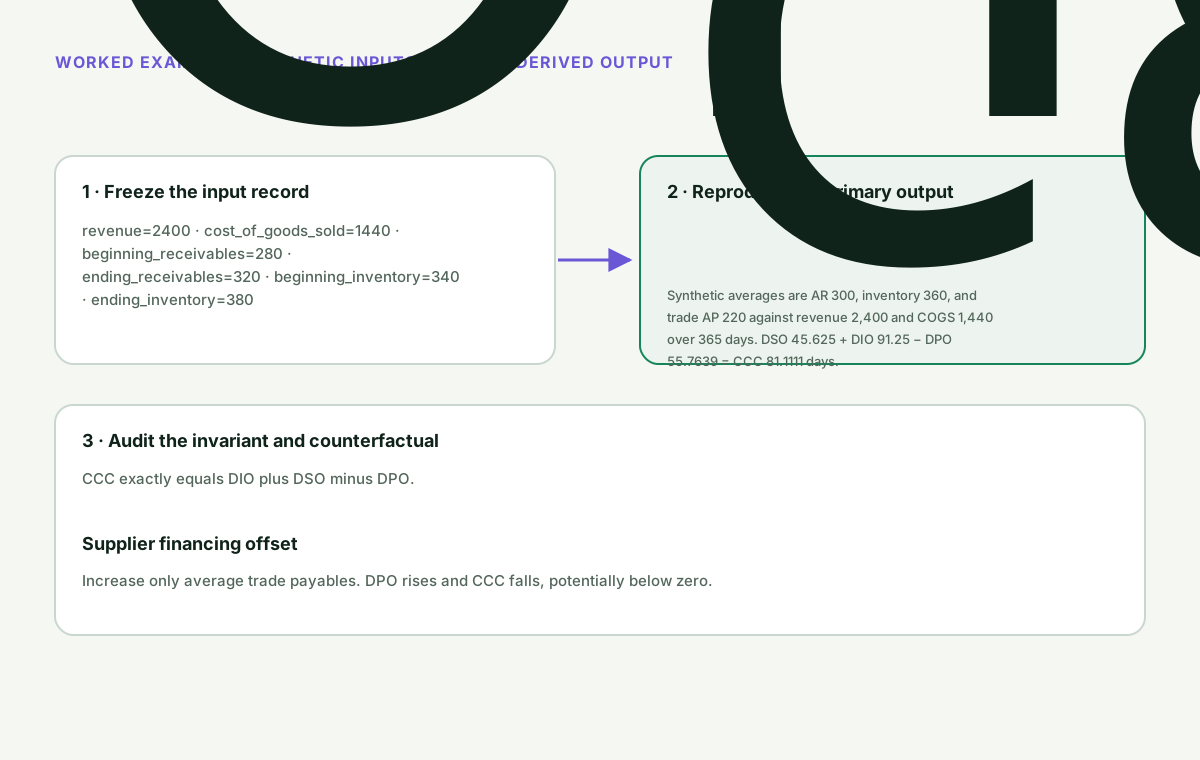
Calculation flow#
Cash Conversion Cycle calculation flow
flowchart LR
    S1["Align revenue and positive COGS to the same period"]
    S2["Average receivables inventory and trade payables at pe"]
    S3["Convert each balancetoflow ratio into days"]
    S4["Add DIO and DSO then subtract DPO"]
    S1 --> S2
    S2 --> S3
    S3 --> S4
    S4 --> D{"CCC equals zero or a flow denominator becomes nonpositive"}
    D --> O["cash_conversion_cycle_days + diagnostics"]
    O --> A["Audit: CCC exactly equals DIO plus DSO minus DPO"]
How it works#
This page states the contract — how to call it correctly. The article explains the concept: why it works, and where it breaks.
References#
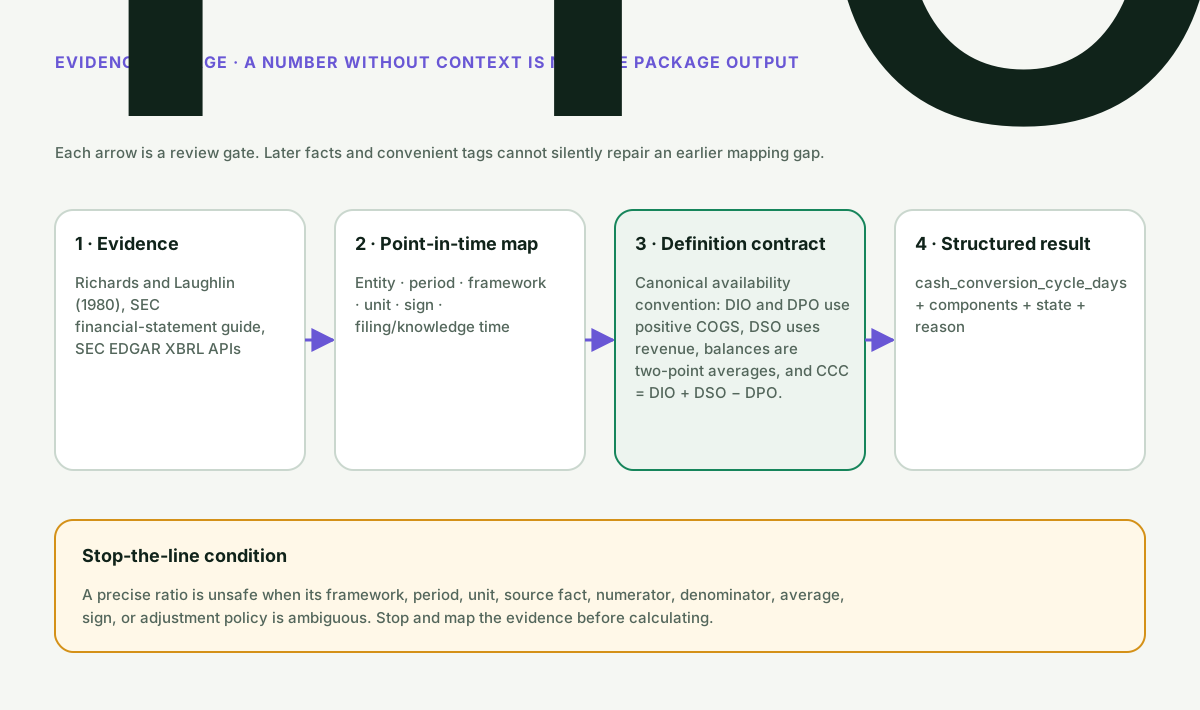
- A Cash Conversion Cycle Approach to Liquidity Analysis — Verlyn D. Richards and Eugene J. Laughlin
- Beginners' Guide to Financial Statements — U.S. Securities and Exchange Commission
- EDGAR Application Programming Interfaces — U.S. Securities and Exchange Commission
- Evidence boundary