Trend, Seasonality, Cycles, and Remainder
Install and import#
npm install fintech-algorithmsimport { trendSeasonalityCyclesAndRemainder } from "fintech-algorithms/foundations/financial-time-series-foundations/trend-seasonality-cycles-and-remainder";Signature#
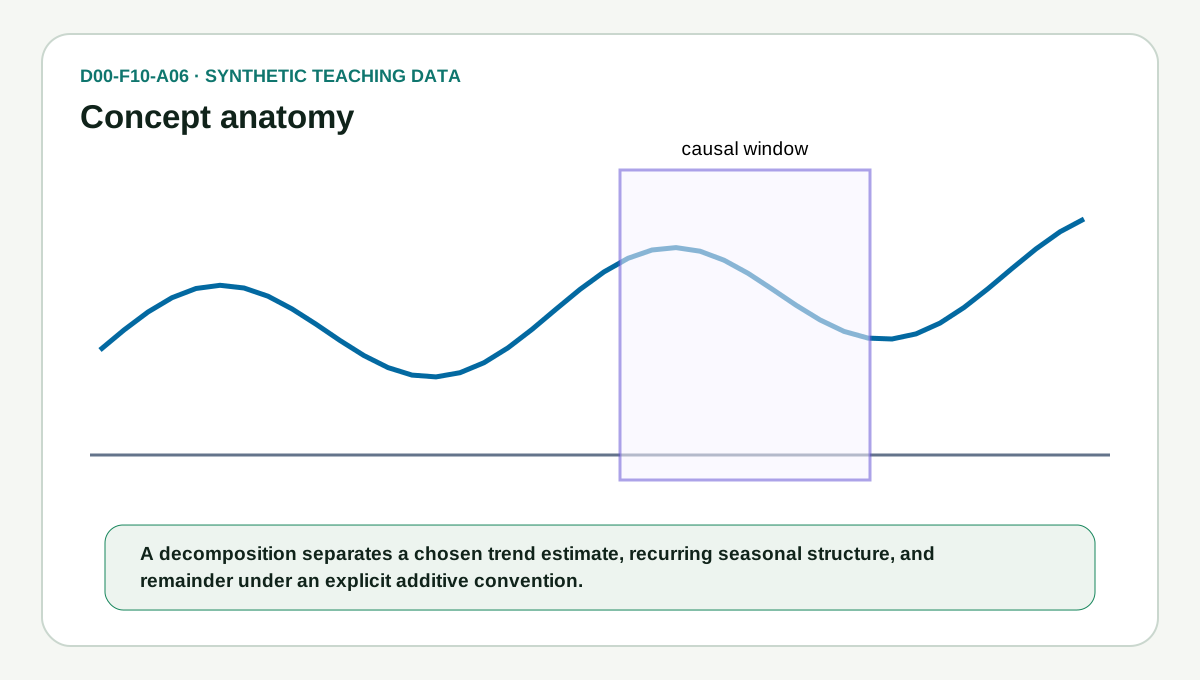
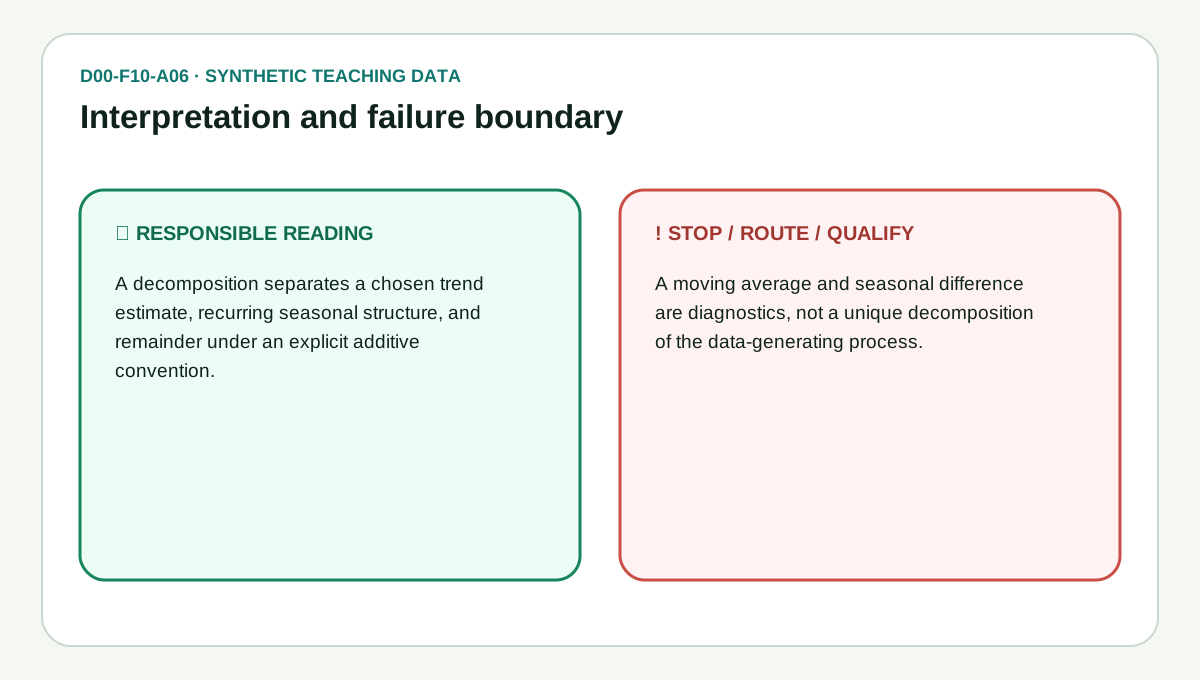
trendSeasonalityCyclesAndRemainder(input)Separates a series into a rolling-mean trend, a seasonal difference taken period steps back, and the remainder left once the trend is removed.
Parameters#
| Name | Type | Notes |
|---|---|---|
input | D00Input | Reads values, a non-empty list of finite numbers, timestamps of the same length, window for the trend average, and period for the seasonal difference. |
Returns#
D00Output
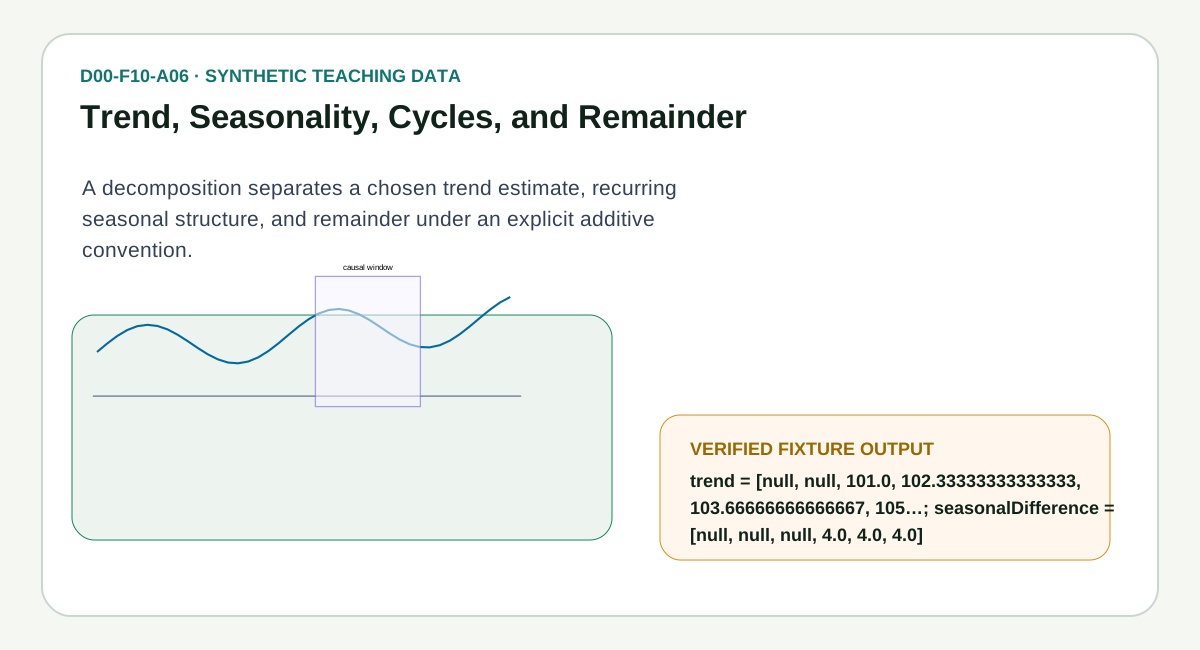
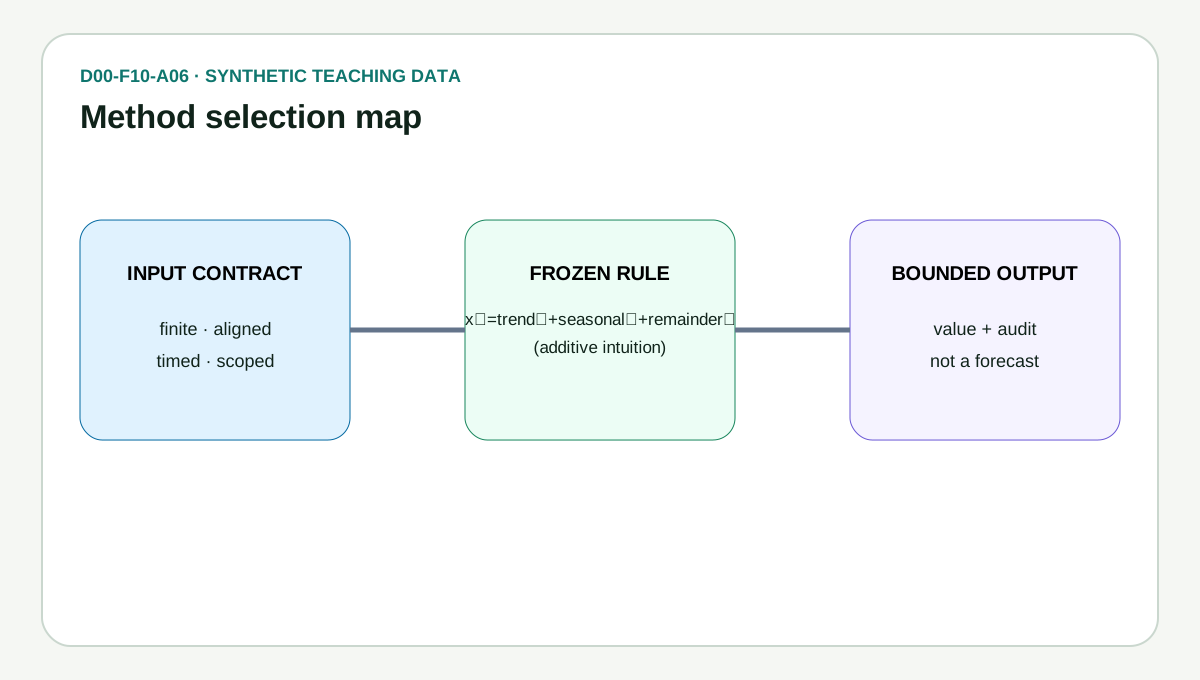
trend is the rolling mean, null at positions with fewer than window observations behind them. seasonalDifference subtracts the value period positions earlier and is null for the first period entries. remainder is the value minus the trend, null wherever the trend is. period is echoed back.
Errors#
- When
valuesis absent, empty, or holds a non-finite number — throws RangeError - When
timestampsandvalueshave different lengths — throws RangeError - When the series holds fewer than two observations — throws RangeError
- When
windowis not an integer between one and the observation count — throws RangeError - When
periodis not an integer between one and the observation count minus one — throws RangeError
Complexity: time O(n^2),
space O(n).
Worked example#
verified This is the worked example published in the article, replayed by the test suite on every run. The output cannot drift.
Input#
{
  "timestamps": [
    "2025-01-01T00:00:00Z",
    "2025-01-02T00:00:00Z",
    "2025-01-03T00:00:00Z",
    "2025-01-04T00:00:00Z",
    "2025-01-05T00:00:00Z",
    "2025-01-06T00:00:00Z"
  ],
  "values": [100, 102, 101, 104, 106, 105],
  "lag": 1,
  "window": 3,
  "resampleSize": 2,
  "period": 3,
  "stationarityTolerance": 3,
  "alpha": 0.4,
  "splitIndex": 4
}Call#
trendSeasonalityCyclesAndRemainder(input)Returns#
object with 4 fields: trend, seasonalDifference, remainder, period
{
  "trend": [null, null, 101, 102.33333333333333, 103.66666666666667, 105],
  "seasonalDifference": [null, null, null, 4, 4, 4],
  "remainder": [null, null, 0, 1.6666666666666714, 2.3333333333333286, 0],
  "period": 3
}Diagrams#
Calculation flow#
Reasoning flow — D00-F10-A06
flowchart LR
    A["Synthetic input + metadata"] --> B{"Contract valid?"}
    B -->|No| C["Reject or route with reason"]
    B -->|Yes| D["Apply Trend, Seasonality, Cycles, and Remainder"]
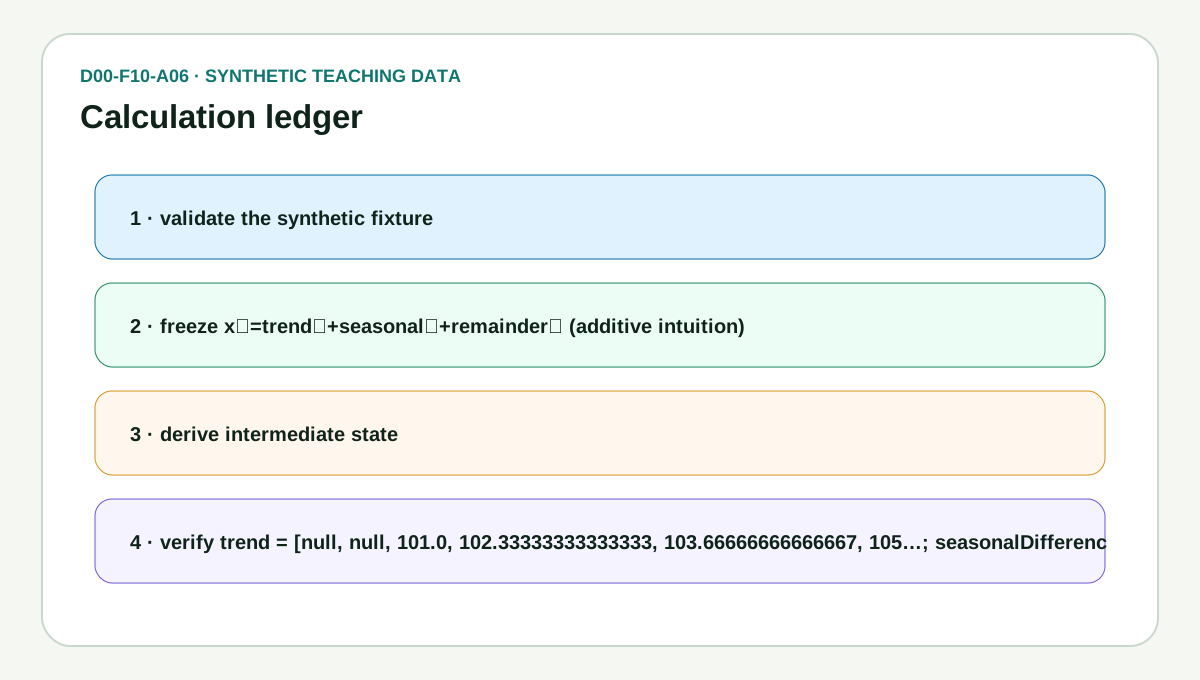
    D --> E["Formula: trendₜ=mean(xₜ₋w₊₁…xₜ); seasonalDifferenceₜ=xₜ−xₜ₋ₚ; remainderₜ=xₜ−trendₜ"]
    E --> F["Verified fixture output"]
    F --> G{"Interpretation within boundary?"}
    G -->|Yes| H["Report value + convention + audit"]
    G -->|No| I["Add companion view or narrower claim"]
How it works#
This page states the contract — how to call it correctly. The article explains the concept: why it works, and where it breaks.
References#
- Time Series Plot — NIST/SEMATECH e-Handbook
- Common Pitfalls and Recommended Practices — scikit-learn
- Historical-example decision