Variables, Constants, Expressions, and Equations
Install and import#
npm install fintech-algorithmsimport { variablesConstantsExpressionsAndEquations } from "fintech-algorithms/foundations/mathematical-language-and-quantitative-reasoning/variables-constants-expressions-and-equations";Signature#
variablesConstantsExpressionsAndEquations(input)Substitutes named quantities into a cash-balance equation and checks that the rearranged form still holds, returning the ending cash implied by startingCash, inflows and outflows.
Parameters#
| Name | Type | Notes |
|---|---|---|
input | D00Input | A plain object. Every F01 topic first reads values, which must be a non-empty array of finite numbers, and validates it before any per-topic branch runs. This topic then reads startingCash, inflows and outflows, each coerced with Number; values is demanded but not used by this calculation. |
Returns#
{ endingCash: number; balances: boolean }
endingCash is startingCash + inflows - outflows. balances is true when moving the three terms back across the equals sign lands within 1e-12 of zero, which it does for any finite input.
Errors#
- When input is not a plain object — throws TypeError
- When values is missing, empty, or not an array — throws RangeError
- When values contains a value that is not a finite number — throws RangeError
Complexity: time O(n),
space O(n).
Worked example#
verified This is the worked example published in the article, replayed by the test suite on every run. The output cannot drift.
Input#
{
  "values": [1, 2, 3, 4, 5],
  "startingCash": 1000,
  "inflows": 250,
  "outflows": 120,
  "slope": 2,
  "intercept": 1,
  "part": 25,
  "whole": 200,
  "elapsed": 5,
  "old": 4.5,
  "new": 4.75,
  "base": 16,
  "exponent": 0.5,
  "a": 2
}
Showing 14 of 28 fields.
Call#
variablesConstantsExpressionsAndEquations(input)Returns#
object with 2 fields: endingCash, balances
{
  "endingCash": 1130,
  "balances": true
}Diagrams#
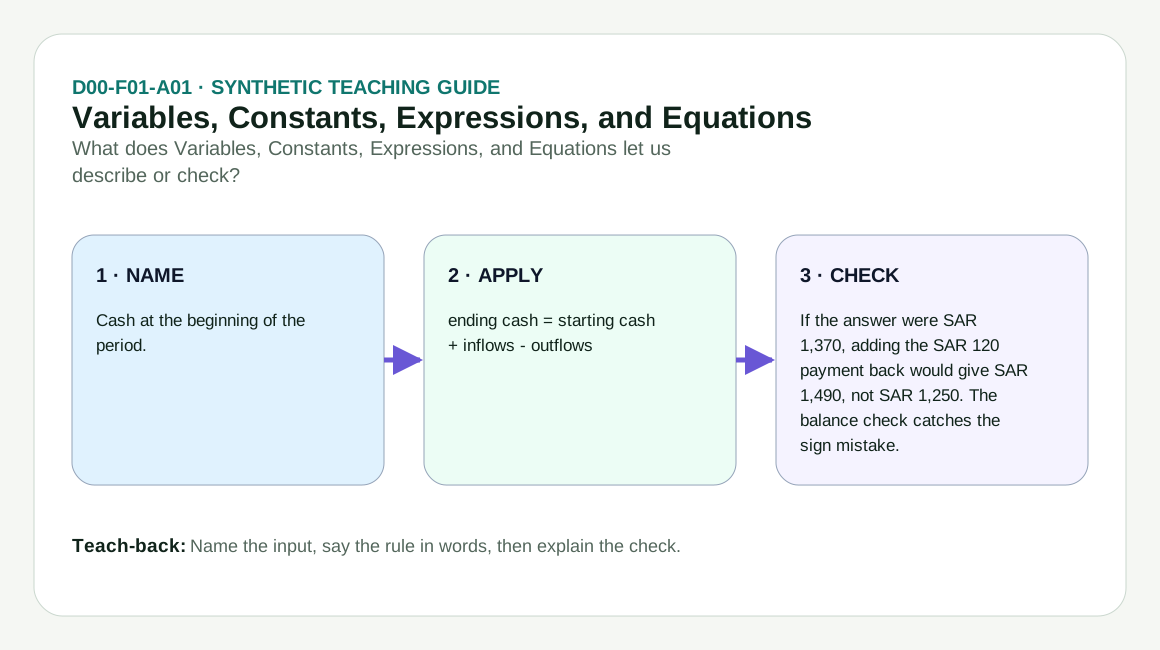
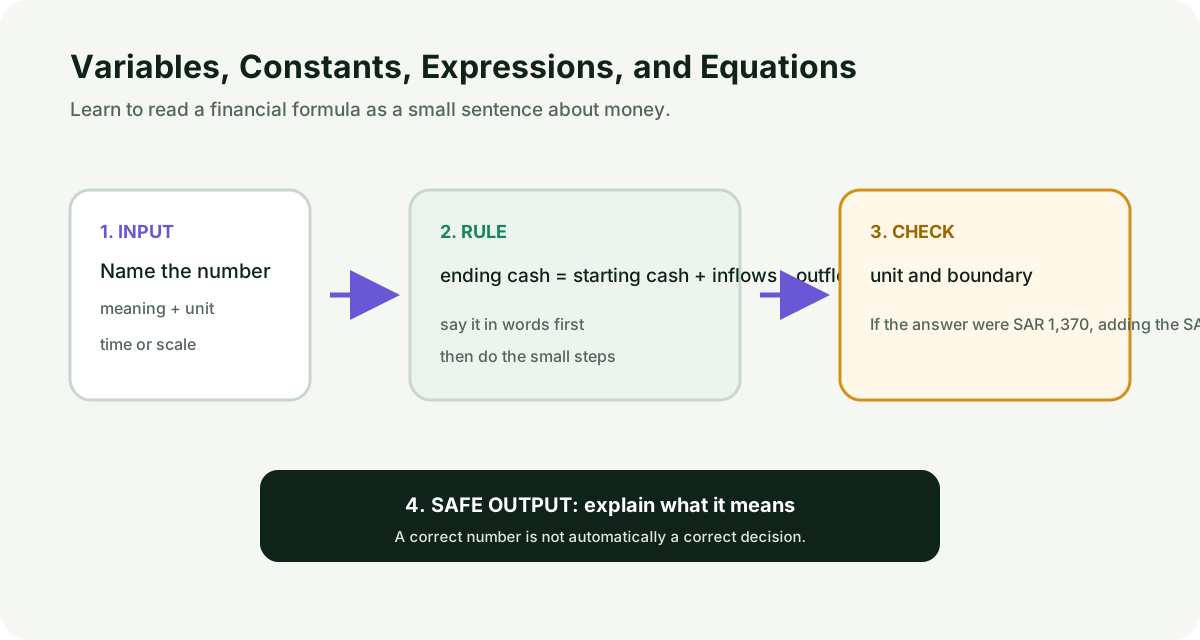
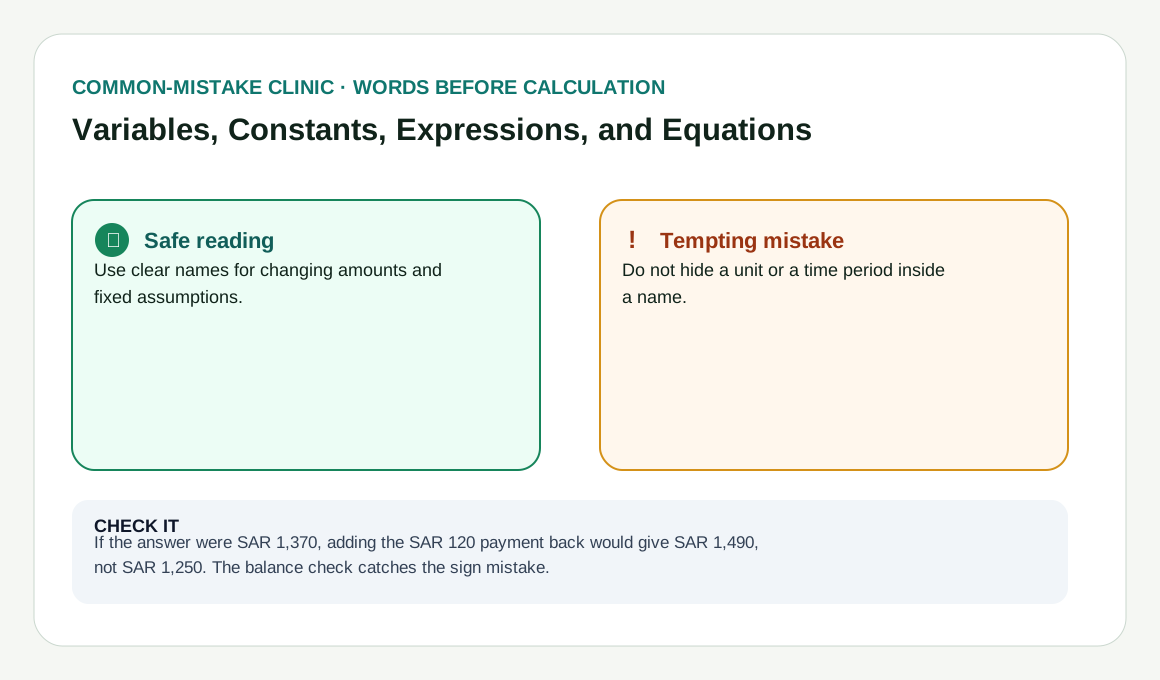
Calculation flow#
Variables, Constants, Expressions, and Equations — four-part map
flowchart LR
    A["Name the input"] --> B["Apply: ending cash = starting cash + inflows - outflows"]
    B --> C["Check units and boundary"]
    C --> D["Explain the output"]
How it works#
This page states the contract — how to call it correctly. The article explains the concept: why it works, and where it breaks.
References#
- NIST/SEMATECH e-Handbook of Statistical Methods — NIST/SEMATECH
- Author-derived and synthetic boundary