Probability Rules, Complements, Unions, and Intersections
Install and import#
npm install fintech-algorithmsimport { probabilityRulesComplementsUnionsAndIntersections } from "fintech-algorithms/foundations/probability-and-random-variables/probability-rules-complements-unions-and-intersections";Signature#
probabilityRulesComplementsUnionsAndIntersections(input)Applies the complement and addition rules to a pair of events, deriving the probability that A does not happen and the probability that at least one of A or B happens.
Parameters#
| Name | Type | Notes |
|---|---|---|
input | { pA: number; pB: number; pAB: number } | pA and pB are the marginal probabilities of the two events and pAB the probability of both together. The joint probability is taken as given, not inferred, so it must be consistent with the two marginals.pA: 0 <= pA <= 1 · pB: 0 <= pB <= 1 · pAB: 0 <= pAB <= min(pA, pB) |
Returns#
{ complementA: number; union: number; intersection: number }
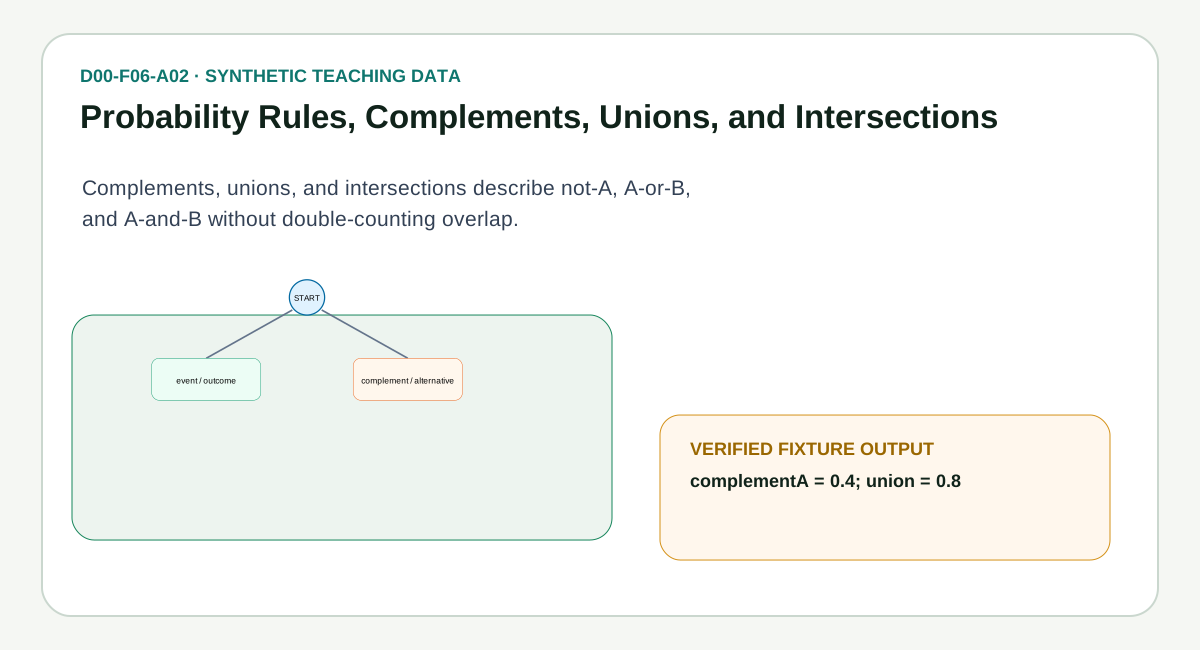
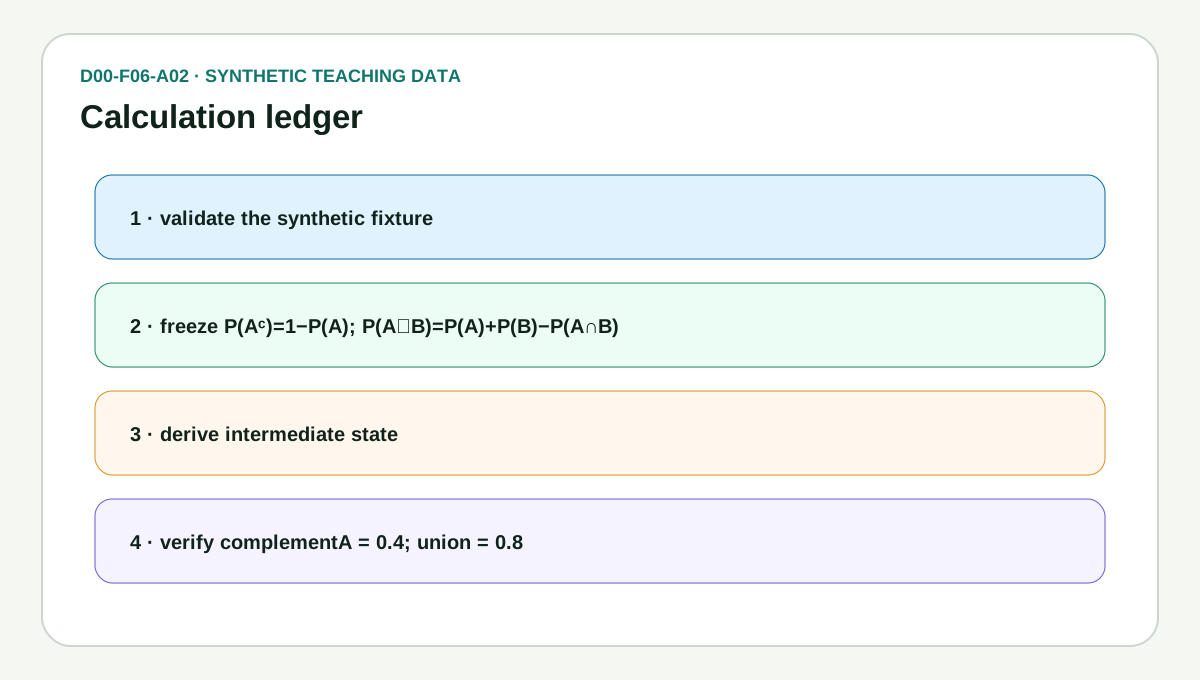
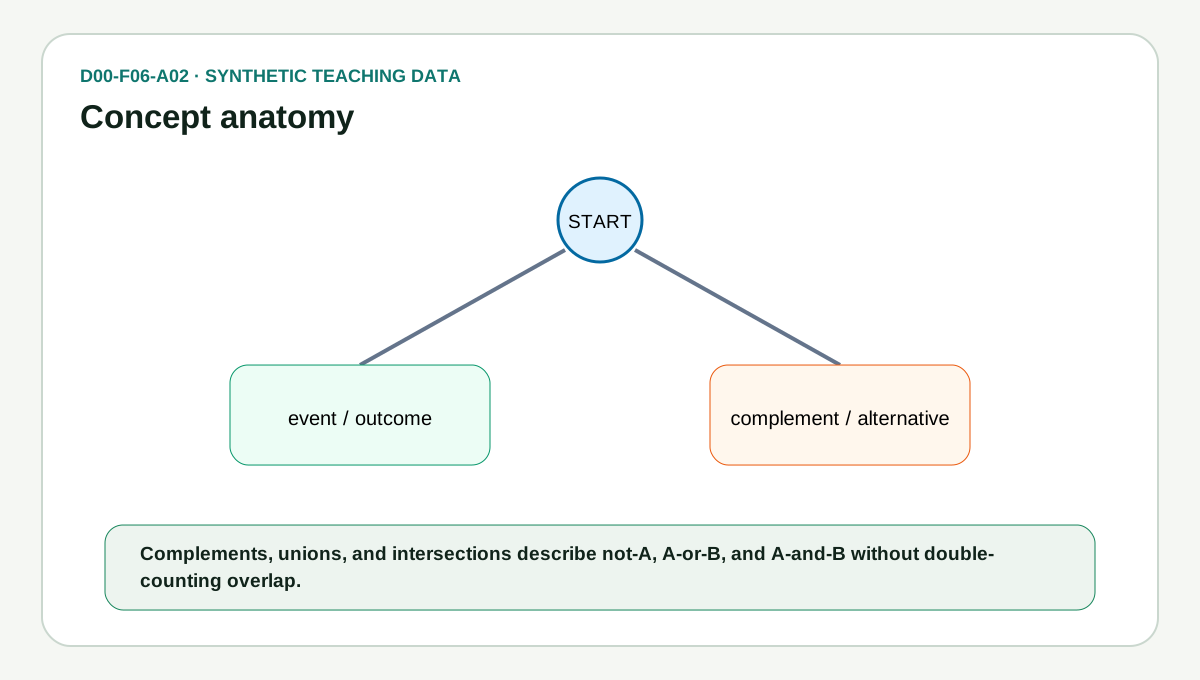
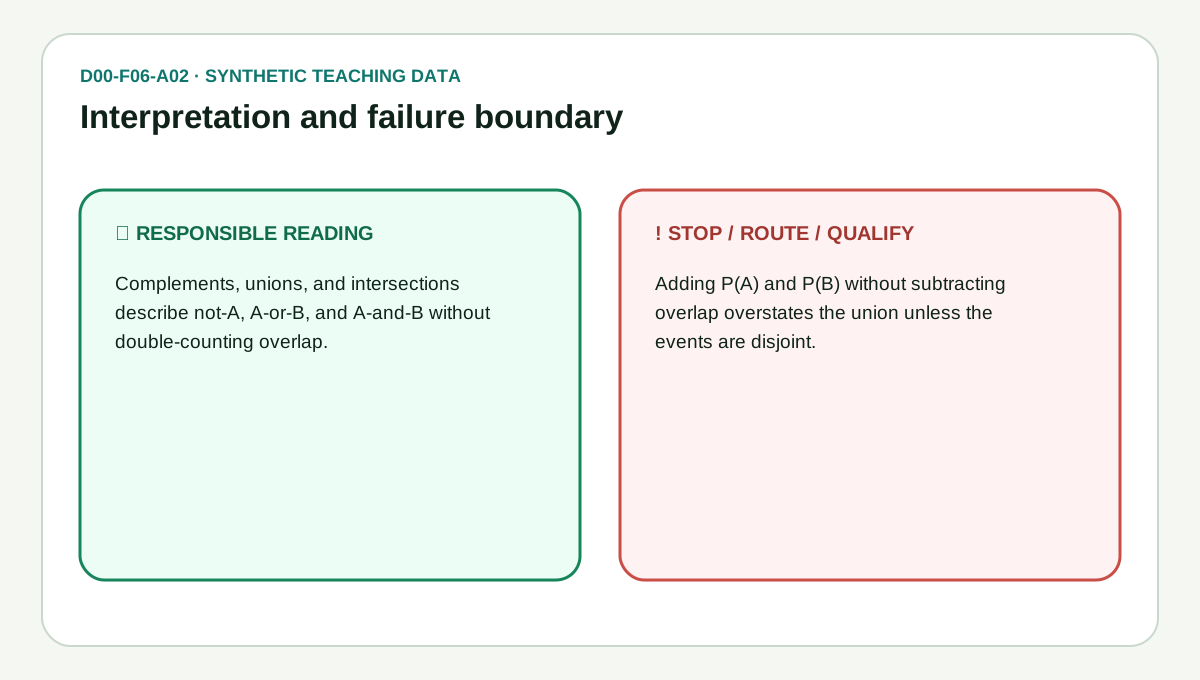
complementA is 1 - pA, union is pA + pB - pAB, and intersection echoes the supplied pAB so all three rule terms sit side by side.
Errors#
- When
inputis null, an array, or not an object — throws TypeError - When
pA,pB, orpABfalls outside [0, 1], orpABexceedsmin(pA, pB)— throws RangeError
Complexity: time O(1),
space O(1).
Worked example#
verified This is the worked example published in the article, replayed by the test suite on every run. The output cannot drift.
Input#
{
  "pA": 0.6,
  "pB": 0.5,
  "pAB": 0.3,
  "outcomes": ["up", "flat", "down"],
  "event": ["up", "flat"],
  "prior": 0.01,
  "sensitivity": 0.9,
  "falsePositiveRate": 0.05,
  "randomValues": [0, 1, 2],
  "probabilities": [0.2, 0.5, 0.3],
  "randomVariableKind": "discrete",
  "joint": [
    {
      "x": 0,
      "y": 0,
      "p": 0.3
    },
    {
      "x": 0,
      "y": 1,
      "p": 0.2
    },
    {
      "x": 1,
      "y": 0,
      "p": 0.1
    }
  ],
  "conditionY": 1
}Call#
probabilityRulesComplementsUnionsAndIntersections(input)Returns#
object with 2 fields: complementA, union
{
  "complementA": 0.4,
  "union": 0.8
}Diagrams#
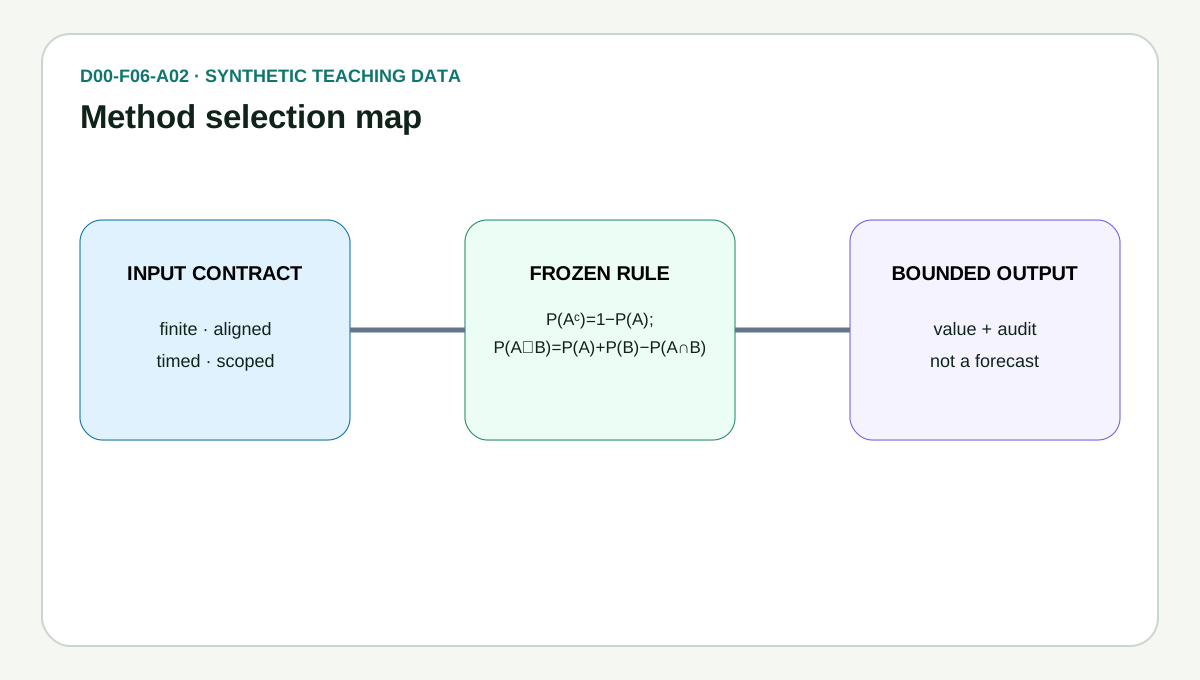
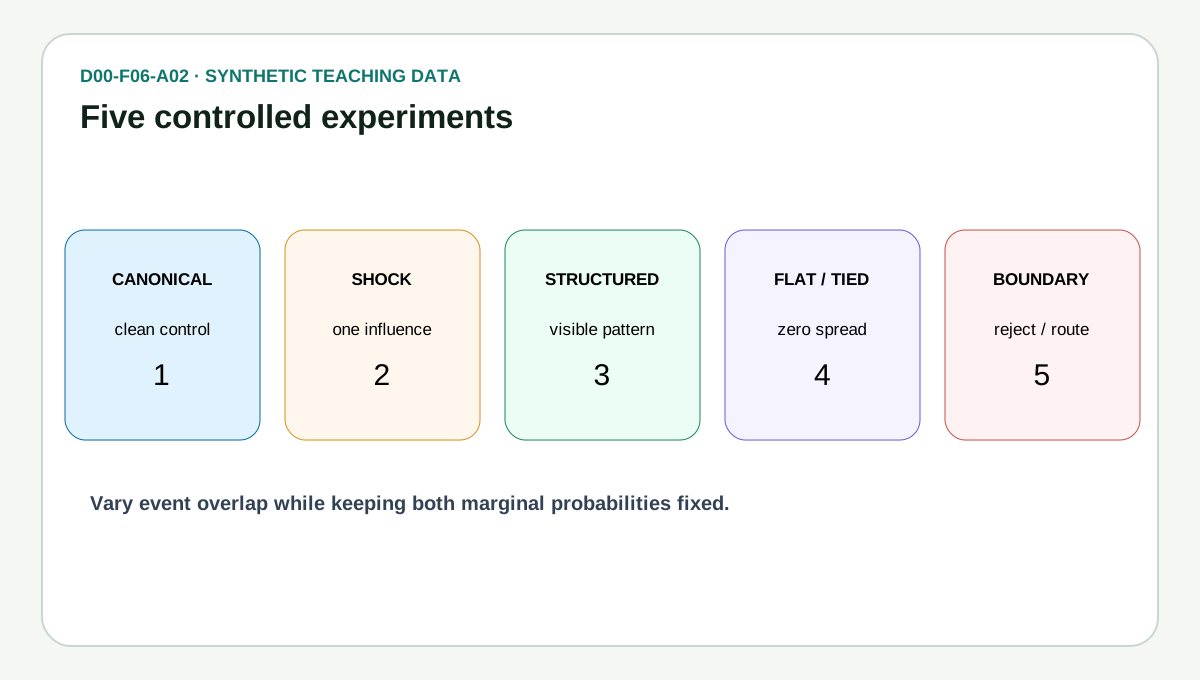
Calculation flow#
Reasoning flow — D00-F06-A02
flowchart LR
    A["Synthetic input + metadata"] --> B{"Contract valid?"}
    B -->|No| C["Reject or route with reason"]
    B -->|Yes| D["Apply Probability Rules, Complements, Unions, and Intersections"]
    D --> E["Formula: P(Aᶜ)=1−P(A); P(A∪B)=P(A)+P(B)−P(A∩B)"]
    E --> F["Verified fixture output"]
    F --> G{"Interpretation within boundary?"}
    G -->|Yes| H["Report value + convention + audit"]
    G -->|No| I["Add companion view or narrower claim"]
How it works#
This page states the contract — how to call it correctly. The article explains the concept: why it works, and where it breaks.
References#
- Probability Distributions — NIST/SEMATECH e-Handbook
- Probability Distributions — SciPy User Guide
- Historical-example decision