Volatility and Annualized Volatility
Install and import#
npm install fintech-algorithmsimport { volatilityAndAnnualizedVolatility } from "fintech-algorithms/foundations/financial-risk-and-performance-statistics/volatility-and-annualized-volatility";Signature#
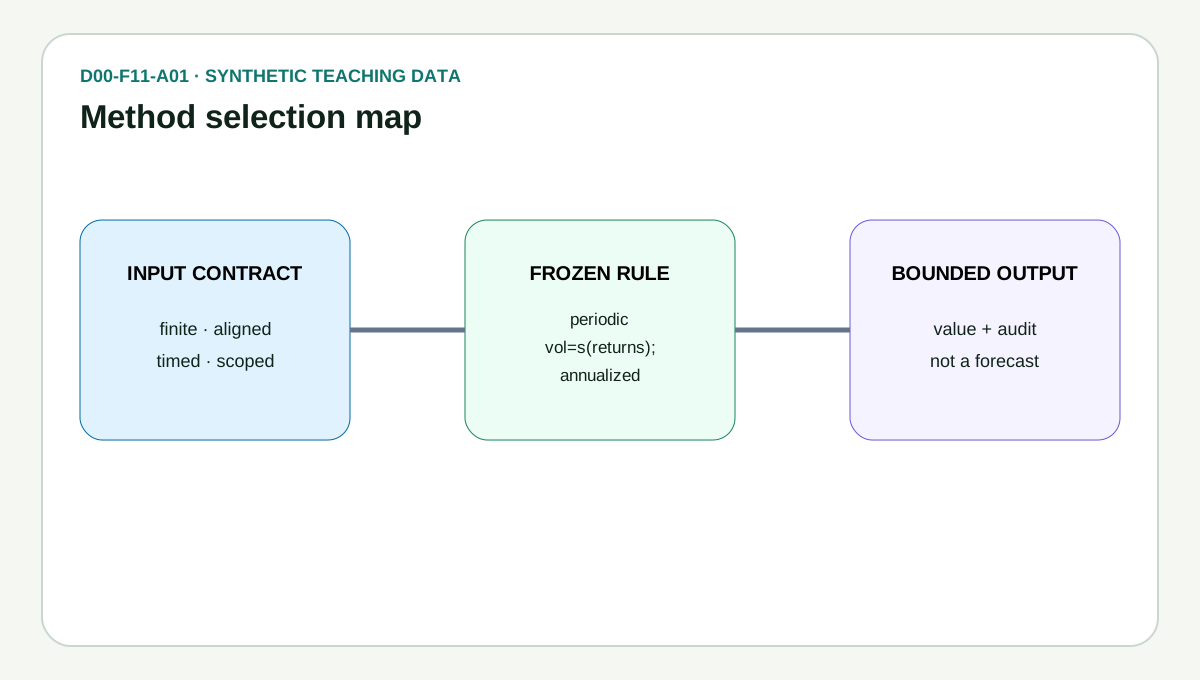
volatilityAndAnnualizedVolatility(input)Takes the sample standard deviation of a return series and rescales it to an annual horizon by the square root of the observations per year.
Parameters#
| Name | Type | Notes |
|---|---|---|
input | D00Input | Reads returns and benchmark, two aligned non-empty lists of finite periodic returns, and frequency, the number of periods per year. Only returns and frequency enter this calculation; benchmark is still validated. |
Returns#
D00Output
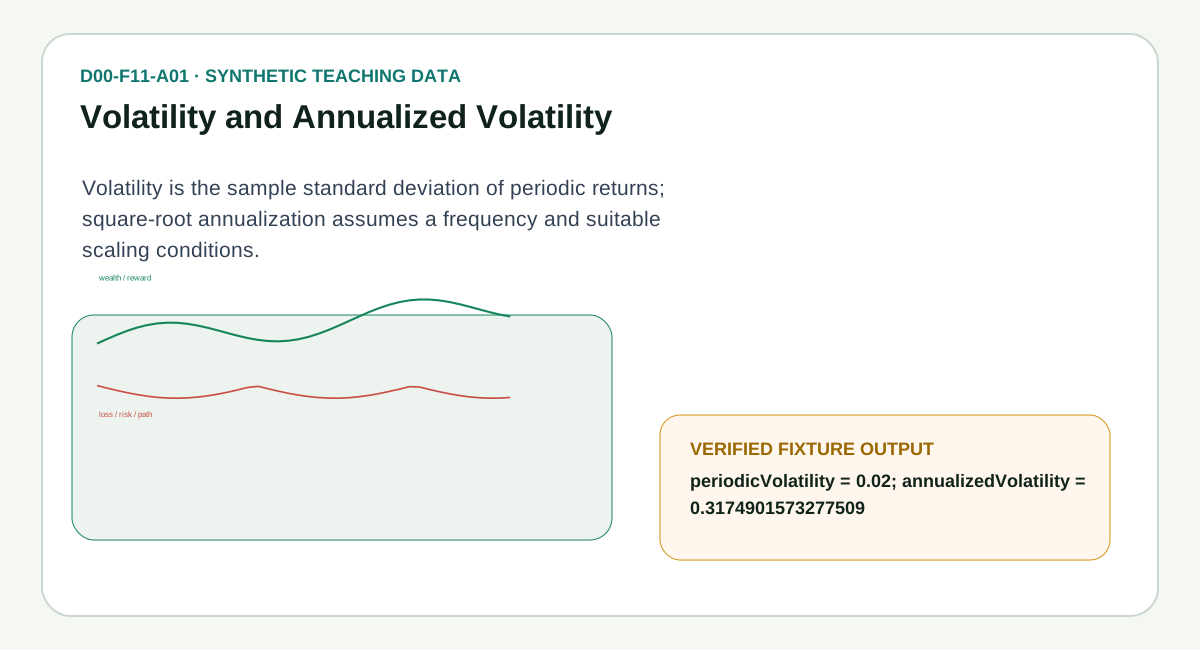
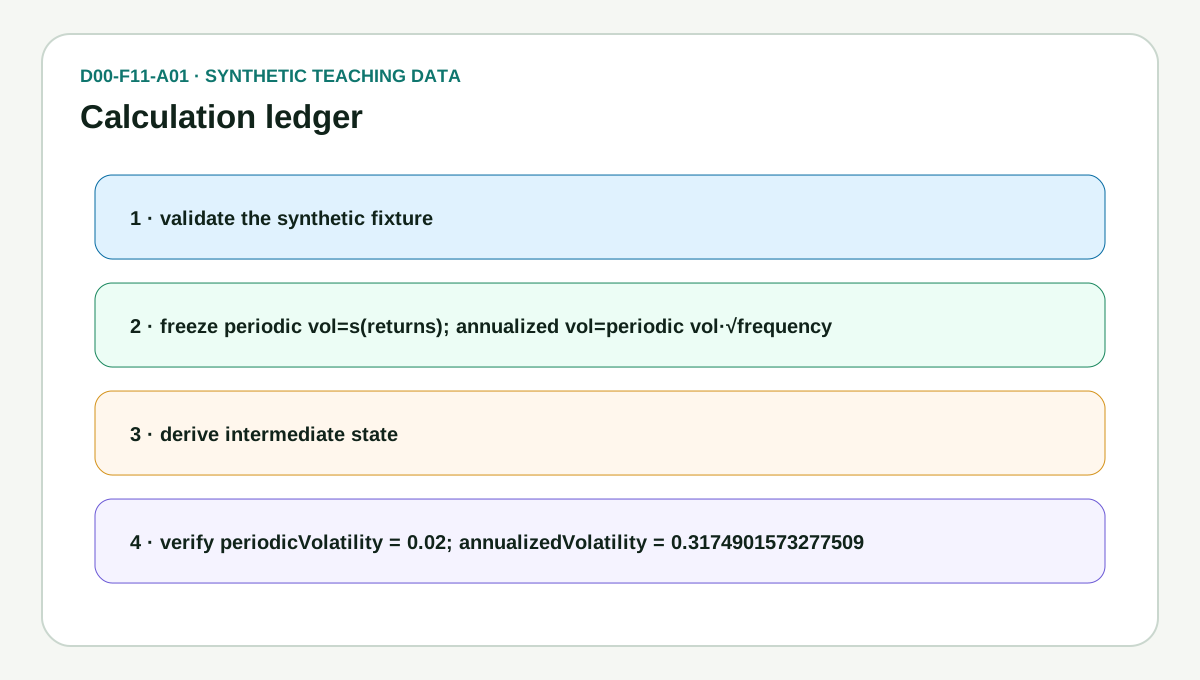
periodicVolatility is the per-period sample standard deviation and annualizedVolatility is that figure times the square root of frequency.
Errors#
- When
returnsorbenchmarkis absent, empty, or holds a non-finite number — throws RangeError - When
returnsandbenchmarkdiffer in length, or hold fewer than two observations — throws RangeError - When
frequencyis zero or negative — throws RangeError
Complexity: time O(n),
space O(n).
Worked example#
verified This is the worked example published in the article, replayed by the test suite on every run. The output cannot drift.
Input#
{
  "returns": [0.01, -0.02, 0.015, -0.01, 0.03],
  "benchmark": [0.008, -0.01, 0.012, -0.006, 0.02],
  "frequency": 252,
  "target": 0,
  "confidence": 0.8,
  "riskFree": 0.0001,
  "weights": [0.6, 0.4],
  "covarianceMatrix": [
    [0.04, 0.01],
    [0.01, 0.09]
  ]
}Call#
volatilityAndAnnualizedVolatility(input)Returns#
object with 2 fields: periodicVolatility, annualizedVolatility
{
  "periodicVolatility": 0.02,
  "annualizedVolatility": 0.3174901573277509
}Diagrams#
Calculation flow#
Reasoning flow — D00-F11-A01
flowchart LR
    A["Synthetic input + metadata"] --> B{"Contract valid?"}
    B -->|No| C["Reject or route with reason"]
    B -->|Yes| D["Apply Volatility and Annualized Volatility"]
    D --> E["Formula: periodic vol=s(returns); annualized vol=periodic vol·√frequency"]
    E --> F["Verified fixture output"]
    F --> G{"Interpretation within boundary?"}
    G -->|Yes| H["Report value + convention + audit"]
    G -->|No| I["Add companion view or narrower claim"]
How it works#
This page states the contract — how to call it correctly. The article explains the concept: why it works, and where it breaks.
References#
- Expected Shortfall — Basel Framework MAR33
- Mutual Fund Performance — William F. Sharpe
- Measures of Scale — NIST/SEMATECH e-Handbook
- Historical-example decision