Dividend Discount Model
Install and import#
npm install fintech-algorithmsimport { dividendDiscountModel } from "fintech-algorithms/fundamental-analysis-and-valuation/intrinsic-valuation/dividend-discount-model";Signature#
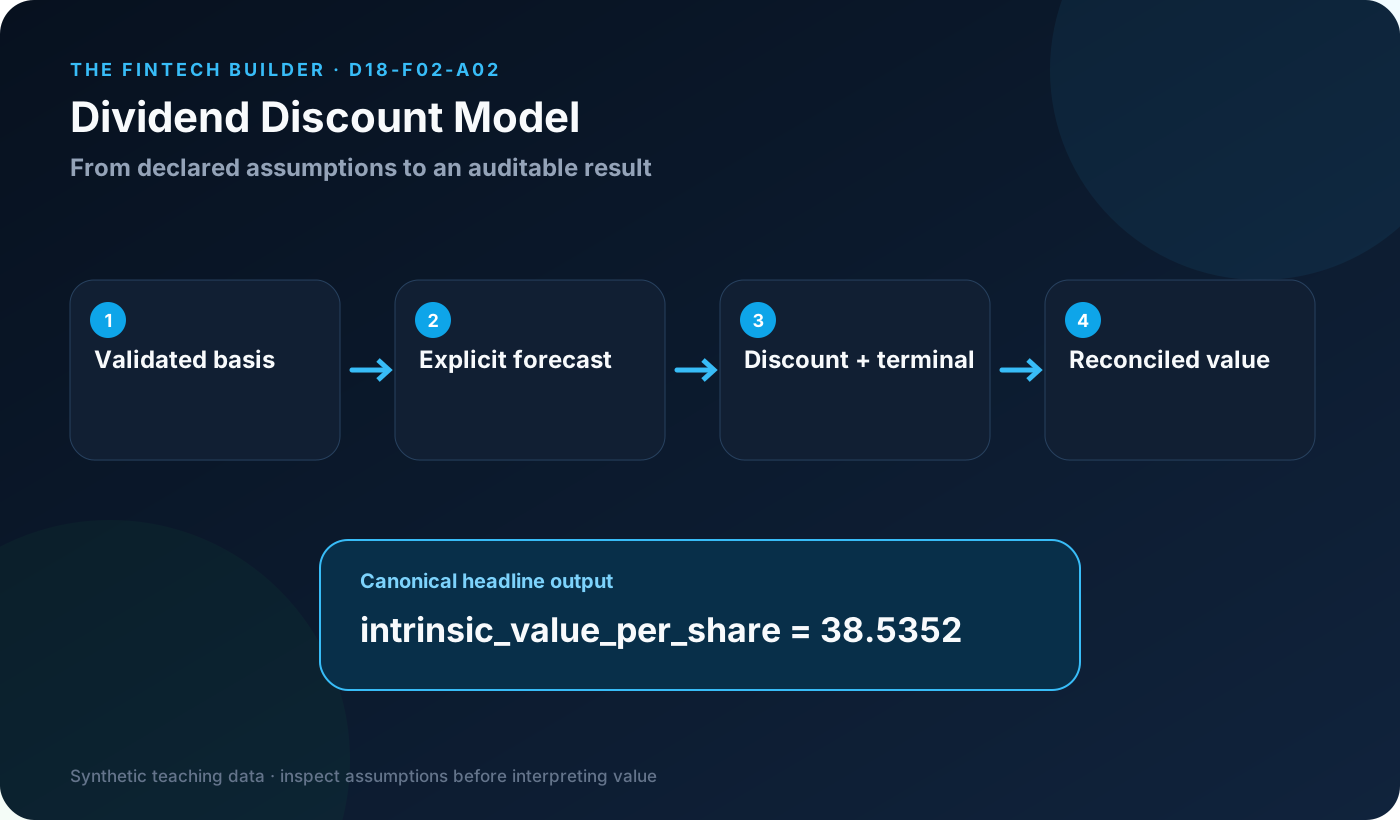
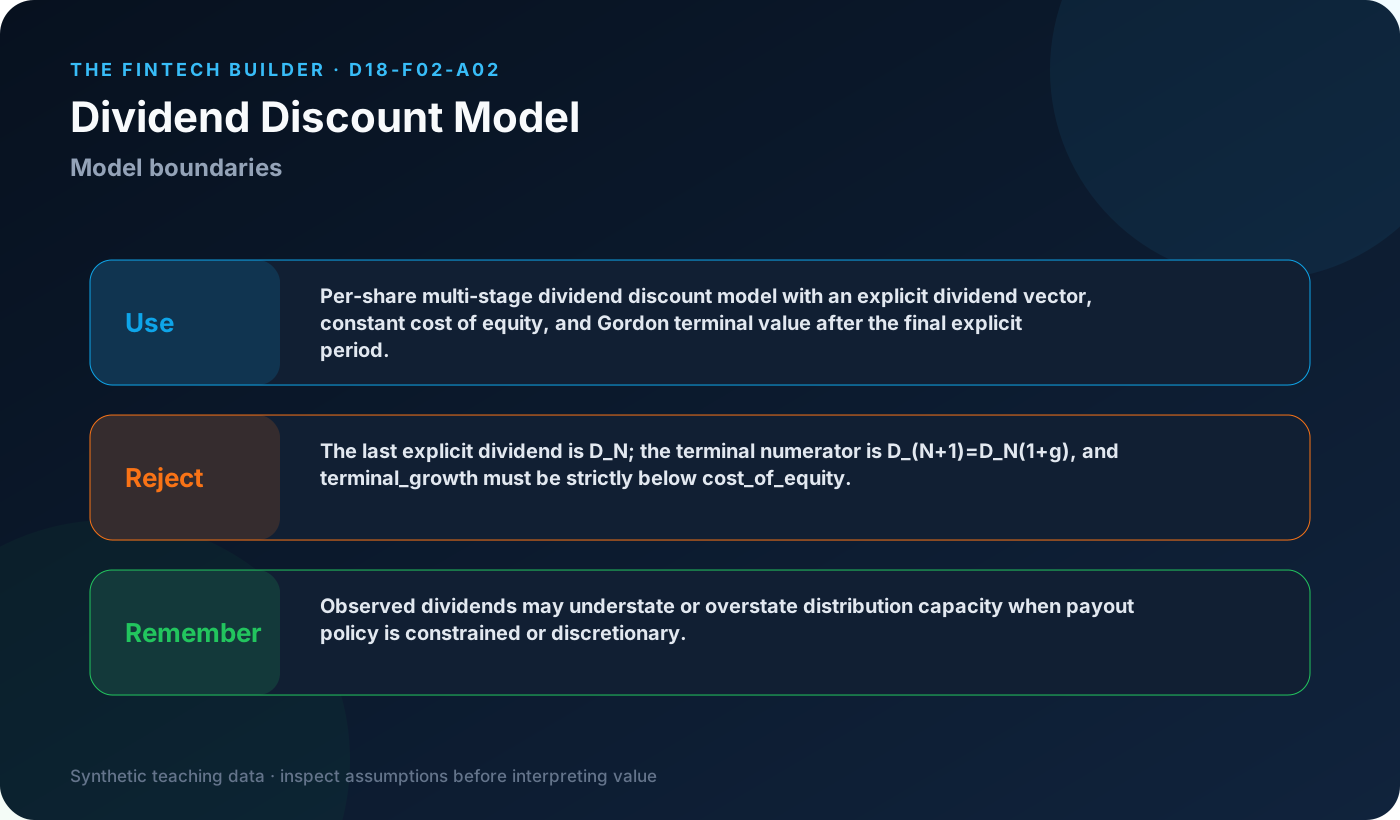
dividendDiscountModel(data)Discounts an explicit per-share dividend forecast at the cost of equity and adds a growing-perpetuity terminal value built from the final forecast dividend, returning intrinsic value per share.
Parameters#
| Name | Type | Notes |
|---|---|---|
data | { dividends: number[]; cost_of_equity: number; terminal_growth: number } | dividends is the explicit per-share forecast, one finite nonnegative number per period, discounted at periods 1 through n. cost_of_equity is the discount rate and terminal_growth grows the last dividends entry into the terminal dividend. Other keys in the record are not read. |
Returns#
{ state: string; method: string; schedule: { period: number; dividend: number; discount_factor: number; present_value: number }[]; pv_explicit_dividends: number; terminal_dividend: number; terminal_value: number; terminal_discount_factor: number; pv_terminal_value: number; terminal_value_share: number; intrinsic_value_per_share: number }
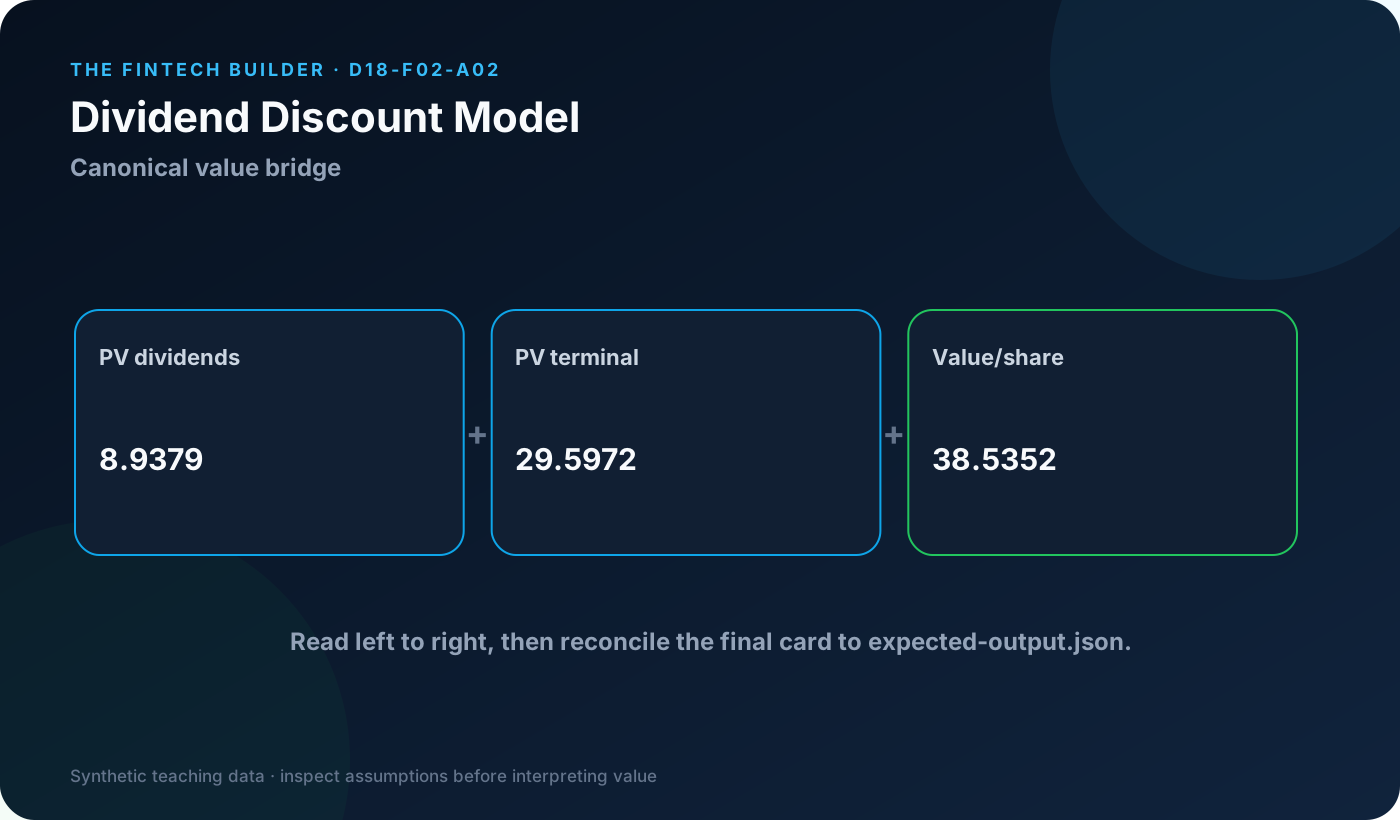
A schedule row per forecast period with its discount_factor and present_value, then pv_explicit_dividends, the terminal block (terminal_dividend, terminal_value, terminal_discount_factor, pv_terminal_value) and intrinsic_value_per_share, which is the sum of the explicit and terminal present values. terminal_value_share is the terminal share of that sum, emitted as 0 when the sum is 0.
Errors#
- When
datais absent, an array, or not an object — throws Error - When
dividendsis not an array holding at least one finite number — throws Error - When any entry of
dividendsis negative — throws Error - When
cost_of_equityis not strictly between 0 and 1 — throws Error - When
terminal_growthis at or below -1, or at or abovecost_of_equity— throws Error
Complexity: time O(n),
space O(n).
Worked example#
executed Captured by running this function on the input its own test provides. Real output of real code — but not asserted against a published figure.
Input#
{
  "valuation_date": "2026-08-04",
  "currency": "USD",
  "dividends": [2, 2.2, 2.42, 2.6, 2.75],
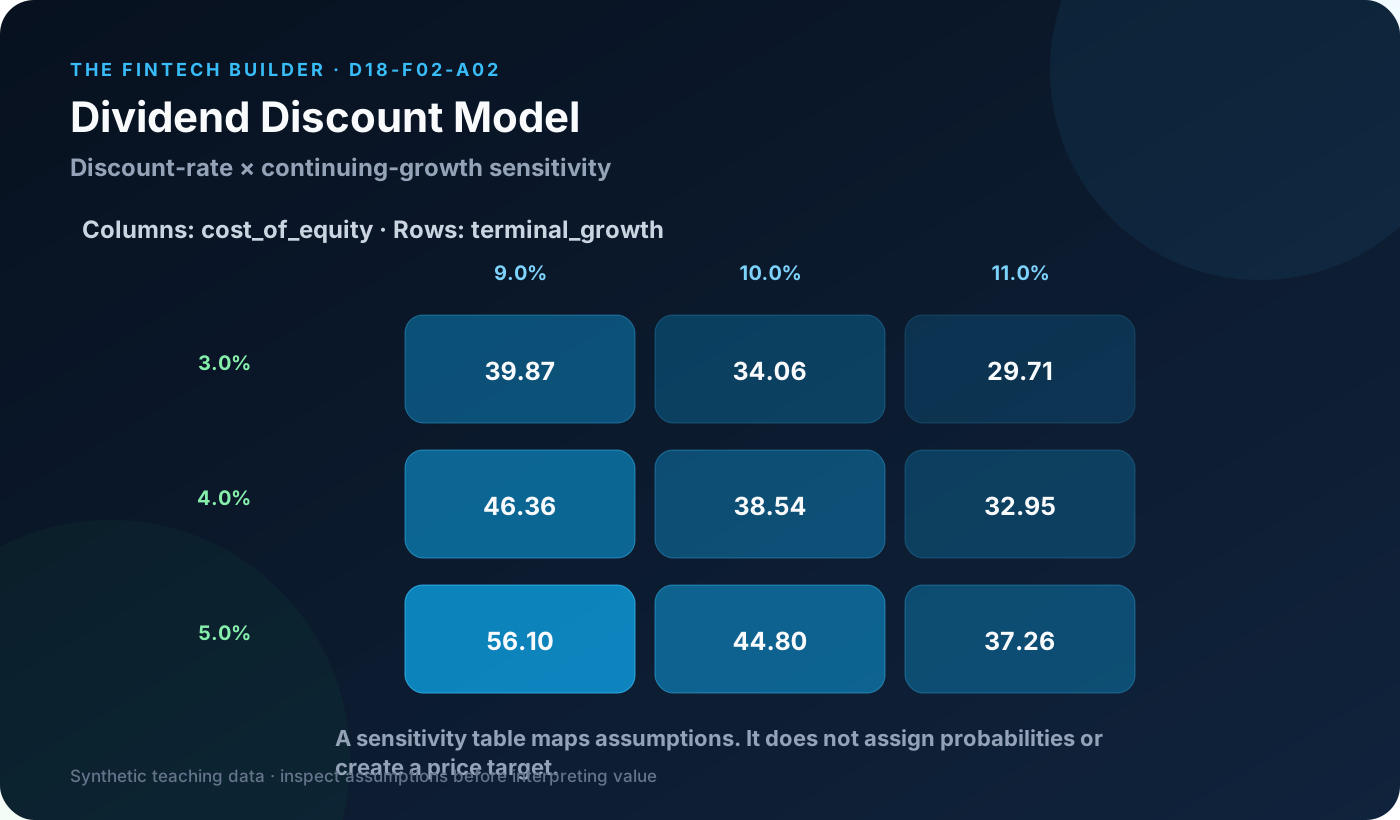
  "cost_of_equity": 0.1,
  "terminal_growth": 0.04
}Call#
dividendDiscountModel(data)Returns#
object with 10 fields: state, method, schedule, pv_explicit_dividends, terminal_dividend, terminal_value, terminal_discount_factor, pv_terminal_value, …
{
  "state": "valued",
  "method": "multi-stage-dividend-discount",
  "schedule": [
    {
      "period": 1,
      "dividend": 2,
      "discount_factor": 0.9090909090909091,
      "present_value": 1.8181818181818181
    },
    {
      "period": 2,
      "dividend": 2.2,
      "discount_factor": 0.8264462809917354,
      "present_value": 1.8181818181818181
    },
    {
      "period": 3,
      "dividend": 2.42,
      "discount_factor": 0.7513148009015775,
      "present_value": 1.8181818181818177
    }
  ],
  "pv_explicit_dividends": 8.937914076907314,
  "terminal_dividend": 2.8600000000000003,
  "terminal_value": 47.66666666666667,
  "terminal_discount_factor": 0.6209213230591549,
  "pv_terminal_value": 29.59724973248639,
  "terminal_value_share": 0.7680582306301622,
  "intrinsic_value_per_share": 38.5351638093937
}
Other exports#
This module also exports
calculate, freeCashFlowDcf, gordonGrowthModel, residualIncomeModel, economicValueAdded. Every module additionally exports run as an alias of its
primary function, and a meta object carrying its catalog id, domain, family,
shape and article URL.
Diagrams#

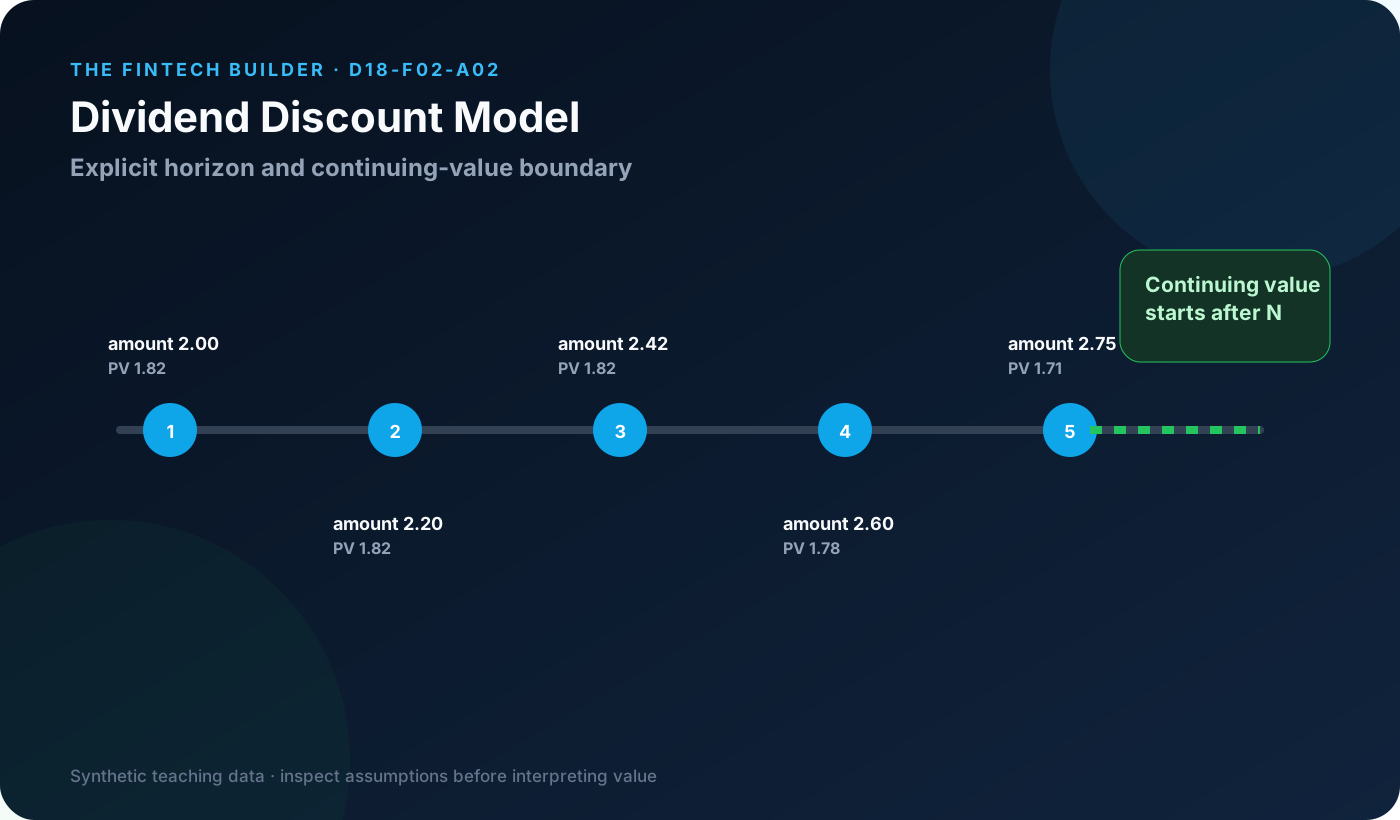
Calculation flow#
Dividend Discount Model calculation flow
flowchart LR
    S1["Confirm pershare dividend timing"]
    S2["Discount every explicit dividend"]
    S3["Project DN1"]
    S4["Capitalize and discount the terminal stream"]
    S5["Reconcile explicit and terminal value"]
    S1 --> S2
    S2 --> S3
    S3 --> S4
    S4 --> S5
    S5 --> D{"The last explicit dividend is DN the terminal numerator is"}
    D --> O["intrinsic_value_per_share + diagnostics"]
    O --> A["Audit: Every headline value equals the displayed reconciled compo"]
How it works#
This page states the contract — how to call it correctly. The article explains the concept: why it works, and where it breaks.
References#
- Dividend Discount Models — Aswath Damodaran
- The Dark Side of Valuation: Terminal Value — Aswath Damodaran
- Evidence boundary