Yang-Zhang Volatility
Install and import#
npm install fintech-algorithmsimport { calculate } from "fintech-algorithms/volatility-and-covariance/historical-estimators/yang-zhang-volatility";Signature#
calculate(data)Separate overnight, weighted body and weighted range contributions. Supplied-parameter educational reference; no fitted performance claim.
Parameters#
| Name | Type | Notes |
|---|---|---|
data | TopicInput | See data-contract/CONTRACT.md. |
Returns#
TopicResult
Structured result with readiness, values, parameters, and diagnostics.
Warm-up#
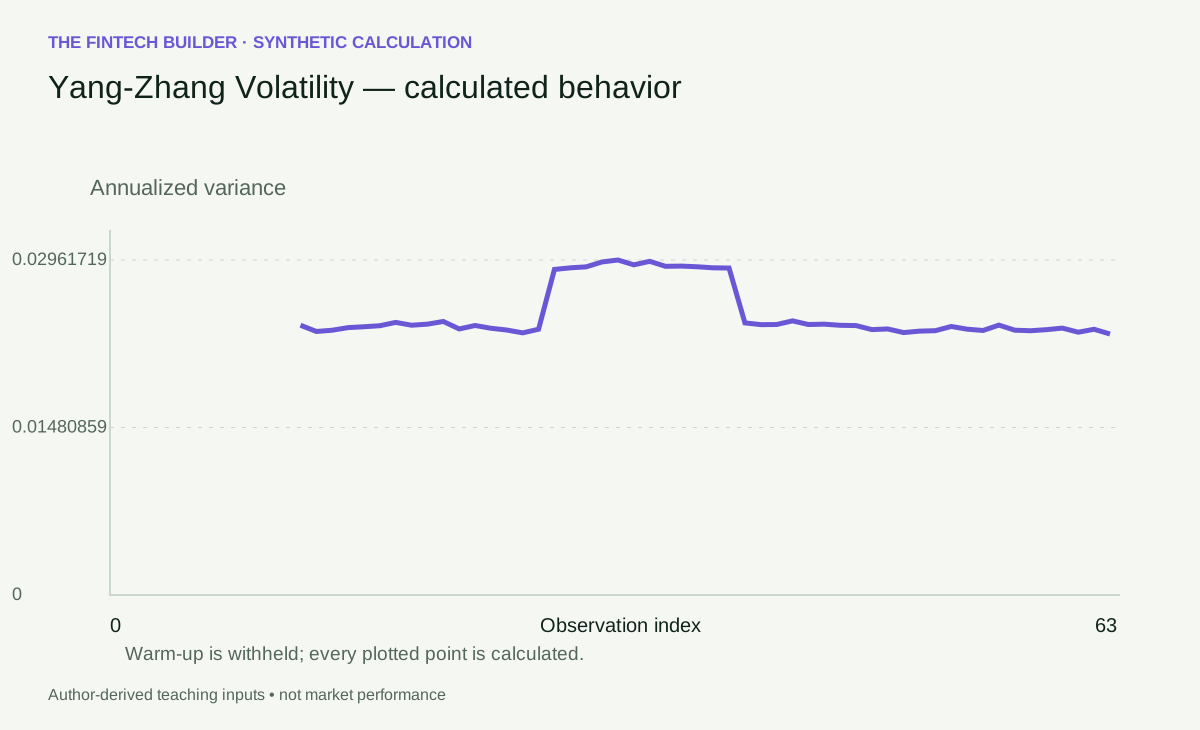
The first depends on window or model order positions are null prefix until minimum history exists.
Errors#
- When required data is missing, non-finite, malformed, or out of range — raises ContractError / Error
Complexity: time O(nw),
space Full diagnostic trace retained for teaching; see implementation for observation/window/matrix dimensions.
Worked example#
executed Captured by running this function on the input its own test provides. Real output of real code — but not asserted against a published figure.
Input#
{
  "bars": [
    {
      "timestamp": "2026-01-01T09:00:00Z",
      "open": 99.50124791926824,
      "close": 100,
      "high": 101.00501670841679,
      "low": 98.51119396030626
    },
    {
      "timestamp": "2026-01-02T09:00:00Z",
      "open": 100.5012520859401,
      "close": 101.00501670841679,
      "high": 102.02013400267558,
      "low": 99.50124791926824
    },
    {
      "timestamp": "2026-01-03T09:00:00Z",
      "open": 98.51119396030626,
      "close": 99.0049833749168,
      "high": 100,
      "low": 97.53099120283326
    }
  ],
  "parameters": {
    "window": 2,
    "annualization_factor": 1
  }
}Call#
calculate(data)Returns#
object with 8 fields: topic_id, title, parameters, series, latest, ready, ready_at, diagnostics
{
  "topic_id": "D10-F01-A05",
  "title": "Yang-Zhang Volatility",
  "parameters": {
    "window": 2,
    "annualization_factor": 1
  },
  "series": [
    null,
    null,
    {
      "timestamp": "2026-01-03T09:00:00Z",
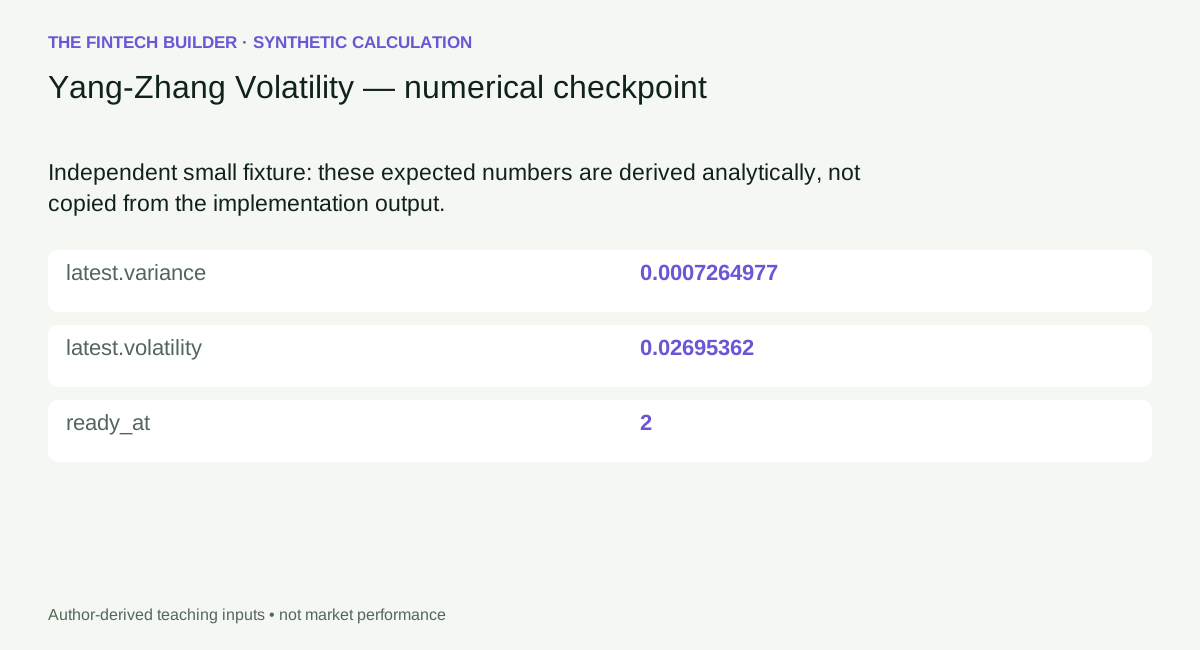
      "variance": 0.0007264976958525304,
      "volatility": 0.026953621201102652,
      "contributions": [
        [0.004999999999999897, 0.004999999999999897, 0.00029999999999999884],
        [-0.024999999999999942, 0.005000000000000118, 0.00030000000000000274]
      ],
      "components": {
        "overnight": 0.00044999999999999516,
        "open_close": 1.9162261030955815e-33,
        "range": 0.00027649769585253527,
        "k": 0.0783410138248848
      },
      "window_start": 1,
      "window_end": 2
    }
  ],
  "latest": {
    "timestamp": "2026-01-03T09:00:00Z",
    "variance": 0.0007264976958525304,
    "volatility": 0.026953621201102652,
    "contributions": [
      [0.004999999999999897, 0.004999999999999897, 0.00029999999999999884],
      [-0.024999999999999942, 0.005000000000000118, 0.00030000000000000274]
    ],
    "components": {
      "overnight": 0.00044999999999999516,
      "open_close": 1.9162261030955815e-33,
      "range": 0.00027649769585253527,
      "k": 0.0783410138248848
    },
    "window_start": 1,
    "window_end": 2
  },
  "ready": true,
  "ready_at": 2,
  "diagnostics": {
    "input_count": 3,
    "annualization_factor": 1,
    "causal": true
  }
}Diagrams#
Calculation flow#
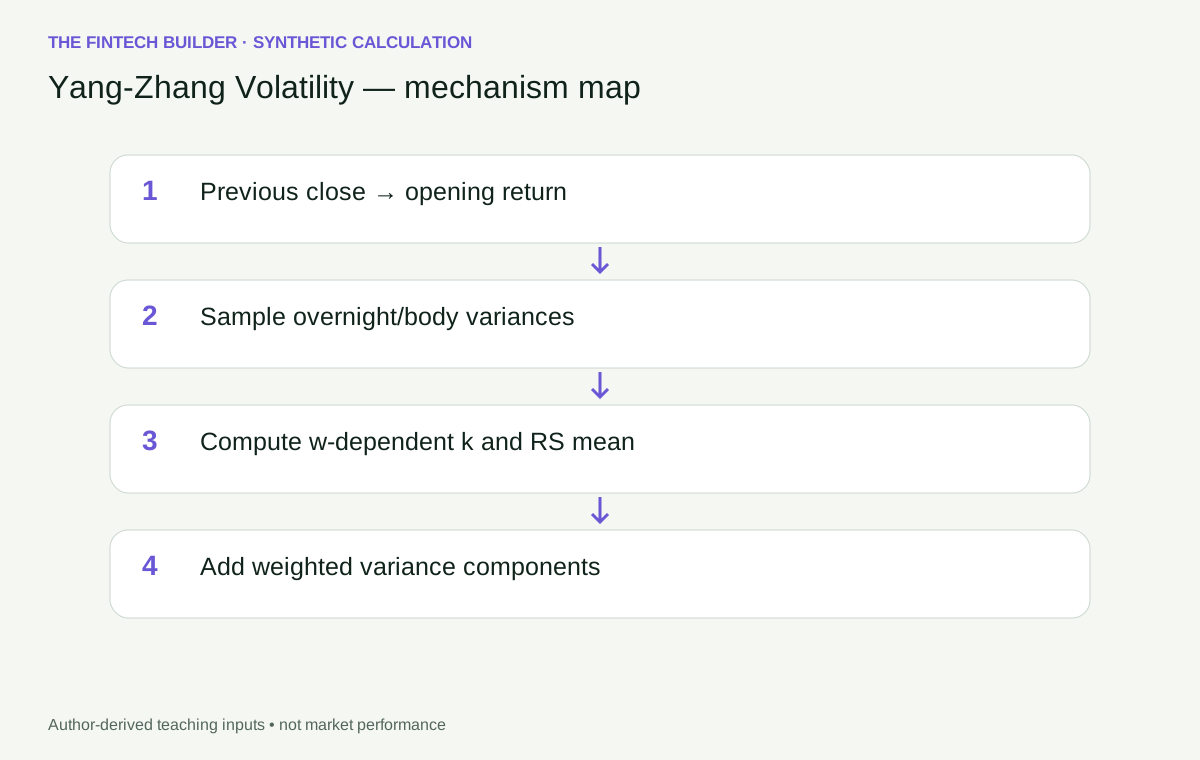
Yang-Zhang Volatility — calculation-flow
flowchart TD
    N0["Previous close → opening return"]
    N1["Sample overnight/body variances"]
    N2["Compute w-dependent k and RS mean"]
    N3["Add weighted variance components"]
    N0 --> N1 --> N2 --> N3
Yang-Zhang Volatility — decision-boundary
flowchart TD
    A["Supplied observations and parameters"] --> B{"Contract valid?"}
    B -->|No| E["Reject with explicit error"]
    B -->|Yes| C{"Required history available?"}
    C -->|No| W["Withhold; never insert zero"]
    C -->|Yes| D["Yang-Zhang Volatility calculation"]
    D --> F["Inspect diagnostics and stated limits"]
How it works#
This page states the contract — how to call it correctly. The article explains the concept: why it works, and where it breaks.
References#
- Scope of evidence